
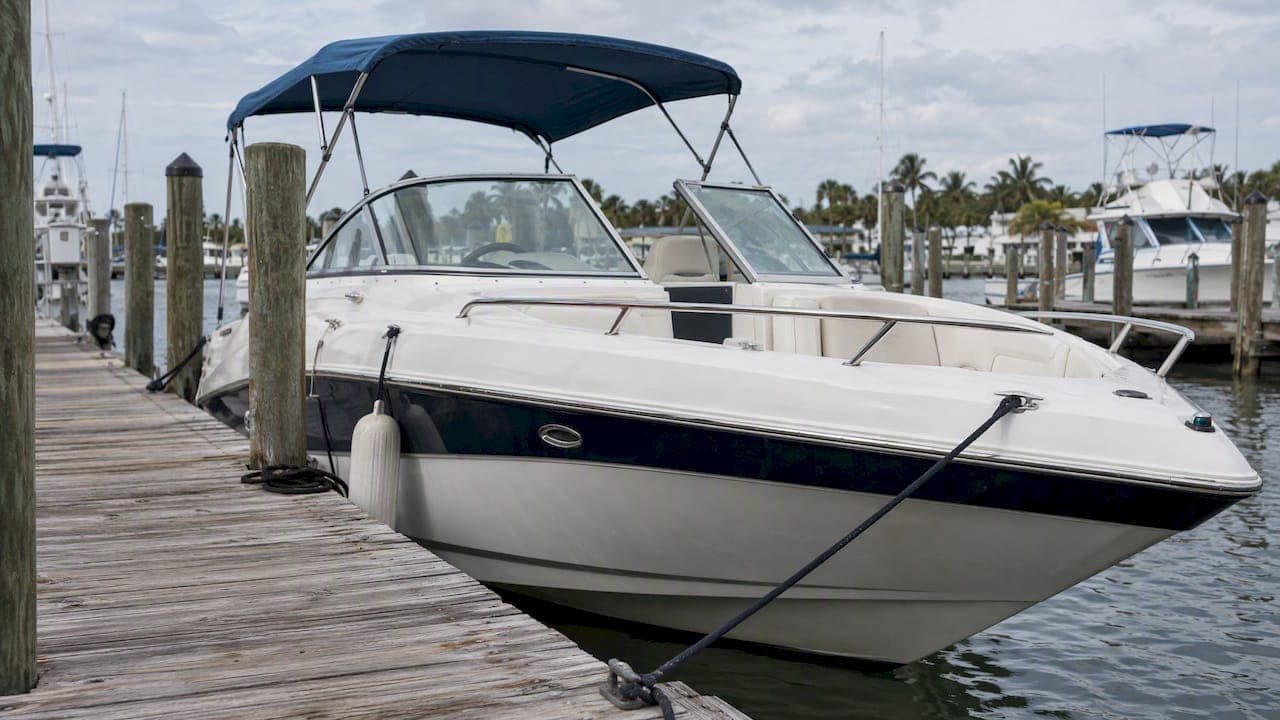
Florida law does not require insurance on most private recreational boats, but that is rarely the end of the story. Lenders, marinas, and rental operators routinely make coverage a condition of doing business with you, and the gap between what the state mandates and what you actually need can leave an uninsured owner exposed. Understanding both sides keeps you legal and protected.
TL;DR:
- Lenders typically require liability and physical damage coverage, and skipping the policy can put the boat loan in default.
- Marinas commonly require liability proof under dockage contracts; FWC rules require rental operators to insure motorboats, personal watercraft, sailboats, and houseboats.
- Agreed value coverage pays the amount set when the policy begins, while actual cash value deducts depreciation, potentially lowering an older boat’s claim payment.
- Before buying, verify how named storm claims are handled and check wreck removal limits; low caps can leave you paying cleanup costs after a sinking.
- Request at least two quotes and compare declarations pages and exclusions, not premiums alone; also confirm each carrier’s cancellation and nonrenewal notice period.
Table of Contents
- Florida's Actual Legal Requirements for Boat Owners
- When Insurance Becomes Required in Practice
- What a Boat Insurance Policy Typically Covers
- How Insurers Price a Florida Boat Policy
- Getting a Quote and What to Ask Your Agent
- Regulatory Details That Shape Your Policy and Claims
- The Practical Bottom Line for Florida Boat Owners
- Get a Florida Boat Policy Review From Geneva Insurance Group
- FAQ
- Sources
Florida's Actual Legal Requirements for Boat Owners
Florida's rules focus on registration and operator safety, not insurance. Most vessels used on Florida waters must be titled and registered through the state, generally within 30 days of purchase, and the registration certificate has to stay aboard the boat. A handful of exemptions apply to certain nonmotor-powered vessels under 16 feet and specified paddlecraft, so it is worth confirming your vessel's status with the Florida Fish and Wildlife Conservation Commission (FWC) or your county tax collector if you are unsure.
Operator education is a separate requirement that often gets confused with insurance. Anyone born on or after January 1, 1988 who operates a vessel with 10 horsepower or more must complete an approved boating safety course, carry photo ID, and hold an FWC boating safety education card. None of this touches liability or property coverage.
The same goes for the Freedom Boater program, which lets qualifying owners attest to carrying required safety equipment in exchange for a compliance decal. That decal confirms safety-equipment compliance. It says nothing about whether the boat is insured, and treating it as proof of coverage is a common and costly misunderstanding.

When Insurance Becomes Required in Practice
Florida statutes leave most private boat owners free to skip coverage, but a lender, marina, or rental agreement can turn that freedom into an obligation overnight. Financing is the clearest example: a bank or credit union funding your purchase will almost always require hull and liability coverage as a loan condition, the same way a mortgage lender requires homeowners insurance. Skip it and you risk default on the loan itself, not just exposure on the water.
Marinas and storage facilities follow a similar pattern. Most dockage and storage contracts include a clause requiring proof of liability coverage before they will let you tie up or store your vessel on their property, protecting the marina from claims tied to fuel spills, fires, or collisions in their slips.
Rental and livery operations face the strictest rules. FWC's livery regulations require proof of valid insurance for operators renting motorboats, personal watercraft, sailboats, or houseboats, with specified minimum coverage expectations before a livery can legally rent to the public. A few points worth keeping in mind:
- Financed boats typically need both liability and physical damage coverage to satisfy the lender.
- Marina and storage contracts commonly list minimum liability limits as a condition of use.
- Liveries renting powered vessels must document valid insurance under FWC rules, with different standards for human-powered-only rentals.
- A private sale with no financing and no marina contract is the main scenario where Florida law truly leaves coverage optional.
What a Boat Insurance Policy Typically Covers
A standard Florida boat policy is built around a handful of core protections, with several optional add-ons that matter more here than in most other states. Liability coverage pays for bodily injury or property damage you cause to someone else, and it is the piece that protects your savings, home equity, and other assets if a collision or injury claim goes to court.
Physical damage coverage handles your own boat: collision pays for damage from a crash, while comprehensive covers fire, theft, and weather events. How insurers pay that claim matters just as much as whether they pay it. Agreed value policies pay a fixed amount set when you buy the policy, while actual cash value (ACV) policies factor in depreciation, which can leave an older boat worth far less at claim time than you expect.
Beyond the basics, several optional coverages come up often enough in Florida to be worth a line item:
- Towing and on-water assistance for breakdowns away from the dock.
- Uninsured boater coverage for crashes caused by another operator with no insurance.
- Medical payments coverage for injuries to you or your passengers, regardless of fault.
- Fuel-spill liability and wreck removal, both of which can carry significant cleanup costs on Florida's waterways.
- Trailer and personal effects coverage for gear and equipment you haul and store aboard.
Given Florida's storm exposure, hurricane and windstorm endorsements and agreed-value terms deserve particular attention before a policy gets signed, not after a named storm is bearing down.
How Insurers Price a Florida Boat Policy
Premiums come down to a mix of the boat itself and how you use it. Insurers weigh the vessel's value, type, and horsepower alongside intended use (weekend cruising versus offshore fishing) and where you keep it, since a boat stored in a hurricane-prone coastal marina carries different risk than one kept inland. Operator factors matter too: age, completion of an approved safety course, and claims history all move the needle on price.
Coverage choices you control have a real effect on cost as well:
- Agreed value policies generally cost more than ACV but avoid depreciation disputes at claim time.
- Hurricane and windstorm endorsements add premium but close a major Florida-specific gap.
- Wreck removal caps that are too low can leave you paying out of pocket after a sinking.
A simple framework helps here: match your liability limit to what you would actually lose in a lawsuit, not the state minimum for your car insurance, and set your deductible at a level you could comfortably pay today if you had to.
Getting a Quote and What to Ask Your Agent
Buying the right policy starts with having the right information ready, then asking sharper questions than "what's the price."
- Gather your registration, hull identification number, storage or marina address, and details on how and where you use the boat before requesting quotes.
- Ask whether the policy is written on an agreed value or actual cash value basis, and how claims are adjusted under each.
- Ask how the policy handles hurricane and named-storm claims, what the wreck removal limit is, and whether trailer and personal effects are included or need to be added.
- Confirm the cancellation and nonrenewal notice period, since this varies by carrier and affects how much warning you get before coverage lapses.
- Request at least two quotes and read the declarations page and exclusions before comparing price alone.
Pro Tip: A fee-free policy review can compare the fine print on two similarly priced policies, often turning up differences in wreck removal limits or storm coverage that the quote summary never mentions.
If your boat represents a large share of your net worth, or you carry significant other assets, it may be worth asking your agent whether an umbrella policy would extend your liability protection beyond the boat policy's limits.
Regulatory Details That Shape Your Policy and Claims
Florida's Office of Insurance Regulation (OIR) maintains a form filing checklist for boatowners, umbrella, and inland marine policies, and it explains why two policies with nearly identical names can behave very differently in a claim. The checklist's statutory references point to notice and cancellation timelines, including advance notice requirements before nonrenewal in many cases, that directly affect how much warning you get before a carrier can drop or change your coverage.
These rules matter most after an accident. Florida's boating accident reporting requirements, laid out in Florida Statutes Chapter 327, can call for your insurer's name and policy number on the accident report. Keeping proof of coverage in the boat, alongside your registration, saves a scramble at exactly the moment you need it least.
The Practical Bottom Line for Florida Boat Owners
Florida does not force most private boat owners into buying coverage, but calling it optional misses how often a lender, marina, or storage contract makes it mandatory in practice. The honest takeaway is that the legal minimum and the practical minimum are two different numbers, and most owners should be planning around the second one.
If your boat is financed, kept at a marina, or represents a meaningful share of your assets, a policy review may be worthwhile. Comparing coverage in plain language, rather than guessing from a declarations page full of jargon, is the fastest way to find out whether you are actually protected.
— David
Get a Florida Boat Policy Review From Geneva Insurance Group
We compare coverage options, so you can see how agreed value terms, hurricane endorsements, and wreck removal limits stack up against each other, not just the premium. Our free policy review looks at your current boat policy, or helps you evaluate a new one, and flags the Florida-specific gaps around storm coverage and marina liability requirements before they become a problem.
If you own a larger yacht or are mid-build on a custom vessel, specialized yacht insurers can offer a useful outside perspective on coverage built for that scale, alongside the review we provide. For most Florida boat owners, our plain-language comparison covers what you need. Request your free policy review or get tailored insurance quotes today, and if you are protecting other property in Florida, our Florida insurance page covers home, auto, and life coverage as well.
This article is general information, not a substitute for advice from a qualified financial advisor. Consult a qualified financial professional about your own circumstances before acting on anything here.
FAQ
Are you legally required to have boat insurance in Florida?
No, Florida does not generally require insurance for most private recreational boats under state law. You commonly need it anyway if your boat is financed, docked at a marina with a contract requiring proof of coverage, or used as a rental under FWC's livery regulations.
How much is boat insurance for a $30,000 boat?
There is no single statewide rate, since price depends on the boat's type, horsepower, storage location, intended use, and the coverage limits and deductible you choose. The boat's value is a useful starting point for a quote, but the lender's required limits, your liability exposure, and whether you add hurricane or agreed-value coverage will move the premium more than the hull value alone.
What is the 1/3 rule in boating?
This is not a recognized Florida insurance or boating regulation, and definitions of it vary depending on the source. If you have seen it referenced for a specific boating context, it is worth confirming the claim with FWC or a licensed agent rather than relying on an informal rule.
What is the average cost of boat insurance in Florida?
There is no official statewide average premium for boat insurance in Florida, since cost depends heavily on vessel value, usage, storage location, and the limits and deductible selected. Getting at least two quotes based on your specific boat and coverage needs is the most reliable way to see where you fall.