

Occurrence policies cover an incident that happens during the policy period, no matter when the claim gets filed years down the road. Claims-made policies only respond when the claim is reported while the policy, or a purchased tail, is still active. That timing gap changes everything about how you budget for coverage, how you switch carriers, and what happens the day you cancel a policy.
TL;DR:
- Claims-made policies require reports during the policy or tail period, and resetting the retroactive date when switching carriers leaves prior coverage unprotected.
- Occurrence policies cover incidents during the policy period regardless of claim reporting time, making them simpler for fast-claim risks and not requiring a tail after cancellation.
- Occurrence policies tend to cost more initially but do not incur tail fees, while claims-made policies have lower starting premiums but can become expensive due to step-rate increases and tail costs.
- Protecting claims-made coverage when switching carriers or retiring hinges on obtaining a written retroactive date and purchasing a tail before lapsing to avoid coverage gaps.
- Most professional liability lines, such as malpractice and cyber liability, use claims-made, while general liability and workers' compensation generally use occurrence policies.
Table of Contents
- Claims-Made vs Occurrence: How Claims-Made Coverage Actually Works
- What Is an Occurrence Policy and Why Cancellation Doesn't Hurt You Later
- Occurrence vs Claims-Made: A Side-by-Side Checklist For Your Policy
- What Occurrence and Claims-Made Policies Actually Cost You
- How to Protect Your Coverage When You Switch Carriers or Retire
- Which Insurance Lines Use Claims-Made vs Occurrence
- How to Choose Between Claims-Made and Occurrence Coverage
- Geneva Insurance Group's Fee-Free Policy Review
- An Agent's Take on Avoiding Coverage Gaps
- Get Your Fee-Free Policy Review From Genevainsgroup
- Sources
Claims-Made vs Occurrence: How Claims-Made Coverage Actually Works
A claims-made policy pays out only if the claim is made and reported during the policy period, or during an extended reporting period you've purchased afterward. Most professional policies are technically written as "claims-made and reported," meaning the insurer requires both events, the incident and the report, to fall inside an active window. Miss that window and the claim gets denied, even if the underlying mistake happened while you were fully insured.
The retroactive date is the piece most people overlook. It marks the earliest date an incident can have occurred and still be covered, and it typically matches your original claims-made start date rather than your current renewal date. When you switch carriers, the new insurer either honors your old retroactive date or resets it, and a reset date leaves every prior year of work unprotected.
Premiums usually follow a step-rate pattern: cheap in year one, then climbing steadily for four or five years as insurers price in accumulating prior-acts exposure. Check your declarations page for these items before signing anything:
- The exact retroactive date listed on the policy
- Whether it says "claims-made" or "claims-made and reported"
- Any extended reporting period (tail) endorsement and its cost
- Prior-acts language if you're moving from another carrier
What Is an Occurrence Policy and Why Cancellation Doesn't Hurt You Later
Occurrence coverage triggers on the incident date, not the report date. If something goes wrong while the policy is active, it's covered, even if the claim surfaces five years later and the policy has long since been canceled or nonrenewed. That's the core distinction in the claims-made vs occurrence debate, and it's why occurrence forms feel simpler to manage.
There's no tail to buy, no retroactive date to track, and no reporting deadline hanging over you after you switch insurers or shut down a business. Coverage from that policy term just sits there, permanently tied to whatever happened while it was in force.
That simplicity is why occurrence dominates certain categories:
- General liability and standard CGL policies
- Commercial auto coverage
- Workers' compensation
- Most short-tail risks where claims tend to surface quickly
Occurrence forms generally remove the tail requirement entirely, since coverage follows the incident date rather than the reporting date. If your risk is the kind that shows up fast, a slip-and-fall, a fender bender, an occurrence policy usually means one less thing to manage.
Occurrence vs Claims-Made: A Side-by-Side Checklist For Your Policy
Pull out your declarations page and work through this:
- Trigger: Does it say the policy responds to an "occurrence" during the policy period, or a "claim made and reported" during the policy period?
- Reporting window: Is there a deadline for reporting claims after an incident, or does the incident date alone control coverage?
- Retroactive date: Is one listed? If yes, you're looking at a claims-made policy, and that date should match your original coverage start.
- Tail or ERP endorsement: Is an extended reporting period option listed, with pricing?
- Premium pattern: Did your quote show a step-rate schedule, or a flat premium across years?
Two quick examples show why this matters. A contractor causes water damage to a client's building in 2023 under an occurrence policy that later gets canceled in 2024. The claim surfaces in 2026. Covered, because the incident happened during an active policy term. Now swap that contractor for a consultant on a claims-made policy who let coverage lapse in 2024 without buying a tail. The same 2023 mistake, reported in 2026, gets denied outright because no active policy or tail existed when the claim came in.
What Occurrence and Claims-Made Policies Actually Cost You
Occurrence policies tend to cost more from day one because the insurer is accepting open-ended exposure with no cutoff date. Claims-made policies usually start cheaper and climb through a step-rate schedule as the insurer prices in the growing pile of prior-acts risk sitting behind you.
That second point catches people off guard at renewal time. Your premium in year one might look like a bargain compared to an occurrence quote, but by year four or five it can approach or exceed what occurrence would have cost, since the insurer is now covering several years of unreported exposure instead of just one.
Tail coverage adds its own cost layer. Pricing commonly runs as a percentage of your final annual premium, though the exact multiplier varies by carrier and by line of business. Retiring professionals sometimes negotiate a one-time, unlimited tail instead of a multi-year renewal cycle, and that math can work out cheaper than paying incremental ERP premiums for years after you've stopped practicing.
- Occurrence: steadier cost, no tail purchase ever needed
- Claims-made: lower entry cost, rising renewals, tail cost due eventually
- Matching prior-acts on a new claims-made policy can sometimes beat buying a standalone tail
How to Protect Your Coverage When You Switch Carriers or Retire
The retroactive date is the single most important number on a claims-made policy, and it needs to survive every carrier switch intact. If a new insurer won't honor your original date, you're facing a coverage gap for every incident that happened before your new policy started, even though you were insured at the time.
Here's how to keep that gap from opening:
- Get the retroactive date in writing before you agree to switch carriers, not after the policy is bound.
- Buy a tail before canceling your old policy, not after, since some insurers won't sell an ERP once the policy has lapsed.
- Confirm prior-acts coverage on the new policy explicitly matches or predates your old retroactive date.
- Ask what happens on retirement or sale of your practice, since medical and legal professionals in particular need tail coverage locked in before closing shop.
Pro Tip: Never let a claims-made policy lapse for even a single day without either a tail in place or a new policy that explicitly picks up your old retroactive date. A one-day gap can be enough for an insurer to deny a claim tied to work you did years earlier.
Which Insurance Lines Use Claims-Made vs Occurrence
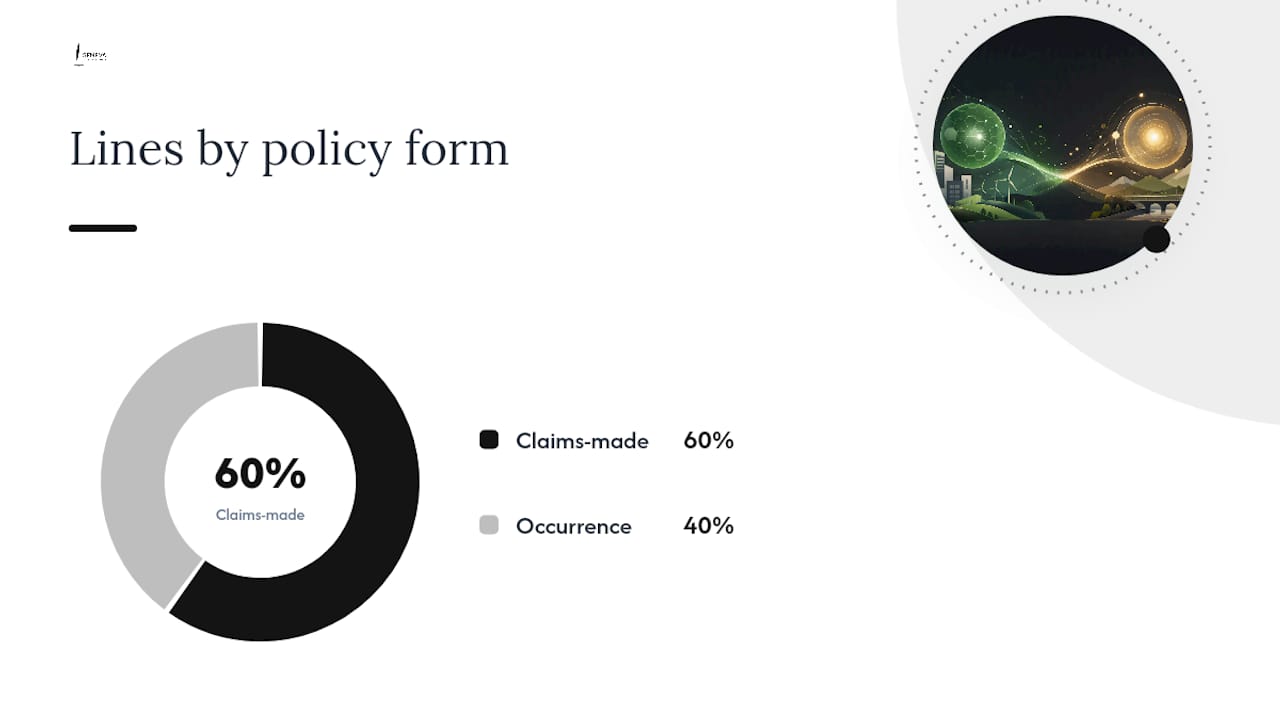
Professional liability lines default to claims-made almost across the board: medical malpractice, legal malpractice, directors and officers (D&O), errors and omissions (E&O), cyber liability, and employment practices liability (EPLI) all typically use this form. Insurers want a defined window to reprice long-tail exposure as it accumulates, which is hard to do on a policy that never closes the book on prior years.
General liability, commercial auto, workers' compensation, and standard CGL forms go the other direction. These risks tend to surface quickly, so insurers are comfortable writing them as occurrence without worrying about a claim showing up a decade later. Long-tail professional exposures favor claims-made specifically because it lets carriers price prior acts as that exposure grows, something a pure occurrence form can't do.
- Claims-made: malpractice, D&O, E&O, cyber, EPLI
- Occurrence: general liability, commercial auto, workers' comp, standard CGL
How to Choose Between Claims-Made and Occurrence Coverage
Start with your exposure timeline. If claims against your work tend to surface fast, a car accident, a workplace injury, occurrence coverage usually fits without much second-guessing. If your work carries long-tail risk, financial advice, medical treatment, software that fails years after deployment, claims-made is probably what the market offers you anyway, and the real decision becomes how you manage the tail.
Budget matters just as much as risk profile. A cheap claims-made quote in year one can be a trap if you're not planning for the step-rate climb or setting aside money for an eventual tail purchase. Run the five-year cost, not the first-year quote, before you commit.
Before your next call with an agent, ask for these in writing:
- The exact retroactive date on any claims-made quote
- Whether an extended reporting period endorsement is available and its cost
- How prior-acts coverage would transfer if you switched carriers again
- What happens to coverage if you retire, sell the business, or stop practicing
Bring these to the call:
- Your current declarations page
- Any prior policy's retroactive date
- A rough timeline for retirement, sale, or major business changes
Geneva Insurance Group's Fee-Free Policy Review
Genevainsgroup runs a fee-free policy review that checks your current form, retroactive date, tail exposure, and any endorsements that might leave gaps. Bring your declarations page and any prior carrier's policy information, and the review will flag exactly where you stand before you make a switch. This article is written from Genevainsgroup's agency perspective, drawing on direct work reviewing claims-made and occurrence policies for clients across multiple states.
An Agent's Take on Avoiding Coverage Gaps
Keep continuous claims-made coverage or buy the tail before you stop it, full stop. Always get written confirmation that your retroactive date carried over or that the tail was purchased before the old policy lapsed. Verbal assurances don't hold up when a claim shows up three years later.
— David
Get Your Fee-Free Policy Review From Genevainsgroup
If you've read this far wondering whether your own policy has a retroactive date problem or a tail you forgot to budget for, that's exactly the gap Genevainsgroup's review is built to catch. Genevainsgroup compares your coverage across more than 25 A-rated carriers, checks your policy form and endorsements in plain language, and stays involved through claims advocacy if something goes wrong later.
There's no fee for the review, and no obligation to switch anything. Pull your current declarations page, note your renewal date, and request a policy review to find out whether your claims-made retroactive date is protected or your occurrence coverage is doing everything it should.
Sources
- Per occurrence vs. claims made policies (MoneyGeek)
- Occurrence vs. Claims-Made Insurance Explained (Coverage Criteria)