

Errors and omissions insurance pays the legal defense and settlement costs when a client blames your professional advice, service, or deliverable for their financial loss. It's usually written on a claims-made basis, meaning the policy has to be active when the claim gets filed, not just when the mistake happened. If you're comparing quotes or wondering whether you're exposed, check your retroactive date first and consider a fee-free policy review before you assume you're covered.
TL;DR:
- Most professionals should verify that their retroactive date matches their current coverage to avoid uncovered claims when switching policies.
- Premium costs generally range from $600 to $1,200 annually, with higher premiums for riskier industries like finance and healthcare.
- Claims-made policies respond only if the policy is active when the claim is filed, making tail coverage essential when changing carriers or winding down.
- Many client contracts or licensing boards specify minimum E&O limits, often around $1 million, which should guide your coverage amount.
- An independent agency can help review your current policy for gaps, missing endorsements, and proper limits without charging fees.
Table of Contents
- What Is Errors and Omissions (E&O) Insurance?
- What E&O Insurance Covers (and the Endorsements Worth Adding)
- Who Actually Needs E&O Insurance?
- How Much Does E&O Insurance Cost?
- Claims-Made vs. Occurrence: Why the Trigger Matters More Than the Price
- Is E&O Insurance Legally Required?
- How to Buy E&O Insurance Without Getting Burned
- What an Independent Agency Adds to the Process
- A Straight Answer on Priorities
- Get a Fee-Free Policy Review Before Your Next Renewal
- Sources
- FAQ
What Is Errors and Omissions (E&O) Insurance?
Errors and omissions insurance, also called professional liability insurance or PLI, protects service providers when a client says your work, advice, or a missed step cost them money. It's the same coverage in three different wrappers: doctors and lawyers usually call it malpractice insurance, tech and consulting firms call it E&O, and insurance regulators tend to call it professional liability. All three cover the same basic risk.
A typical claim looks like this: a marketing consultant misses a filing deadline for a client's trademark application, the client loses rights to the mark, and sues for the resulting damages, a situation that underscores why managing COIDA claims carefully matters under evolving employer rules. The consultant's E&O policy pays a lawyer to defend the claim and, if the consultant is found liable, covers the settlement. Professional liability insurance exists specifically for this kind of financial harm caused by advice or service, not by a physical accident.
That's the line that separates E&O from general liability:
- General liability covers bodily injury and property damage, like a client slipping in your office.
- E&O covers financial harm from your professional judgment, advice, or deliverable.
- Most service businesses need both, because a slip-and-fall lawsuit and a "your advice cost me money" lawsuit are entirely different exposures.
What E&O Insurance Covers (and the Endorsements Worth Adding)
A standard errors and omissions policy pays for two things: your legal defense and any settlement or judgment tied to a covered claim. Defense costs alone can run into six figures before a case ever reaches trial, which is why Investopedia notes that E&O is as much about funding a defense against a meritless claim as it is about paying out a real one. Covered scenarios typically include negligent advice, factual errors in your work, missed deadlines or omissions, and breach of contract tied to a service failure.
Beyond the base policy, most carriers offer endorsements worth asking about:
- Regulatory defense coverage for licensing board investigations or disciplinary actions.
- Cyber or privacy endorsements if your work involves handling client data (standard E&O usually excludes data breaches).
- Intellectual property defense for claims involving copyright or trademark disputes tied to your deliverables.
- Pre-claim assistance, which pays for legal advice before a formal claim is even filed.
Standard exclusions matter just as much. Cornell Law School's Legal Information Institute is clear that E&O does not cover intentional misconduct, criminal acts, or fraud. It also won't touch bodily injury or property damage, since those belong to your general liability policy.
Pro Tip: If your contracts require you to handle client data, don't assume your E&O policy has you covered. Ask specifically whether cyber liability is included or needs to be added as an endorsement.
Who Actually Needs E&O Insurance?
If you give advice, produce a deliverable a client relies on, or make decisions that affect someone else's money, you're a candidate for E&O coverage. The professions that carry it most often include:
- Consultants and marketing/PR agencies
- IT contractors and software developers
- Accountants and bookkeepers
- Real estate agents and brokers
- Insurance agents and financial advisors
- Architects, engineers, and other design professionals
The clearest signal you need it isn't your job title, it's your job function. Do you give recommendations someone acts on? Do you create work product a client depends on for a business decision? Do you touch client funds or sensitive records? Any "yes" answer is a reason to check coverage.
The fastest way to confirm whether you're required to carry it is to check with your state licensing board or professional association, and to reread any client contracts or RFPs for insurance clauses. Plenty of contracts specify minimum E&O limits before you can even bid on the work.
How Much Does E&O Insurance Cost?
Most small businesses and solo professionals pay somewhere in the range of several hundred to a couple thousand dollars a year for E&O coverage, though the spread is wide. NerdWallet's aggregated data puts median costs around $61 a month, while Forbes Advisor's research lands closer to $735 a year for many professionals. Higher-risk sectors like financial advising or medical consulting typically pay more.
By the numbers: Median E&O premiums cluster around $600 to $1,200 annually for many small-business professionals, according to NerdWallet, with riskier industries paying well above that range.
Premiums move based on a handful of factors:
- Revenue. More revenue usually means more exposure and higher premiums.
- Industry risk. Financial and medical advice carries more liability than, say, graphic design.
- Claims history. A prior claim or lawsuit raises your rate at renewal.
- Limits and deductible. Higher limits cost more; a higher deductible lowers your premium.
- Prior acts coverage. Gaps in continuous coverage can spike your rate or trigger exclusions.
A solo consultant with $150,000 in revenue and no claims history might pay closer to the low end of that range. A ten-person marketing agency with $2 million in revenue and a past claim will land well above it. A small tech firm handling sensitive client data often pays more once cyber endorsements get added in. Bundling E&O with a business owner's policy, tightening internal quality-control processes, and accepting a higher deductible are the three most reliable ways to bring the number down.
Claims-Made vs. Occurrence: Why the Trigger Matters More Than the Price
The single most misunderstood part of an E&O policy isn't the price, it's the trigger. Claims-made policies only respond if the policy is active on the date the claim is filed, not the date the mistake happened. Occurrence policies respond based on when the incident occurred, regardless of whether the policy is still active later. The Insurance Information Institute confirms claims-made is the standard structure for professional liability and E&O lines. Occurrence forms exist but are rare and usually more expensive for this category.
That claims-made structure hinges on your retroactive date, the point before which claims aren't covered even if the policy is active. Switch carriers, and if the new policy's retroactive date resets to the new start date, NerdWallet warns that all your past work loses coverage. That's why continuity matters more than price when you're shopping renewals.
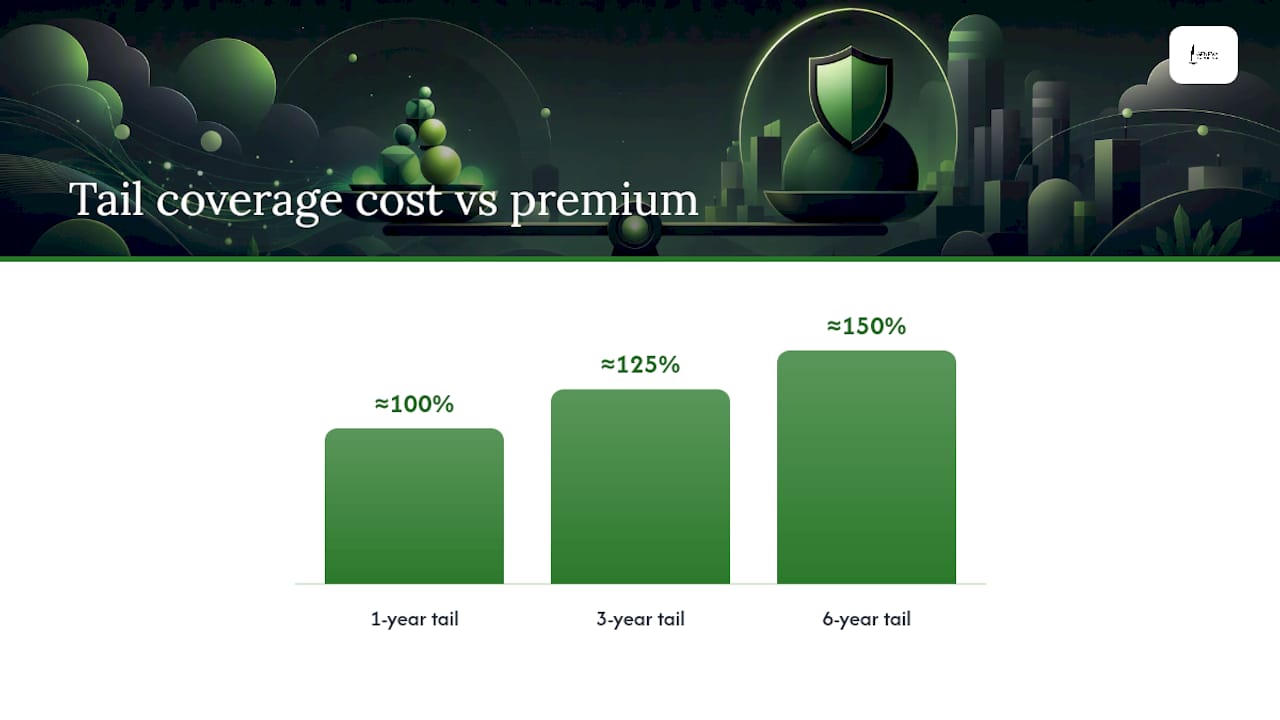
Tail coverage, also called an extended reporting period, closes that gap when you switch carriers, sell your business, or wind down operations entirely. Pricing follows a predictable pattern: a one-year tail often runs about 100% of your annual premium, with three-year tails closer to 125% and six-year tails around 150%, according to industry claims-made analysis.
Run through this before you switch anything:
- Confirm your current policy's retroactive date in writing.
- Never let coverage lapse, even for a few days, between carriers.
- If you're closing the business or switching carriers without a matching retro date, buy tail coverage before the old policy ends.
Pro Tip: Selling your consulting business or agency? Budget for tail coverage as part of the deal, not as an afterthought. Buyers and their attorneys will ask about it.
Is E&O Insurance Legally Required?
There's no blanket federal or state law forcing every professional to carry E&O insurance, but plenty of narrower rules do. Forbes Advisor reports that more than 10 states require real estate agents to show proof of E&O coverage, and licensing boards frequently mandate malpractice or professional liability coverage for attorneys and physicians.
Even where the law stays silent, your clients often aren't. RFPs and service contracts routinely specify minimum E&O limits, sometimes $1 million or more, before you're even allowed to bid. The safest move is to check three places: your state licensing board, your professional association's requirements, and every contract you're about to sign, before you assume you're either exempt or already covered.
How to Buy E&O Insurance Without Getting Burned
Start by sizing your limit to your actual exposure, not a round number that sounds safe. A consultant working with $500,000 contracts needs a different limit than a bookkeeper managing $50,000 accounts. Most brokers recommend matching limits to your largest client contract's requirement, then adding a buffer.
Before you sign anything, ask your agent these questions directly:
- What's the retroactive date, and does it match my current coverage?
- Is tail coverage available, and what would it cost if I switch carriers later?
- Are defense costs paid inside or outside the policy limit? Defense outside the limit preserves more money for an eventual settlement.
- Is the aggregate limit per claim or shared across all claims in the policy period?
Have your contracts, prior claims history, and a revenue estimate ready before you request quotes; most brokers can turn around a proposal within a few business days once they have those documents. Watch for red flags in any proposal: a vague or unstated retroactive date, no mention of tail options, or missing endorsements that your client contracts specifically require.
Pro Tip: If a quote doesn't mention the retroactive date at all, ask before you buy. Silence on that detail is the single most common way business owners discover a coverage gap after it's too late.
What an Independent Agency Adds to the Process
Comparing E&O quotes on your own means reading fine print across carriers with different retro-date language, different tail pricing, and different defense-cost structures. Geneva Insurance Group is licensed across 17 states and compares options across more than 25 A-rated carriers, which means the comparison work happens on your behalf instead of yours.
The agency's approach centers on three things:
- A fee-free policy review that checks your existing coverage for gaps, retro-date mismatches, and missing endorsements.
- Claims advocacy, meaning support during the claims process itself, not just at the point of sale.
- Plain-language explanations of what your policy actually says, instead of jargon that leaves you guessing.
A Straight Answer on Priorities
If you take one thing from this, check your retroactive date this week, not at renewal. Size your limits to your riskiest client contract, not a guess. And if you're unsure where you stand, a policy review beats assuming you're covered.
— David
Get a Fee-Free Policy Review Before Your Next Renewal
If you've read this far, you already know the two things that sink small businesses: a coverage gap nobody noticed and a retroactive date that quietly reset. A fee-free policy review looks at your current E&O coverage line by line, flags any retroactive date mismatch, checks whether your limits still match your client contracts, and identifies missing endorsements clients might be asking for without you realizing it.
Requesting one is straightforward: have your current policy documents, a recent client contract or two, and a rough revenue figure ready, and Genevainsgroup will compare your existing coverage against options across more than 25 A-rated carriers. You'll get plain-language answers about what you're actually covered for, not sales language dressed up as advice, and ongoing claims advocacy if you ever need to file. Start your fee-free policy review today and find out exactly where you stand before your next renewal date arrives.
This article is general information, not a substitute for advice from a qualified financial advisor. Consult a qualified financial professional about your own circumstances before acting on anything here.
Sources
- Errors and Omissions — Cornell Law School, Legal Information Institute
- Professional liability insurance — Insurance Information Institute (III)
- Per occurrence vs. claims-made — MoneyGeek
- Errors and Omissions Insurance: What E&O Is, Where to Get It — NerdWallet
FAQ
How much is E&O insurance per month?
Most small-business professionals pay somewhere around $61 a month on average, according to NerdWallet's aggregated data, though higher-risk professions can pay significantly more.
What is not covered by E&O insurance?
E&O excludes intentional misconduct, criminal acts, and fraud, along with bodily injury and property damage, which fall under general liability instead, per the Cornell Law School definition.
How much does a $1 million liability insurance policy cost?
Cost depends heavily on your industry, revenue, and claims history, but many professionals carrying $1 million in E&O limits fall within the broader $600 to $1,200 annual range cited by NerdWallet, with riskier sectors paying more.
Who is required to carry E&O insurance?
There's no universal mandate, but more than 10 states require it for real estate agents, and licensing boards often require it for attorneys and physicians; client contracts frequently add their own requirements on top.
What's the difference between E&O and general liability insurance?
E&O covers financial harm from professional advice, errors, or omissions, while general liability covers bodily injury and property damage, two entirely separate risk categories that most service businesses need to carry together.