
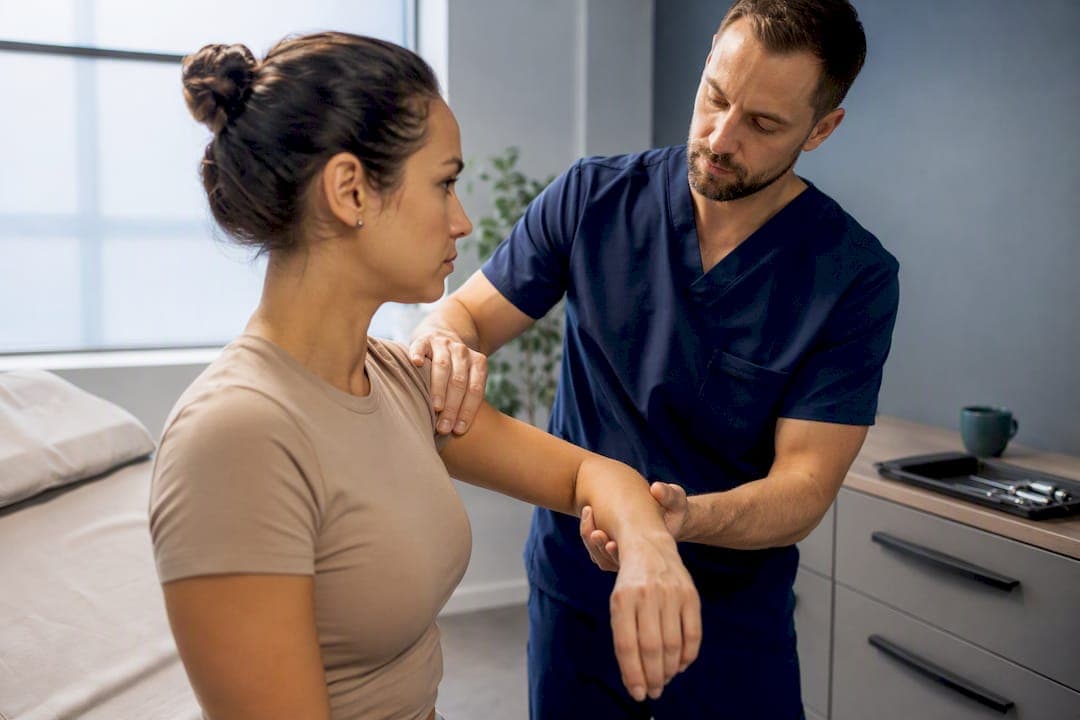
Yes, Florida is still a no-fault state, and that shapes every claim you'll ever file after a crash. State law requires owners of four-wheeled vehicles to carry at least $10,000 in Personal Injury Protection (PIP) and $10,000 in Property Damage Liability (PDL) just to register a car. PIP pays your medical bills and lost wages regardless of who caused the wreck, but you generally must receive initial medical treatment within 14 days to qualify, and suing beyond your PIP limits requires meeting a specific legal injury threshold.
TL;DR:
- Most Florida drivers have a 14-day window to receive initial medical treatment; missing this can result in total denial of PIP benefits.
- PIP covers 80% of medical expenses, 60% of lost wages, and 100% of replacement services, but only up to a $10,000 limit minus the deductible.
- The no-fault system applies to all drivers, including pedestrians and permissive drivers, regardless of fault, with specific statutory obligations for insurers.
- Motorcycle accidents are excluded from PIP coverage, requiring riders to have separate medical payments or health insurance.
- Proper documentation, prompt reporting, and timely medical treatment are critical for ensuring access to all applicable benefits after a crash.
Table of Contents
- What Florida PIP Insurance Actually Pays For
- Where Florida's No-Fault Rules Come From
- Deadlines and Exceptions That Can Sink Your Claim
- How to File a Florida PIP Claim Without Losing Benefits
- When PIP Runs Out: BIL, UM, and Suing the At-Fault Driver
- How Geneva Insurance Group Helps Florida Drivers Navigate PIP
- The 14-Day Rule Matters More Than Fault Ever Will
- Get a Free Florida Policy Review Before You Need It
- Sources
- FAQ
What Florida PIP Insurance Actually Pays For
PIP is not a blank check. It covers 80% of necessary and reasonable medical expenses, 60% of lost wages, and 100% of replacement services, such as hiring help for chores you can't do while recovering, all capped at your policy's $10,000 limit minus any deductible.
Coverage extends further than most drivers realize:
- The policyholder and relatives living in the same household
- Permissive drivers operating the insured vehicle with consent
- Passengers riding in the car at the time of the crash
- Pedestrians and bicyclists struck by the insured vehicle in Florida
Most Florida policies have a PIP deductible that applies before benefits kick in. Say a passenger breaks a wrist in a fender bender. A pedestrian hit while crossing the street can file against the driver's PIP policy the same way, even though they never bought coverage themselves.
Where Florida's No-Fault Rules Come From
Florida's no-fault system isn't a rule of thumb insurance agents invented. It's written directly into state law, and every claim you file traces back to specific statutory language.
- Florida Statutes Chapter 627, specifically sections 627.730 through 627.7405, make up the Motor Vehicle No-Fault Law and spell out insurer obligations, payment deadlines, and penalties for late claims.
- The Florida Department of Highway Safety and Motor Vehicles (FLHSMV) enforces proof-of-insurance rules at registration, meaning you cannot legally tag a car without valid PIP and PDL.
- The Florida Financial Services Commission holds authority to adjust minimum coverage amounts over time, so the $10,000 figures aren't necessarily permanent.
Insurers themselves face statutory deadlines for paying or denying PIP claims, which gives claimants real leverage when a payment gets stalled.
Deadlines and Exceptions That Can Sink Your Claim
Florida's no-fault system has sharp edges, and missing key deadlines can result in loss of benefits.
- The 14-day rule. You must receive initial medical services within 14 days of the accident to qualify for PIP benefits at all. Wait longer, even with a legitimate injury, and the insurer can deny the claim outright.
- Motorcycles are excluded. PIP does not apply to motorcycle accidents, so riders need medical payments coverage or health insurance to cover crash injuries.
- The tort threshold. Once PIP benefits run out, you can only sue the at-fault driver for pain and suffering if you suffered a permanent injury, significant scarring, or death, not for routine soft-tissue injuries.
- Notice windows matter. Insurers generally must respond to proper notice of a covered loss within statutory timeframes, and late payment can trigger penalties.
How to File a Florida PIP Claim Without Losing Benefits
Getting hurt in a crash is stressful enough without wondering if paperwork mistakes will cost you your PIP benefits. Follow this sequence.
- Right after the crash: Call police for a report, exchange insurance information, and photograph the scene and vehicle damage before anything gets moved or repaired.
- Within 14 days: See a doctor, urgent care provider, or emergency room, even if symptoms feel minor. This single step determines whether you're eligible for PIP benefits at all.
- Build your paper trail: Keep itemized medical bills, wage-loss documentation from your employer, and any authorization forms your provider or insurer requests.
- Notify your insurer promptly: Report the accident as soon as possible and follow their submission process for medical bills and wage documentation.
- If your claim stalls: Send written notice referencing the specific overdue payment, track the insurer's response window, and file a complaint with the Florida Department of Financial Services if the delay continues.
Pro Tip: Even a same-day urgent care visit for what feels like minor whiplash can be the difference between a paid claim and a denied one. Insurers look for that 14-day window first, before they look at anything else.
When PIP Runs Out: BIL, UM, and Suing the At-Fault Driver
PIP handles the first $10,000, but severe injuries often blow past that fast. Two other coverages pick up where PIP leaves off.
- Bodily Injury Liability (BIL) from the at-fault driver's policy can cover your excess medical costs and damages, but only if you meet Florida's permanent injury threshold.
- Uninsured motorist (UM) coverage fills the gap when the at-fault driver carries no insurance or not enough, covering medical expenses and lost wages much like PIP does.
- Tort claims that clear the injury threshold can pursue pain and suffering, future medical care, and lost earning capacity, though Florida law limits attorney fee awards in certain PIP-related actions.
Solid documentation from day one, matching your medical records to what the insurer requires, tends to determine whether these secondary claims succeed or stall in disputes.
How Geneva Insurance Group Helps Florida Drivers Navigate PIP
Understanding the law is one thing. Making sure your actual policy protects you is another, and that's where a fee-free policy review earns its keep.
- We check whether your PIP and PDL sit at the state minimum or above it, and what that gap means if you're seriously hurt.
- We review your deductible and show you how it affects the dollars you'd actually collect after a claim.
- We compare your UM and BIL coverage against your PIP limits to spot holes before an accident finds them for you.
- We compare options across more than 25 A-rated carriers, so you're not stuck with whatever a single insurer offers.
Our team advocates through the claims process itself, not just at the point of sale, which is where most Florida drivers actually need help.
The 14-Day Rule Matters More Than Fault Ever Will
Most drivers spend their energy figuring out who's "at fault" after a crash. That instinct is understandable and almost entirely beside the point under Florida law. PIP pays out regardless of fault, so the real question isn't who caused the wreck. It's whether you got medical treatment inside that 14-day window, because a missed deadline erases benefits that fault-based thinking never would have protected.
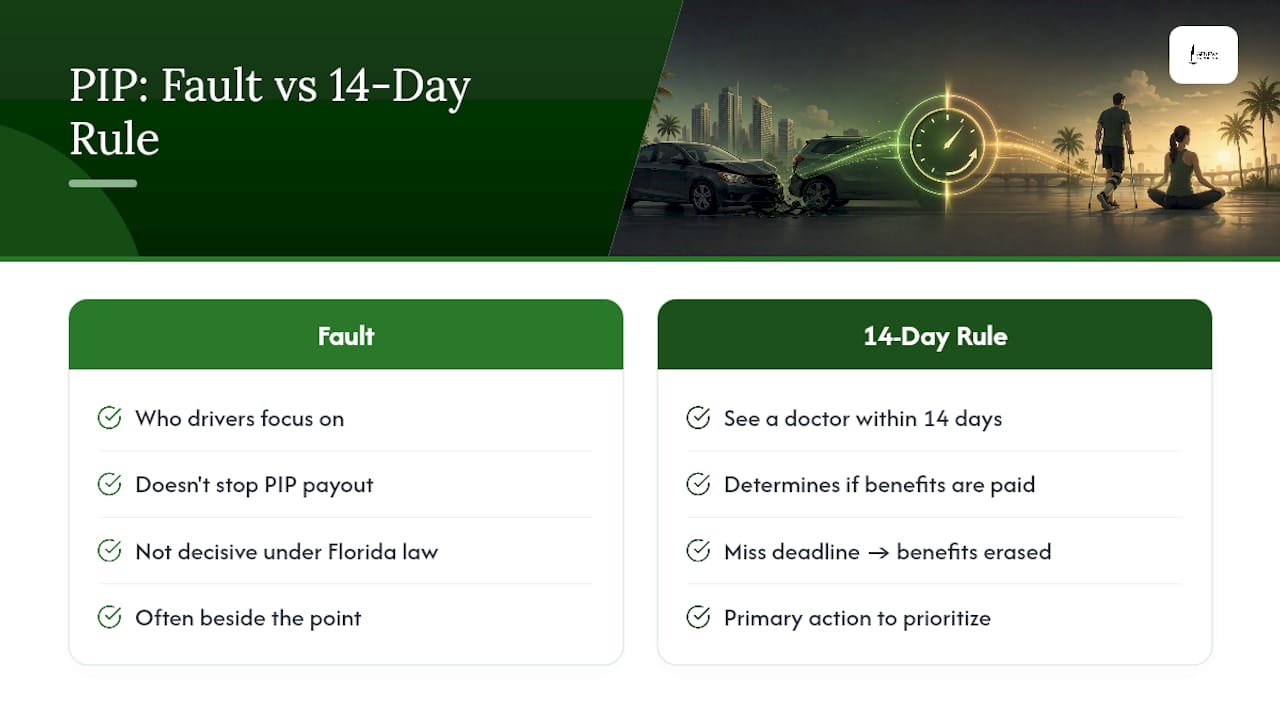
Conventional advice on this topic tends to focus on the wrong drama. Guides love to dramatize lawsuits and injury thresholds, but for most people, the crash never gets there. The claim lives or dies on paperwork discipline. That's less exciting to write about, but it's what actually determines whether your medical bills get paid.
If there's one thing worth prioritizing above everything else in this article, it's this: see a doctor within two weeks, no matter how minor the injury feels. Everything else, from documentation to disputes to the eventual insurance conversation, flows from that first decision.
— David
Get a Free Florida Policy Review Before You Need It
Some insurance agencies offer a fee-free policy review that examines your PIP and PDL limits before you face relying on the state minimum after a real accident.
The review looks at three things specifically. Whether your PIP and PDL sit above Florida's $10,000 minimums, how your deductible would play out in an actual claim, and whether your UM and BIL coverage lines up with the risk you're actually carrying on the road. Bring your current auto policy declarations page, and if you're reviewing coverage after an accident, any recent medical bills you have on hand. Coverage options can be compared across multiple A-rated carriers, helping to identify coverage gaps clearly and understandably. Request your free policy review and find out in writing whether your current coverage would actually hold up.
This article is general information, not a substitute for advice from a qualified financial advisor. Consult a qualified financial professional about your own circumstances before acting on anything here.
Sources
- Florida Department of Highway Safety and Motor Vehicles — Insurance
- Florida Bar — Automobile insurance consumer pamphlet
- Florida Statutes — Section 627.736 (and related sections)
FAQ
Who pays for car repairs in a Florida no-fault accident?
Property damage isn't covered by PIP. The at-fault driver's Property Damage Liability coverage typically pays for repairs, which is why Florida requires $10,000 in PDL alongside PIP.
If I rear-end someone in Florida, does that automatically make me at fault?
Rear-end collisions usually favor a finding of fault against the trailing driver, but Florida's no-fault system means medical bills get paid through PIP regardless of who caused the crash.
Does my insurance go up if I'm not at fault in Florida?
Fault determinations can still affect your rates in Florida, especially if an insurer classifies the accident as preventable, even though PIP itself pays out without assigning blame.
How much does no-fault insurance pay in Florida?
PIP pays 80% of medical expenses, 60% of lost wages, and 100% of replacement services, up to your policy's $10,000 limit minus any deductible.
What happens if I miss the 14-day treatment deadline?
Missing the 14-day window generally disqualifies you from PIP benefits entirely, which is why prompt medical care after any accident matters more than most drivers assume.