
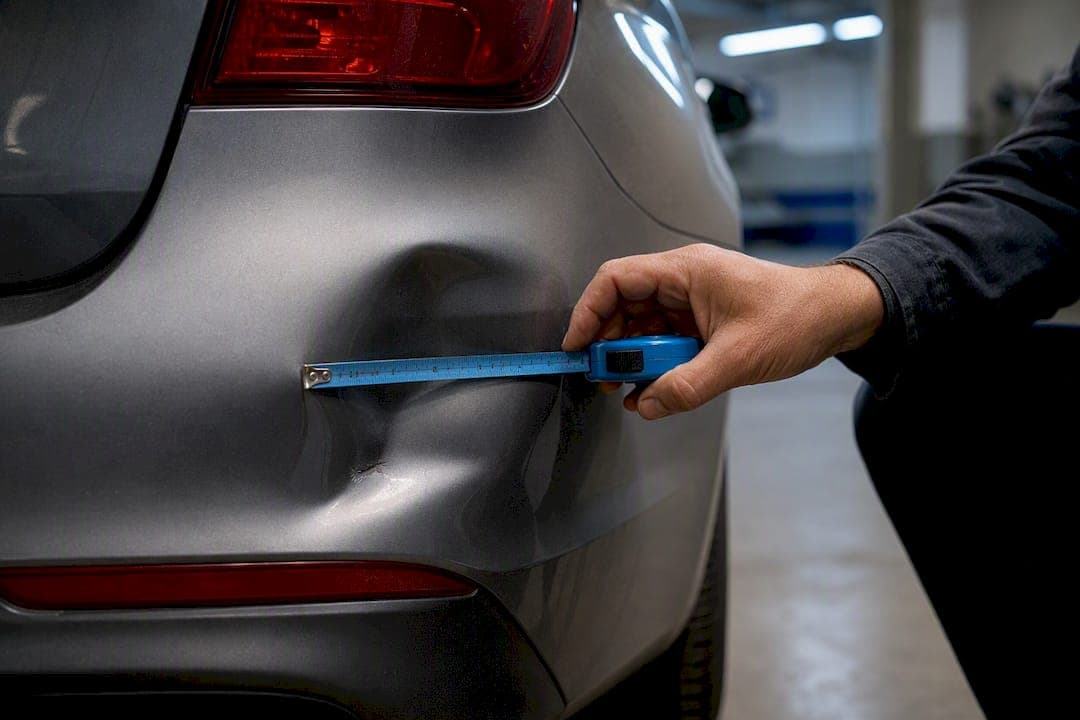
"Full coverage" isn't a real policy type. It's shorthand for a package that pairs liability with collision and comprehensive coverage, usually rounded out with add-ons like uninsured motorist protection. You need it if you're financing or leasing your car, or if your vehicle is worth enough that replacing it out of pocket would hurt. If your car is old and nearly worthless, dropping the physical-damage pieces often makes more financial sense.
TL;DR:
- Full coverage includes liability, collision, and comprehensive, with optional extras like uninsured motorist, roadside assistance, and gap insurance, depending on your needs.
- The average national cost for full coverage insurance is about $2,117 annually, with higher premiums in states with increased accident and repair rates.
- Maintaining full coverage is mandatory for financed or leased cars until the loan is paid, and ignoring this can result in more expensive lender-imposed policies.
- Dropping collision and comprehensive coverages may be cost-effective if their combined premiums approach a significant portion of your car's value, especially for older vehicles.
- Raising your deductible can lower premiums, but you must ensure you can afford the deductible out-of-pocket if you file a claim.
Table of Contents
- What is full coverage car insurance made of?
- What optional coverages get bundled into full coverage?
- How much does full coverage car insurance cost?
- When does a lender require full coverage?
- The 10% rule and how to decide what you actually need
- What full coverage typically won't pay for
- How to lower your premium without cutting real protection
- How a fee-free policy review works
- What the research actually tells you to prioritize
- Get a fee-free policy review from Genevainsgroup
- Sources
What is full coverage car insurance made of?
The term full coverage car insurance describes a bundle, and each piece in that bundle does a different job.
Liability coverage pays for injuries and property damage you cause to someone else. Limits are usually written as three numbers, like 50/100/50: $50,000 per person for bodily injury, $100,000 total per accident, and $50,000 for property damage. This coverage never pays for your own car.
Collision coverage pays to repair or replace your car after a crash, no matter who caused it. Hit a guardrail, back into a pole, get rear-ended by someone with no insurance: collision responds, minus your deductible. Choose a $500 deductible and a $4,000 repair bill turns into a $3,500 check.
Comprehensive coverage handles damage that has nothing to do with a collision: theft, hail, a tree branch through your windshield, a deer in the road. WalletHub's breakdown confirms this three-part structure, liability plus collision plus comprehensive, is the industry's working definition of full coverage.
When a car is totaled, insurers typically pay actual cash value minus your deductible, not what you originally paid for the car. That distinction trips up a lot of people at claim time, and it's worth understanding before you ever file.
- Liability: covers others, never your own vehicle
- Collision: covers crash damage to your car, deductible applies
- Comprehensive: covers non-crash losses like theft and weather, deductible applies
What optional coverages get bundled into full coverage?
Full coverage often includes extras beyond the core three, and which ones you carry can matter as much as the base policy.
- Uninsured/underinsured motorist (UM/UIM): pays your medical bills and sometimes vehicle damage when the at-fault driver has no insurance or not enough. This matters more than most people assume, since a meaningful share of drivers on the road carry no coverage at all.
- PIP or MedPay: covers medical costs for you and your passengers regardless of fault. PIP is broader and required in some states; MedPay is a simpler, cheaper add-on available almost everywhere.
- Rental reimbursement: pays for a rental car while yours is in the shop after a covered claim.
- Roadside assistance: covers towing, jump starts, and lockouts, usually for a few dollars a year.
- Gap insurance: covers the difference between what you owe and what your car is worth after a total loss. Lenders frequently require this on new or heavily financed vehicles.
State rules vary on which of these are mandatory, so check your state's minimum requirements before assuming your policy already includes them.
How much does full coverage car insurance cost?
Your premium depends on a handful of variables working together: age, driving record, credit history, the car itself, your ZIP code, the liability limits you pick, and your deductible.
WalletHub's data puts the national average for full coverage around $2,117 a year, though state-by-state figures swing widely depending on local accident rates and repair costs. Minimum-coverage policies run considerably cheaper, but they leave your own car completely unprotected.
By the numbers: Full coverage averages roughly $2,117 annually nationwide, though your actual quote could land well above or below that depending on where you live and what you drive.
The deductible you choose swings your premium more than almost any other factor you control directly. Raise it from $500 to $1,000 and your premium drops, but you're now on the hook for twice as much cash the day you file a claim. That trade-off is the whole game, and it's worth running the math before you lock in a number that looks good on paper but hurts in practice.
When does a lender require full coverage?
If you're financing or leasing, the lender or leasing company almost always requires collision and comprehensive coverage until the loan is paid off. It's collateral protection for them, not a favor to you.
- Skip a payment on your insurance and let it lapse, and your lender can force-place its own coverage on your account, which is typically far more expensive and protects only their financial interest, not yours.
- Forbes Advisor notes that keeping full coverage while you still owe money on the car is standard financial advice, not just a lender formality.
- If your loan balance is higher than your car's value, which happens often in the first couple of years of a new loan, gap insurance closes that gap after a total loss.
- Pull your loan or lease paperwork and check the exact coverage limits and deductible caps required. Some lenders specify numbers, not just categories.
The 10% rule and how to decide what you actually need
A common suggestion from financial advisors is to consider dropping collision and comprehensive coverages if their combined annual premium approaches a significant portion of your car's actual value, and use the savings instead. Forbes Advisor lays out this heuristic as a practical starting point, not an absolute rule.
Say your car is worth $4,000 and collision plus comprehensive cost you $500 a year. But if that same $4,000 car is your only way to get to work, the math changes even when the percentage doesn't.
Your deductible choice matters just as much as the drop/keep decision. MoneyGeek's guidance is blunt about this: never pick a deductible higher than what you could pay in cash tomorrow if your car got totaled tonight.
- Is your car financed or leased? If yes, keep full coverage, no exceptions.
- What's your car actually worth on today's market, not what you paid for it?
- Does your deductible amount sit in a savings account you could tap immediately?
- Would losing the car without a payout derail your finances?
Pro Tip: Look up your car's private-party value on a site like Kelley Blue Book before running the 10% math. Trade-in values run lower and will skew your decision toward dropping coverage you might actually need.
What full coverage typically won't pay for
Even a solid full coverage policy has limits, and assuming otherwise is how people get blindsided at claim time.
- Intentional damage you cause to your own car
- Damage from racing, off-roading outside your policy's terms, or certain commercial use like rideshare driving without an endorsement
- Normal wear and tear, mechanical breakdowns, or maintenance issues
- Government seizure of the vehicle
WalletHub outlines these standard exclusions, and total-loss payouts run on actual cash value, not replacement cost, unless you've added a new-car replacement or OEM parts endorsement. Flood-prone regions and specialty equipment (custom parts, commercial tools stored in a vehicle) sometimes need separate riders or policies entirely.
How to lower your premium without cutting real protection
A few tactics consistently move the needle on price: raising your deductible, bundling auto with home or renters coverage, keeping a clean driving record, and installing anti-theft or tracking devices. Credit history factors into pricing in most states too, so cleaning up your credit report before shopping can shave real dollars off your quote.
Ask your agent these questions directly: How do you define a total loss? Is glass repair covered without a deductible? What are my UM/UIM limits compared to my liability limits? What's the price difference between a $500 and $1,000 deductible?
For a policy review, bring your current declarations page, your loan or lease agreement, and a rough estimate of your car's current value.
Pro Tip: Ask specifically whether your quote includes new-car replacement coverage or just actual cash value. The two can differ by thousands of dollars on a total loss claim, and most people never find out until it's too late.
How a fee-free policy review works
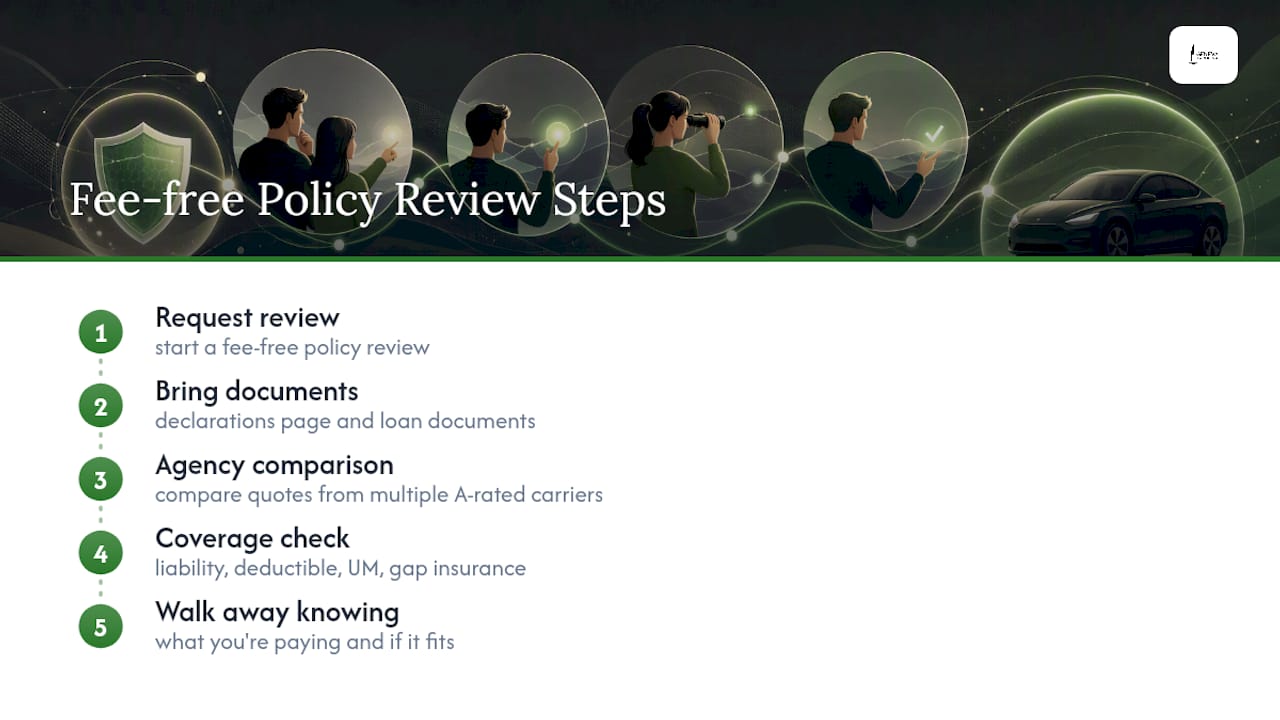
A policy review starts with your current declarations page and, if applicable, your loan or lease documents. From there, an independent agent compares your existing limits, deductibles, and add-ons against what's actually available across multiple carriers, flagging gaps like missing gap insurance or UM limits that don't match your liability coverage.
An independent insurance agency runs this process by comparing options across multiple A-rated carriers, explaining recommendations in plain language instead of insurance jargon, and staying involved if needed during claims. Such agencies may be licensed in multiple states and typically do not charge for the review itself.
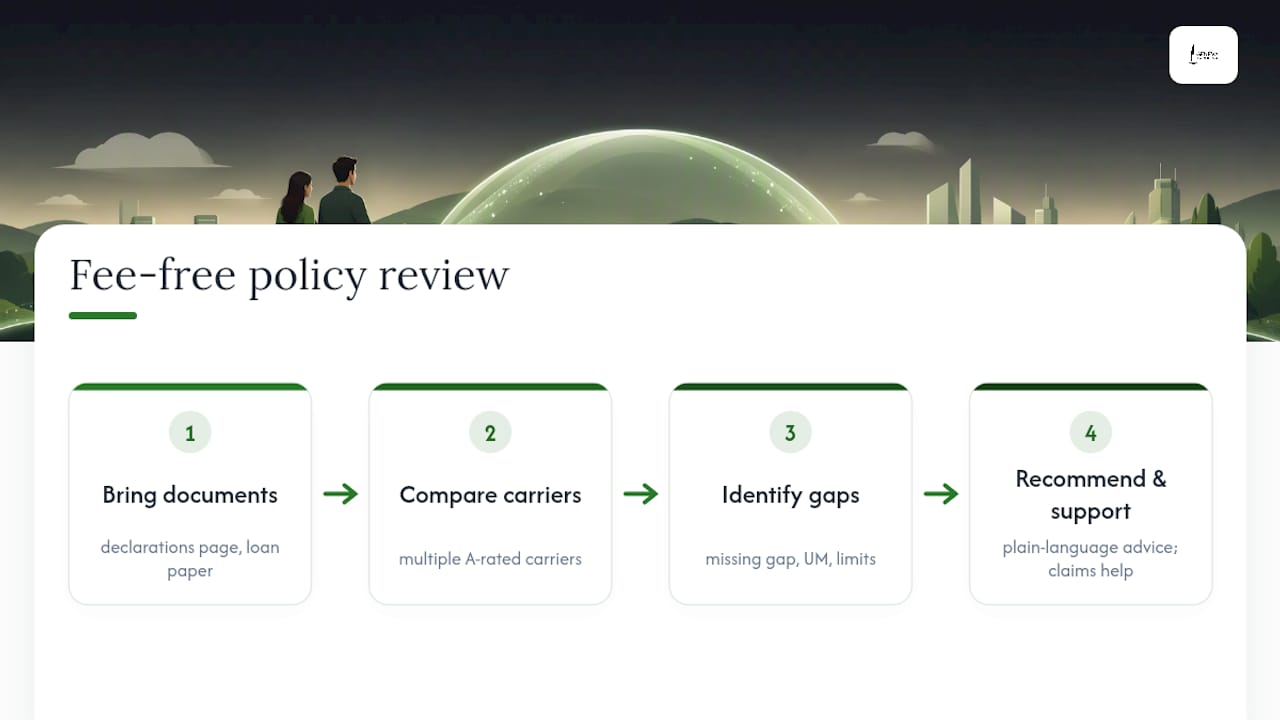
Bring your declarations page, loan paperwork, and questions about your deductible. Expect to walk away with a clear picture of what you're actually covered for, where the gaps are, and what changing your deductible or limits would cost.
What the research actually tells you to prioritize
Most articles on full coverage spend their word count defining terms and never get to the part that actually changes your bank account: the deductible decision. Raising your deductible to save $200 a year sounds smart until you're staring at a $1,000 repair bill you can't cover. That's not a hypothetical. It's the single most common way people convert a manageable insurance decision into a financial emergency.
The conventional advice, "get full coverage if your car is newer," undersells the real question, which is whether you have the cash to survive the gap between what you'll pay in premiums and what you'd pay out of pocket without them.
If you take one thing from this, let it be this order of operations: check your loan terms first, confirm your liquid savings second, and only then run the 10% math. Skipping straight to the percentage is how people end up underinsured on a car they can't afford to replace.
— David
Get a fee-free policy review from Genevainsgroup
Running the 10% rule and checking your deductible against your savings gets you most of the way there, but confirming it against real quotes is what actually saves money. An independent insurance agency can compare your current policy against options from multiple A-rated carriers at no cost, walking you through the differences in plain language instead of policy jargon.
The review covers exactly what this article walked through: whether your liability limits make sense, whether you're carrying the right deductible for your savings, and whether gaps like missing UM coverage or gap insurance are quietly leaving you exposed. If you're financing a car, leasing one, or just haven't looked at your policy in a couple of years, that's the moment a review pays for itself. Licensed in multiple states, such agencies often stay involved to assist if you need to file a claim, rather than disappearing after the sale.
Start by requesting your fee-free policy review and bring your declarations page and loan documents. You'll walk away knowing exactly what you're paying for and whether it still fits your car and your budget.
This article is general information, not a substitute for advice from a qualified financial advisor. Consult a qualified financial professional about your own circumstances before acting on anything here.