
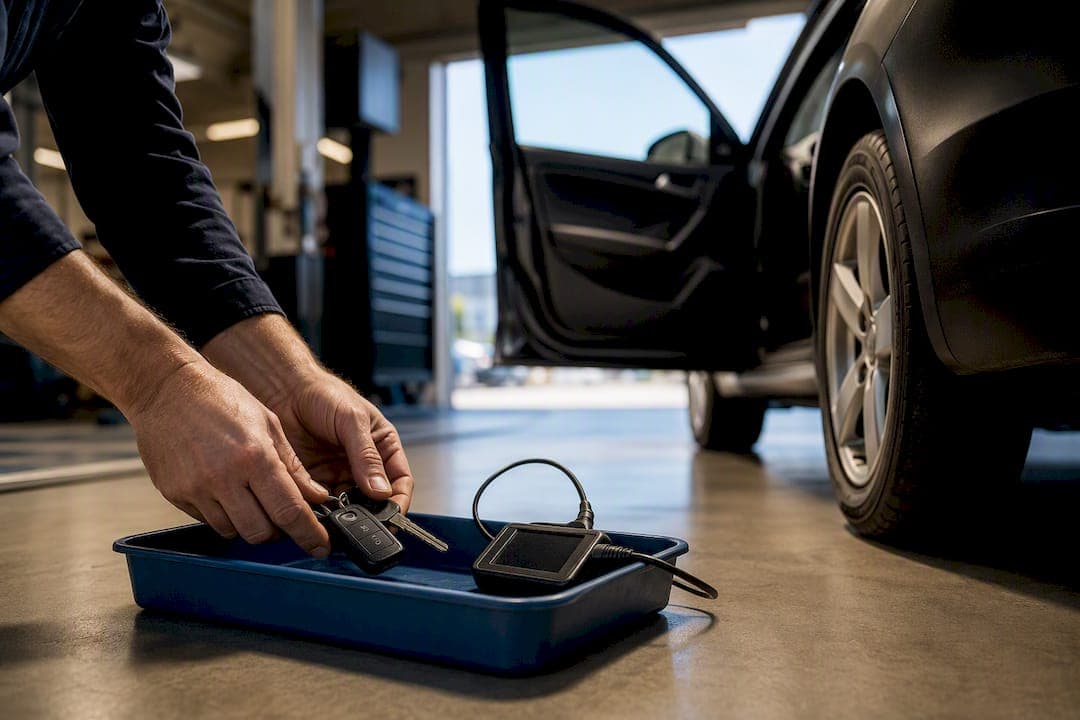
Garage keepers insurance covers customer vehicles left in your care, custody, or control if they're damaged by fire, theft, vandalism, or collision on your lot. If you're a repair shop, tow yard, valet service, or storage operator who holds keys to vehicles you don't own, you almost certainly need it, since your general liability policy won't pay to fix a customer's car that gets keyed overnight or totaled when a teenage lot attendant clips a pole.
TL;DR:
- Garage keepers insurance covers damages to customer vehicles caused by fire, theft, vandalism, or collision while in your care, custody, or control.
- A direct primary policy offers coverage regardless of fault, unlike legal liability coverage, which only pays when you are proven negligent.
- Businesses holding keys to customer vehicles such as repair shops, tow yards, or valet services should consider this coverage to avoid paying out-of-pocket for accidents or theft.
- Costs depend on limits, deductibles, vehicle value, location, and security measures, with higher limits necessary for luxury vehicles and better security reducing premiums.
- Filing a claim requires immediate steps like photographing damage, obtaining owner consent, and collecting relevant documents to ensure smooth processing.
Table of Contents
- What Does Garage Keepers Insurance Cover?
- Legal Liability vs. Direct Primary: Which Form Do You Need?
- Who Actually Needs This Coverage?
- How Much Does Garage Keepers Insurance Cost, and What Drives the Price?
- What Does Garage Keepers Insurance Not Cover?
- How Do You File a Claim, and What Documentation Do You Need?
- Garage Keepers vs. Garage Liability vs. Commercial Auto: What's the Difference?
- How Do You Choose the Right Policy and Agent?
- Three Shop Habits That Actually Lower Your Risk
- Get a Fee-Free Policy Review from Genevainsgroup
- Sources
What Does Garage Keepers Insurance Cover?
Garage keepers insurance responds when a customer's vehicle is damaged while it's physically in your possession, whether it's parked overnight, up on a lift, or being moved between bays. The coverage hinges on that "care, custody, and control" language, meaning the clock starts when you take the keys and stops when the owner drives away.
Standard policies typically cover:
- Fire damage, including electrical fires that start in a vehicle you're servicing
- Theft of the vehicle or its contents while on your property
- Vandalism, from smashed windows to keyed paint jobs
- Collision, including damage caused by your own staff moving the car
A common real-world scenario looks like this: a customer drops off a sedan for brake work, and it sits overnight in an unfenced lot. Someone breaks a window and steals a stereo. Without garage keepers coverage, that repair bill lands entirely on you. Car storage insurance exists specifically to close that gap, and it's built around exactly this kind of on-lot exposure.
Pro Tip: Ask your agent whether "collision" under your policy includes damage caused during test drives. Some forms exclude it, and that's a common blind spot for repair shops.
Legal Liability vs. Direct Primary: Which Form Do You Need?
Insurers sell garage keepers coverage in a few different structures, and the difference matters more than most shop owners realize.
- Legal liability form: Pays only when you're legally at fault for the damage. If a fire starts for unexplained reasons and no negligence is proven, this form may not pay.
- Direct primary (or "comprehensive") form: Pays regardless of fault, covering the customer's vehicle almost like the customer's own comprehensive policy would.
- Bailee's customers coverage: A broader variant sometimes used by businesses that hold goods beyond just vehicles, useful for operations that combine storage with light repair work.
Shops that want the strongest customer protection, and fewer disputes over fault, generally lean toward direct primary coverage. Some states label similar protection "storage location insurance," so when you're comparing quotes, read the endorsement schedule rather than the product name alone.
Who Actually Needs This Coverage?
If your business ever holds keys to a vehicle you don't own, garage keepers insurance belongs on your radar. That covers more operations than most owners assume:
- Auto repair shops and collision centers
- Tow yards and impound lots
- Long-term and seasonal vehicle storage facilities
- Valet services at hotels, restaurants, and event venues
- Full-service car washes where employees drive customer vehicles through the line
Edge cases trip people up. Dealerships with consignment vehicles on their lot, and businesses leasing space in a shared storage yard, often get surprised when a landlord's contract requires proof of garage keepers coverage before they'll sign a lease. The simple rule: if you hold or move a customer's vehicle at any point, treat this coverage as a serious question, not an afterthought.
How Much Does Garage Keepers Insurance Cost, and What Drives the Price?
Coverage limits set the ceiling on what your policy pays per vehicle or per incident, and most shops choose limits based on the highest-value vehicle they realistically expect to service. A shop that mostly works on economy cars might carry a modest coverage limit, while a specialty shop handling luxury or classic vehicles needs significantly higher limits, since one uninsured claim on a high-end car can wipe out a thin annual margin.
Deductibles work the way they do on any policy: choosing a higher deductible lowers your premium, but it also means you're writing a bigger check out of pocket the day something goes wrong. Choosing a higher deductible can lower your premium somewhat, but the savings may be modest, so run the math against your actual claims history before assuming the cheaper premium wins.
Several factors shape what an underwriter quotes:
- Type of operation (a body shop faces different risk than a valet stand)
- Location and local crime rates
- Average value of vehicles typically on the lot
- Prior claims history
- Security measures: fencing, cameras, lighting, alarm systems
- Endorsements added, like towing operations or hail/weather coverage
Vehicle-related risk isn't hypothetical. Roadway incidents remain a persistent source of workplace injury across industries that move vehicles as part of daily operations, which is exactly why insurers weight security and handling procedures so heavily in pricing.
What Does Garage Keepers Insurance Not Cover?
Every policy has gaps, and the ones that catch shop owners off guard tend to be predictable once you know where to look.
- Mechanical breakdown or pre-existing mechanical issues aren't covered. If a transmission fails on its own, that's not a garage keepers claim.
- Normal wear and tear is excluded across nearly every policy form.
- Intentional acts by your own staff typically void coverage for that specific incident.
- High-value or classic vehicles often carry sublimits well below the car's actual worth unless you schedule them separately.
- Flood and earthquake damage usually require separate endorsements, since standard forms exclude these perils by default.
If your shop tows vehicles, ask specifically about a towing endorsement. Standard garage keepers forms often stop covering the vehicle the moment it's hooked to a tow truck, which is a gap that only shows up after something goes wrong.
How Do You File a Claim, and What Documentation Do You Need?
Handling a claim well starts before anything ever happens, but once damage occurs, speed and documentation determine how smoothly it gets paid.
- Secure the vehicle immediately and stop any further damage, like moving a car out of standing water or away from a fire hazard.
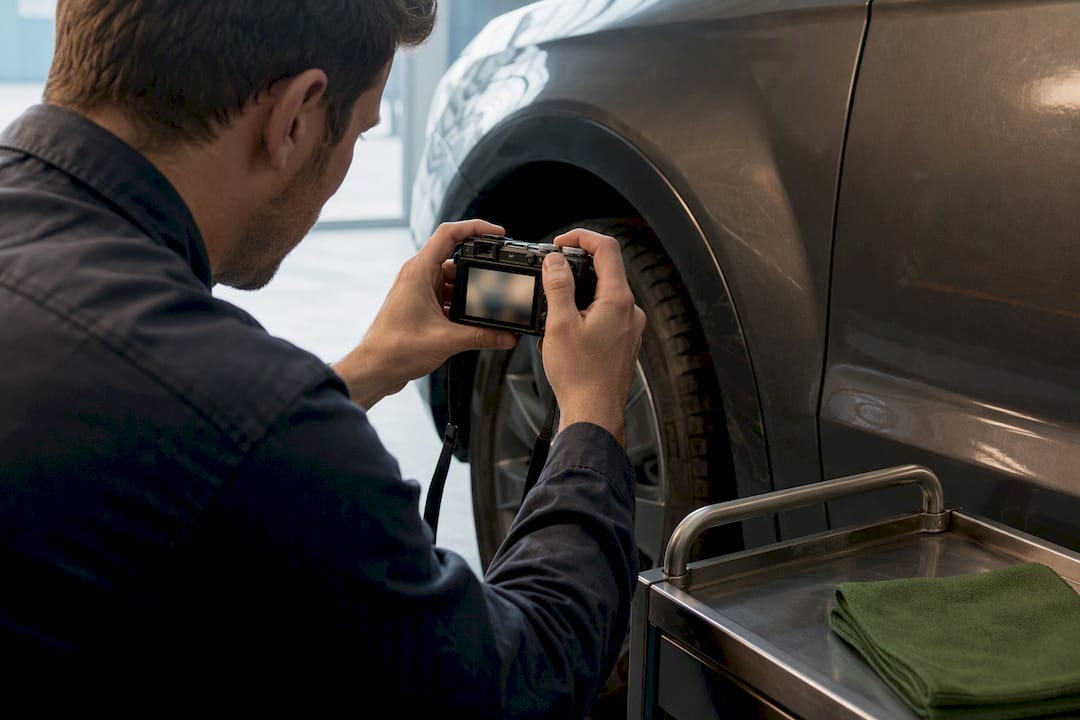
- Photograph the damage from multiple angles before touching or moving anything else.
- Notify the vehicle owner and your insurer the same day, not after the weekend.
- Pull the signed work order and any pre-loss condition notes or intake photos you took when the car arrived.
- File a police report for theft or vandalism, since most insurers require one to process the claim.
Insurers may pursue subrogation against a third party if someone else caused the damage, which can sometimes reduce your deductible exposure later. Expect claims processing to take longer without a signed work order and dated intake photos on file.
Pro Tip: Photograph every vehicle at intake, not just the ones that look risky. The claim that gets denied is almost always the one where nobody can prove what the car looked like before it arrived.
Garage Keepers vs. Garage Liability vs. Commercial Auto: What's the Difference?
These three policies get confused constantly, and each one answers a different question.
- Garage liability covers your business's legal responsibility for third-party bodily injury or property damage, like a customer slipping in your lobby.
- Garage keepers insurance covers damage to the customer's vehicle itself while it's in your care.
- Commercial auto covers vehicles your business owns, like a tow truck or a shuttle van, not vehicles owned by customers.
A slip-and-fall in your waiting room goes to garage liability. A customer's car damaged on your lot goes to garage keepers. An employee crashing your company tow truck goes to commercial auto. Most shops end up buying all three, layered together, because each one leaves a hole the other two don't fill.
How Do You Choose the Right Policy and Agent?
Comparing proposals gets easier once you know what actually separates a strong policy from a weak one; for helpful tips on selecting and comparing policies, see MKB verzuim ontzorgverzekering: kiezen en vergelijken.
- Confirm limits match your highest-value vehicle on the lot, not your average one.
- Check the deductible against your real claims history, not a guess.
- Ask which endorsements are included versus sold separately, especially towing and weather perils.
- Verify the carrier's financial strength rating before you sign anything.
- Ask directly how claims get handled and how long payouts typically take.
An independent insurance agency that works across multiple A-rated carriers can show you several structures side by side, rather than pitching whatever one insurer happens to sell. That comparison is where coverage gaps usually surface before they become expensive.
Three Shop Habits That Actually Lower Your Risk
The shops that get the smoothest claims experience share three habits: a secure, lit, camera-covered parking layout; photos taken at intake and at pickup on every vehicle, not just the ones that look fragile; and a signed key inventory so you know exactly who had access to which vehicle and when.
None of these are expensive to implement, but underwriters notice them, and so do claims adjusters when something goes wrong. Vehicle-heavy operations carry real injury and incident exposure, as industry data consistently shows, which is exactly why tightening these three habits pays off at renewal time, not just after a claim. Pair them with a policy review, and you'll usually find at least one gap worth fixing.
— David
Get a Fee-Free Policy Review from Genevainsgroup
If you're holding customer vehicles right now without knowing whether your current policy actually covers a fire, theft, or on-lot collision, that type of coverage gap is important to identify. Unlike shopping a single carrier's quote, an independent agency can compare your coverage across multiple A-rated carriers at no cost to you, and flag where your limits, deductibles, or endorsements may fall short before a claim arises.

The review covers important specifics: whether your limits match your highest-value vehicle, whether towing or weather perils are included, and whether a claim might encounter delays under your current policy wording. Some agencies also stay involved after a policy is bound, advocating if claims get disputed, rather than leaving you to negotiate with adjusters alone. If you run a repair shop, tow yard, or storage lot, request a fee-free policy review and find out exactly where you stand before something goes wrong.
Sources
For a plain-language overview of covered perils, see U.S. News on car storage insurance. For workplace vehicle-risk context, see the National Safety Council on roadway incidents.