

Open Enrollment for 2026 coverage ran from November 1, 2025 through January 15, 2026, and it's already closed. If you enrolled on December 15 your plan started January 1; if you signed up between December 16 and January 15, coverage began February 1. With enhanced subsidies expiring and more high-deductible plans on the market, this is the year to double check what you're actually paying for instead of trusting an automatic renewal.
TL;DR:
- The 2026 open enrollment period ended on January 15, but missing it requires a qualifying life event to enroll, except for Medicaid and CHIP which accept applications year-round.
- The average unsubsidized premium increased to around $8,500 annually, with roughly 43% of enrollees choosing high-deductible, HSA-eligible plans.
- Many households face higher out-of-pocket costs due to the expiration of enhanced subsidies and a shift toward more expensive plans with higher deductibles.
- Comparing plans based solely on premiums is misleading; the total expected costs including deductibles, copays, and drug coverage should guide your choice.
- Conduct a proactive review with a licensed agent or independent comparison to avoid costly surprises and ensure your coverage fits your current needs.
Table of Contents
- When Was Health Insurance Open Enrollment 2026?
- Where and How Do You Enroll in a 2026 Health Plan?
- What Changed for 2026 and Why It Hits Your Wallet
- How Do You Compare 2026 Health Plans the Right Way?
- What If You Missed Open Enrollment?
- Why a Proactive Review Beats Automatic Renewal This Year
- Get a Free, Independent Look at Your 2026 Coverage
- Where to Confirm Deadlines and Enrollment Details
- Sources
- FAQ
When Was Health Insurance Open Enrollment 2026?
The federal marketplace, HealthCare.gov, kept to its usual calendar: Open Enrollment ran from November 1, 2025 through January 15, 2026. The exact coverage start date depended entirely on when you hit submit.
- Enroll by December 15, 2025: coverage starts January 1, 2026
- Enroll between December 16, 2025 and January 15, 2026: coverage starts February 1, 2026
- Miss January 15 entirely: you generally need a qualifying life event or a Special Enrollment Period to get in
State-based exchanges don't always mirror the federal calendar. States running their own marketplaces have occasionally pushed deadlines a few weeks later, so if you live somewhere other than the roughly 30 states using HealthCare.gov directly, check your own state's exchange page for the real cutoff rather than assuming the federal dates apply.
This window is specific to Affordable Care Act marketplace plans. Employer-sponsored coverage runs its own enrollment period, usually set by your HR department in the fall. Medicare's Annual Enrollment Period runs October 15 through December 7 every year, a completely separate system from the ACA marketplace. Medicaid and CHIP, meanwhile, allow enrollment year-round for those who qualify, with no deadline at all.
Where and How Do You Enroll in a 2026 Health Plan?
Getting covered takes a handful of concrete steps, whether you're a first-time shopper or rechecking an existing plan.
- Find your marketplace. Most states use HealthCare.gov directly; a smaller group runs independent state exchanges with their own login systems and sometimes different rules.
- Gather your paperwork. You'll need income estimates for your household, Social Security numbers (or document numbers for legal residents without one), and details on your current plan if you're switching.
- Choose your channel. You can apply online, by phone through the marketplace call center, in person with a certified navigator, or through a licensed independent agent or broker who can compare multiple carriers on your behalf.
- Use the price-estimate tools. HealthCare.gov lets you preview 2026 plan costs before you commit to a full application, which saves time if you're just scouting options.
Navigators and agents are both free to consumers, but they work differently. Navigators are neutral and can't recommend one carrier over another; a broker or independent agent can shop your situation across carriers and flag coverage gaps you might not catch reading a summary page alone.
What Changed for 2026 and Why It Hits Your Wallet
The biggest shift this year wasn't a new deadline. It was money. The enhanced premium tax credits that had been propping up marketplace affordability since 2021 expired, and the effect on unsubsidized households was immediate.
By the numbers: Total plan selections for 2026 fell 5% to 23.1 million, and market analysis pegs the national average unsubsidized premium at roughly $8,500 a year, with average deductibles near $3,786 for shoppers above 400% of the federal poverty line.
Fewer people enrolling and higher sticker prices for those who did aren't unrelated facts. When credits shrink, some households simply walk away from marketplace coverage rather than pay full freight.
The other notable trend: a shift toward high-deductible plans. On HealthCare.gov specifically, 43% of consumers chose an HSA-eligible plan for 2026, up sharply as more bronze and catastrophic plans qualified for Health Savings Account pairing. That's not automatically a bad move. But it only works if you can actually fund the HSA and absorb a higher deductible before coverage kicks in. If your household runs tight on cash flow, a plan that looks cheap on the monthly premium can turn expensive fast the first time someone needs an MRI.
- Premiums up, subsidies down for many unsubsidized households
- More shoppers landing in high-deductible, HSA-eligible plans
- Average deductibles pushing toward $3,786 for those paying full price
How Do You Compare 2026 Health Plans the Right Way?
Comparing plans on premium alone is how people end up with a "cheap" policy that costs them thousands the first time they actually use it. A real comparison means looking at total cost, not just the monthly bill.
- Add your premium (after any tax credit) to your realistic expected spending: deductible, copays, coinsurance, and where the out-of-pocket maximum caps things.
- Pull the Summary of Benefits and Coverage (SBC) for each plan you're considering. It's a standardized, plain-language document every carrier has to provide, and it makes side-by-side comparison far easier than reading a full policy.
- Check the drug formulary against your actual prescriptions. A plan with a slightly higher premium but zero-dollar copays on your regular medications often wins over a "cheaper" plan that puts those same drugs on a high-cost tier.
- Confirm your doctors and hospitals are actually in-network. Networks shift every year, even within the same carrier.
- Watch for family deductible structures. Some plans require the whole family to hit one combined deductible before anyone gets full coverage; others use per-person deductibles that kick in individually, and that difference can create surprise out-of-pocket exposure if you assumed the smaller number applied to each family member.
- Ask yourself honestly whether you'd fund an HSA if you picked a high-deductible plan, or whether that money would just... not happen.
Pro Tip: Call your pharmacy and ask for a printed list of every medication you take, with dosages. Handing that list to an agent or plugging it into a formulary lookup tool takes minutes and prevents nasty surprises in March when a refill suddenly costs $400.
If you're working with an agent or requesting a free policy review, come with specific questions: What's my real out-of-pocket max if someone in my family gets sick? Is my specialist in-network on this specific plan, not just this carrier? Does this plan's formulary cover my medications at a reasonable tier?
What If You Missed Open Enrollment?
Missing the window doesn't mean you're stuck uninsured. A Special Enrollment Period opens after qualifying events like losing job-based coverage, marriage, birth or adoption, or a permanent move. You typically have 60 days from the event to enroll and will need documentation proving it happened.
- Check if you qualify for an SEP and gather proof of your life event.
- Consider COBRA if you just lost job coverage, understanding it usually costs more since you pay the full premium your employer used to subsidize.
- Treat short-term or limited-benefit plans as a last resort. They often exclude preexisting conditions and skip essential health benefits entirely.
- Contact a navigator or agent immediately. Faster action means fewer coverage gaps.
Why a Proactive Review Beats Automatic Renewal This Year
Automatic re-enrollment feels easy, but easy isn't the same as smart. Subsidies shifted, deductibles climbed, and plan networks changed underneath millions of households this year. I'd rather see you spend twenty minutes checking than assume last year's plan still fits. Pull your documents together, then talk to someone who compares carriers for a living.
— David
Get a Free, Independent Look at Your 2026 Coverage
Consider using an independent agency during renewal season to get a comparison across multiple A-rated carriers, explained in plain language instead of policy jargon. A fee-free policy review can examine your existing coverage and identify gaps you might not notice from a benefits summary alone.
Before you reach out, gather three things: your current plan details, a list of your prescriptions, and the names of the doctors or specialists you don't want to lose. That's enough for a real comparison. Start with a free policy review if you want someone to check your existing coverage against what else is available, or head straight to get a quote if you're ready to see pricing on new options. Readers weighing broader coverage needs, from a homeowners policy to life and health insurance, can fold that conversation into the same review.
Where to Confirm Deadlines and Enrollment Details
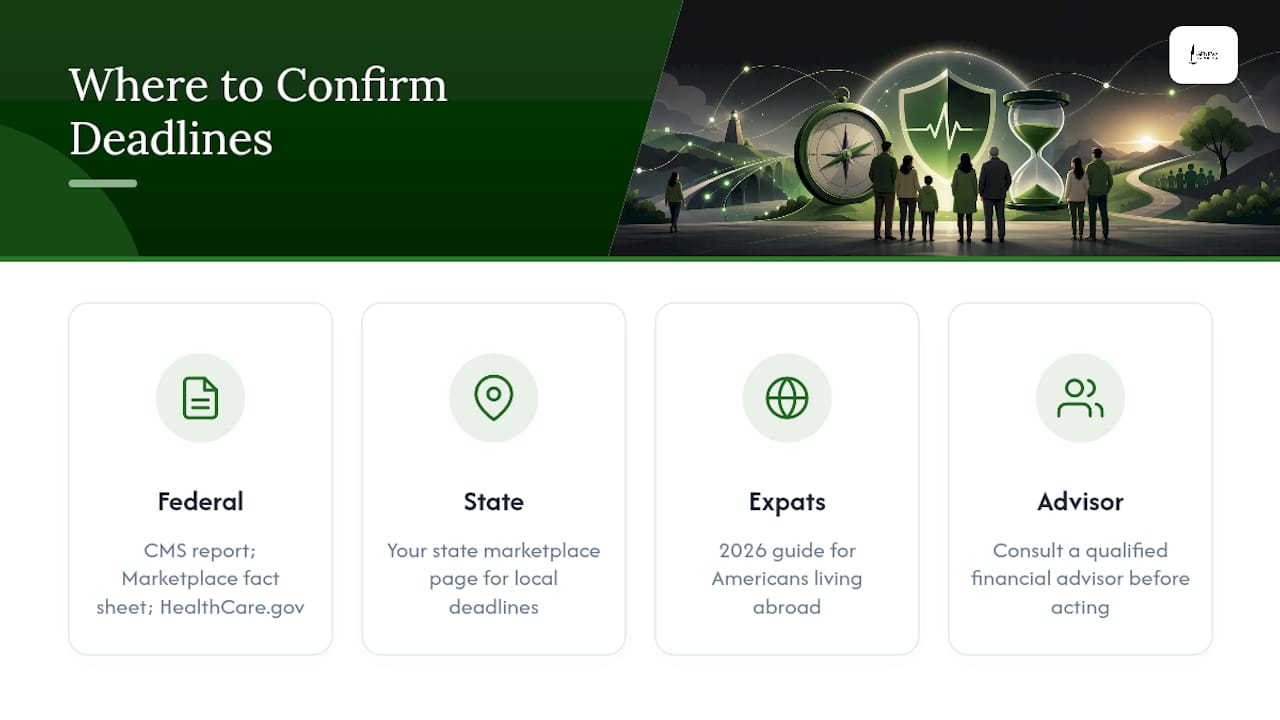
For the official word, rely on the CMS 2026 Open Enrollment report, the Marketplace fact sheet, and HealthCare.gov's SEP guidance. Check your own state marketplace page for local deadlines. Americans weighing coverage while living abroad can also review this 2026 guide for expats.
This article is general information, not a substitute for advice from a qualified financial advisor. Consult a qualified financial professional about your own circumstances before acting on anything here.
Sources
- Marketplace 2026 Open Enrollment fact sheet (CMS)
- ACA marketplace enrollment and affordability take historic hit as enhanced tax credits expire (AJMC)
FAQ
Is It Too Late to Buy Health Insurance for 2026?
The standard Open Enrollment window closed January 15, 2026, so you generally need a qualifying life event to trigger a Special Enrollment Period now. Outside of that, Medicaid and CHIP still accept applications year-round if you meet income eligibility.
What Is the Income Limit for Marketplace Insurance in 2026?
There's no strict upper income cutoff for marketplace enrollment itself. Subsidy eligibility is a different question, and with enhanced premium tax credits expired, households above certain income levels are paying closer to the full unsubsidized premium, averaging around $8,500 annually.
What Happens if I Don't Enroll During Open Enrollment?
If you already had a marketplace plan, most insurers automatically re-enroll you, but that plan may no longer match your income, subsidy amount, or medical needs. If you had no coverage and miss the window without a qualifying event, you'll likely need to wait for the next Open Enrollment period or explore COBRA or short-term coverage in the meantime.
Do I Get Medicare at Age 62?
No. Medicare eligibility generally starts at retirement age. If you're still working without employer coverage, marketplace insurance or a spouse's plan are your realistic options until Medicare enrollment opens.
Can Genevainsgroup Help Me Review My 2026 Health Plan?
Yes. Genevainsgroup offers a free policy review that compares your current coverage against multiple A-rated carriers, with no fee to you. It's a practical way to catch gaps before your next renewal locks you in again.