
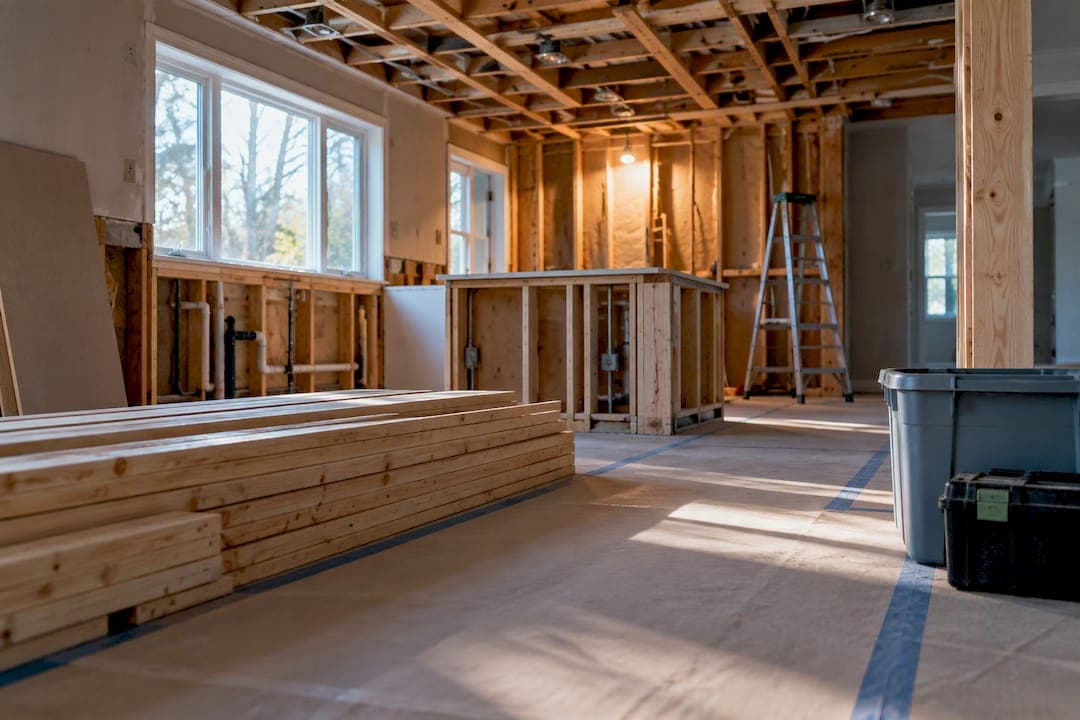
Call your insurance agent before a single hammer swings. Most standard homeowners policies were priced and written for a house sitting still, not one with open walls, staged lumber, and subcontractors coming through daily. Home renovation insurance usually means either a temporary endorsement to your existing policy or a standalone builders risk policy, and figuring out which one you need starts with one phone call and one verified stack of contractor paperwork.
TL;DR:
- If your renovation project exceeds around 10% of your home's value or involves significant structural changes, a standalone builders risk policy is likely necessary.
- Contractors must carry valid general liability and workers' compensation insurance, confirmed through direct contact with their insurance carrier.
- Verify and document your contractor's insurance coverage before work begins by requesting a certificate of insurance and confirming policy details via phone.
- Upgrading your coverage during renovation is essential, especially for projects that increase your home's rebuild cost or leave structures exposed to weather and theft.
- Sending final invoices and completed documentation to your agent after renovation ensures proper insurance adjustments and prevents underinsurance.
Table of Contents
- Home Renovation Insurance vs. a Standard Homeowners Policy
- Coverage Types and Endorsements Worth Evaluating
- When You Actually Need a Builders Risk Policy
- Verifying Your Contractor's Insurance Before Work Starts
- Your Pre-Start Checklist Before the Contractors Arrive
- How a Remodel Changes Your Premium and Replacement Cost
- Updating Your Policy Once the Work Is Done
- How an Independent Agency Fits Into the Process
- What the Research Actually Tells Homeowners to Prioritize
- Get Your Coverage Checked Before Work Begins
- Sources
- FAQ
Home Renovation Insurance vs. a Standard Homeowners Policy
Home renovation insurance is not one specific product. It is a set of options, ranging from a simple endorsement to a dedicated builders risk (also called course-of-construction) policy, that fills the gaps a normal homeowners policy leaves open during construction.
A standard policy covers named perils like fire, wind, and theft, but many carriers write exclusions for damage tied to construction activity, unattended structures, or materials sitting on a job site. That gap matters because renovations change your home's actual replacement cost, which is exactly why III advises contacting your insurer before remodeling. Lenders add another wrinkle: if you're financing the project or pulling a permit, the lender or municipality often requires proof of a specific policy type before releasing funds or signing off on inspections, as explained in detail in What's the difference between owner’s and lender’s title insurance?. Skip that step and you could find yourself covering a loss out of pocket, mid project, with no recourse.
Coverage Types and Endorsements Worth Evaluating
Different projects call for different coverage stacks. Here's what typically shows up on the table when you're renovating:
- Builders risk / course-of-construction coverage protects the structure, installed materials, and equipment on site, including theft of materials during an active build, though it usually excludes worker tools and pre-existing damage.
- Dwelling under renovation endorsement extends your existing homeowners policy to cover construction-related risk without buying a separate policy, often the cheaper route for smaller jobs.
- Extended replacement cost and inflation guard endorsements pay 10% to 50% above your stated policy limit, or automatically adjust that limit, so a spike in lumber or labor costs doesn't leave you underinsured.
- Ordinance and law coverage pays for the added cost of rebuilding to current code, which matters more once you've opened up an older structure.
- Water backup and mold add-ons address specific perils that standard policies frequently carve out.
- Vacant or unoccupied coverage matters if you're mid-gut-renovation and the house sits empty for weeks at a time, since occupancy status changes how a claim gets treated.
None of these are universal add-ons. The right combination depends on project size, how long the house sits vacant, and whether you're insuring a newer build or one of the older homes where wiring and plumbing already carry their own risk profile.
When You Actually Need a Builders Risk Policy
Not every project needs a standalone builders risk policy. A repainted bathroom or a swapped-out faucet doesn't. A full kitchen gut, a home addition, or a new in-ground pool usually does.
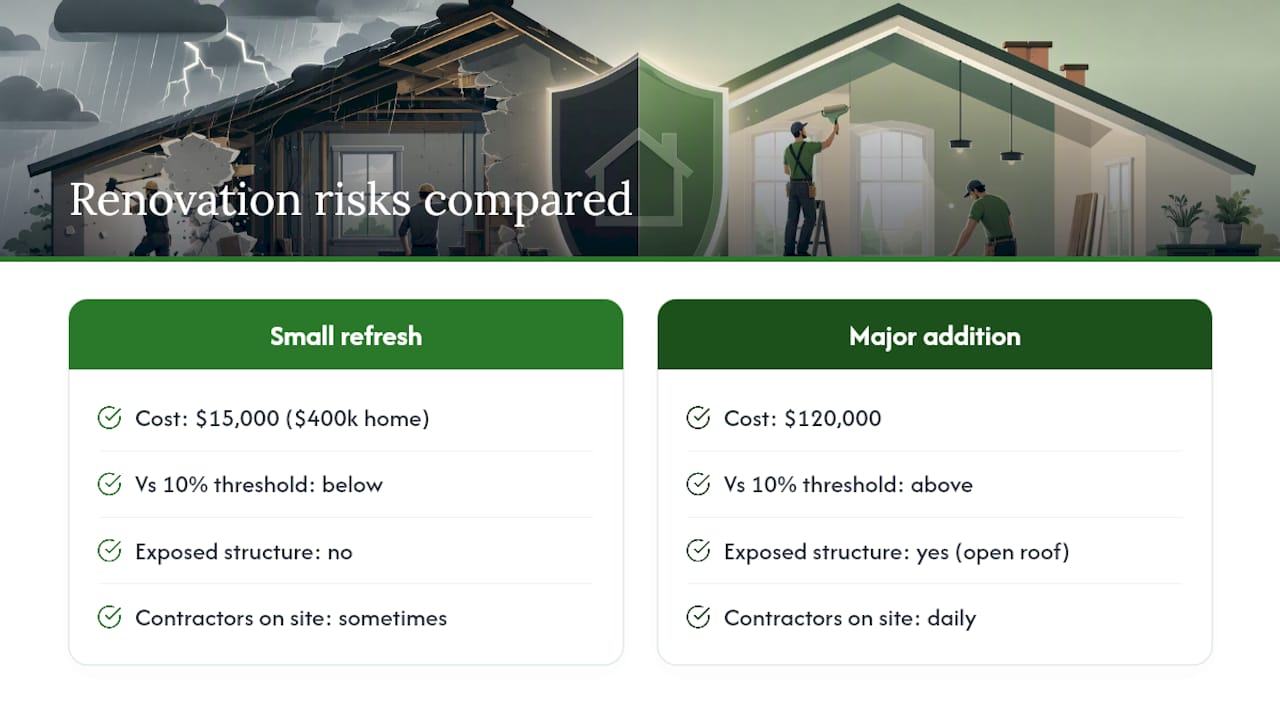
Industry advisors point to a rough threshold: once a project exceeds around 10% of your home's value or materially raises the rebuild cost, an endorsement alone often isn't enough. A $15,000 kitchen refresh on a $400,000 home probably fits inside a dwelling-under-renovation endorsement. A $120,000 second-story addition, or a project that leaves your roof open for weeks, is a different animal entirely, especially with contractors on site daily and structural materials exposed to weather and theft.
DIY projects raise the stakes further, since you're personally on the hook for injuries and defects that a licensed contractor's insurance would otherwise absorb. Vacant periods during a renovation, common when a family moves out during a major remodel, also push insurers toward requiring vacant-home or builders risk coverage rather than a standard policy.
Verifying Your Contractor's Insurance Before Work Starts
A contractor's insurance is your first line of defense against liability claims, and it takes about ten minutes to verify properly.
- Request a certificate of insurance (COI) showing general liability and workers' compensation, not just one or the other.
- Call the carrier listed on the COI directly to confirm the policy is active and the limits match what's on paper. Fraudulent or expired COIs are common enough that NAIC specifically recommends this step.
- Confirm subcontractors carry their own coverage, since a general contractor's policy doesn't always extend to every sub on the job.
- Ask to be named as additional insured on the contractor's policy, and request a waiver of subrogation so their insurer can't turn around and pursue your policy after paying a claim.
Watch for one specific red flag: a contractor who offers to "handle the insurance claim" for you or negotiate directly with your carrier. That's a role reserved for licensed public adjusters, and NAIC guidance warns against letting contractors act in that capacity.
Pro Tip: Save the COI and the confirmation call date in the same folder as your renovation contract. If a claim comes up eighteen months later, you'll want proof you verified coverage before work began, not just a memory of a phone call.
Your Pre-Start Checklist Before the Contractors Arrive
Before the first delivery truck shows up, work through this sequence with your agent:
- Call your agent with the full project scope: cost estimate, timeline, contractor insurance details, and any permits pulled.
- Ask about temporarily raising liability and medical payments limits for the duration of the job, since more people are physically on your property.
- Photograph and inventory the existing condition of the home, room by room, before demolition starts.
- Save every receipt for new materials, fixtures, and appliances as they're purchased, since these establish the new replacement cost.
- Decide with your agent whether a temporary endorsement covers the job or whether a standalone builders risk policy makes more sense given the scope.
This sequence matters more than people expect. A remodel that runs three weeks over schedule with an expired temporary endorsement is a common, avoidable gap.
How a Remodel Changes Your Premium and Replacement Cost
Renovations almost always change your home's replacement cost, sometimes substantially, and that recalculation is where inflation guard and extended replacement cost endorsements earn their keep. A remodel that stretches over several months is particularly exposed, since material and labor costs can climb faster than a static policy limit accounts for.
Premiums typically rise after a renovation that adds square footage or upgrades finishes, but they can drop too, especially if the project includes new wiring, a new roof, or updated plumbing that reduces risk. That's particularly relevant when insuring older homes still running knob and tube wiring or original plumbing, where insurers often price risk higher until the upgrade is documented. Timing the coverage increase to when work actually starts, rather than months in advance, limits how long you pay for coverage you don't yet need.
Updating Your Policy Once the Work Is Done
Send your agent the final invoices, receipts, and any completion or occupancy documents as soon as the project wraps. This is what converts a temporary builders risk policy or endorsement into permanent coverage that actually reflects your home's new value.
It's also the moment to ask about discounts tied to the upgrades you just made, and to reassess personal property sub-limits if you added high-value furnishings or fixtures. Skipping this step is how homeowners end up underinsured two years later, still carrying a dwelling limit based on the pre-renovation version of their house.
How an Independent Agency Fits Into the Process
An independent agent's job in all of this is comparison and advocacy, not selling one carrier's version of the answer. Geneva Insurance Group runs a fee-free policy review that checks your current coverage against more than 25 A-rated carriers, specifically looking for renovation-related gaps like builders risk, endorsement limits, and mold exclusions before they become a denied claim. That same independence is useful if a claim does come up mid-project, since the agent works from your side of the table, not the carrier's.
What the Research Actually Tells Homeowners to Prioritize
The conventional advice on this topic tends to bury the lead. Most guides list every possible endorsement and let homeowners figure out priority on their own. That's backwards. The single highest-leverage action here is the phone call to your agent before work starts, because it's the one step that determines whether every other endorsement even applies correctly.
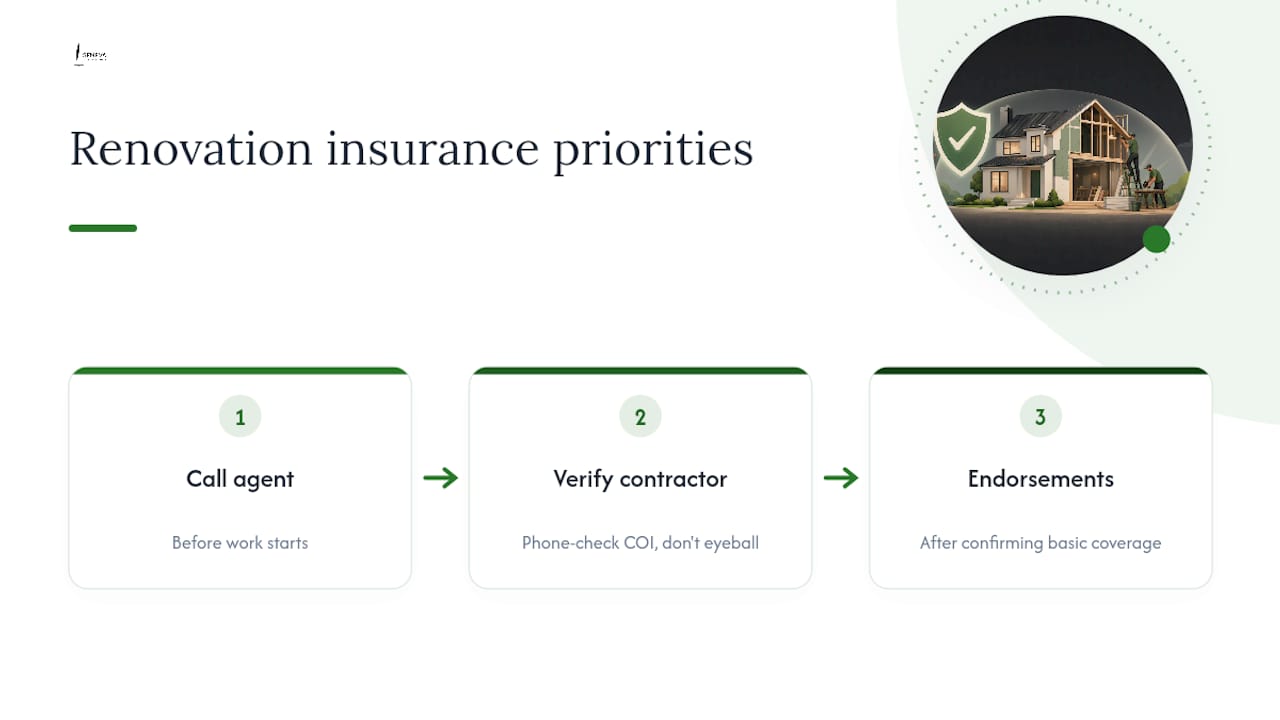
What's overrated: obsessing over which specific mold add-on to buy before you've confirmed the basics. Mold coverage only matters once you've established that your dwelling coverage and contractor liability are already solid, since most mold claims trace back to a covered peril question, not a mold-specific gap.
What's underrated: verifying the COI by phone rather than just eyeballing the paper. That single call catches more problems than any endorsement you could buy. If you take one thing from this guide, make it the sequence: call your agent, verify the contractor, then worry about the endorsement menu. Homeowners who reverse that order usually end up paying for coverage that doesn't match the actual risk on their job site.
— David
Get Your Coverage Checked Before Work Begins
An independent agency is an alternative to guessing whether your current policy still fits once a remodel is underway. Instead of calling one carrier and hoping their standard renovation clause covers your project, you can obtain a fee-free policy review that compares your existing coverage against multiple A-rated carriers and flags the specific gaps that matter for your project, whether that's a missing builders risk endorsement or a mold exclusion buried in the fine print.

If you already know you need updated coverage, request an insurance quote directly. If you're not sure yet what your current policy actually covers during construction, start with the free policy review and get a plain-language answer before the first subcontractor shows up.
Sources
For deeper reference, consult the Insurance Information Institute on notifying insurers before remodeling, NAIC on contractor verification, and your state department of insurance for jurisdictional rules specific to your policy.
- If you are planning to remodel your home, notify your insurance company first | Insurance Information Institute
- How can I avoid getting scammed by a contractor? | NAIC
- Insurance Information Institute — Homeowners insurance handbook (2023)
- Does homeowners insurance cover mold? | NerdWallet
FAQ
Can I use home insurance to renovate my house?
Standard homeowners insurance doesn't fund renovations. It only pays for repairing sudden, covered damage, not planned upgrades, so renovation costs still come from your own budget, a loan, or a contractor's financing.
What is the 30% rule for renovations?
There's no universal insurance rule by that exact name, and definitions vary across guides. The closer industry benchmark is that projects exceeding roughly 10% of your home's value often need a builders risk policy rather than a simple endorsement.
What insurance do I need when renovating?
At minimum, confirm your contractor carries general liability and workers' compensation, and ask your agent whether your project needs a dwelling-under-renovation endorsement or a standalone builders risk policy. Geneva Insurance Group's free policy review can walk through which one applies to your specific project.
How much does $1,000,000 in contractor insurance cost?
Contractor general liability premiums vary widely by trade, location, and claims history, and no single published figure applies universally. Ask the contractor for their current premium and policy documentation rather than relying on a rule of thumb, then verify it directly with their carrier.
Is mold covered by homeowners insurance during a renovation?
Mold is typically covered only when it results from a sudden, covered peril, like a burst pipe, not from gradual leaks or long-term moisture exposure. Most policies exclude flood-related or maintenance-related mold entirely without a specific endorsement.