
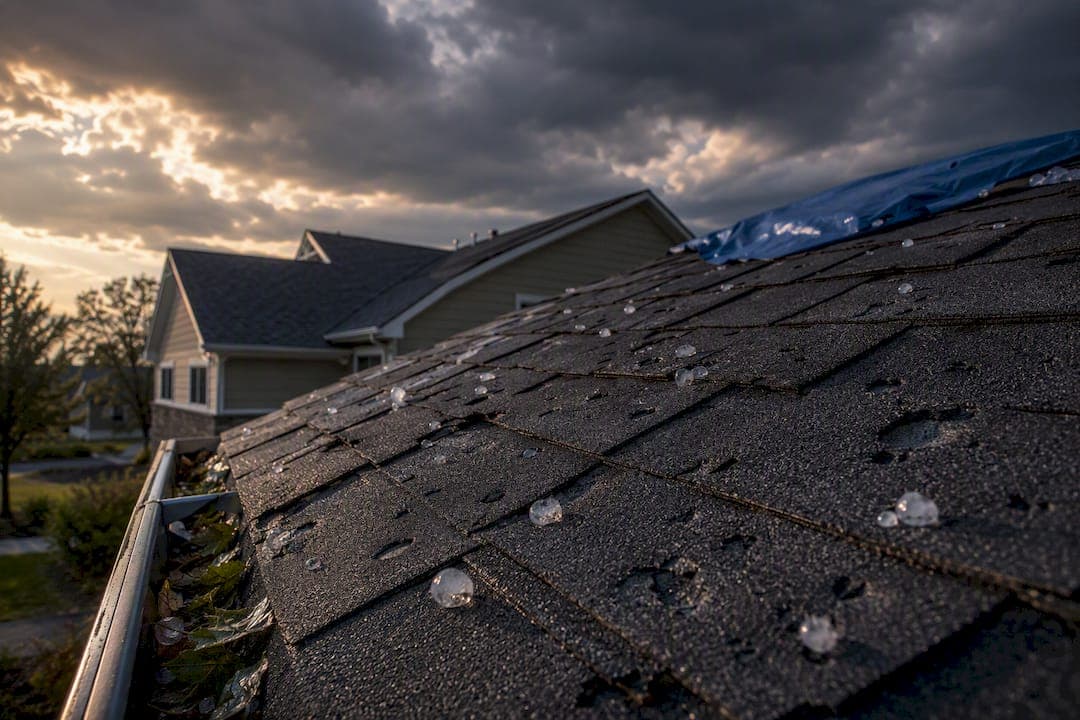
Open perils coverage is broader than named perils coverage. It pays for any loss except what your policy specifically excludes, while named perils coverage pays only for the causes of loss it specifically lists. The tradeoff is straightforward: open perils costs more but leaves fewer gaps. Check your declarations page for the form code and read the "Perils Insured Against" section before you assume either applies to your policy.
TL;DR:
- Most homeowners policies specify whether dwelling and personal property are covered on an open or named perils basis, which directly affects claims outcomes.
- Open perils policies cover everything except explicitly listed exclusions like flood, earthquake, or wear and tear, and shift the burden of proof to the insurer.
- Named perils policies only cover losses caused by listed causes, requiring policyholders to prove their damage matches one of these causes.
- Many common household losses, such as mysterious disappearances or interior water damage from storms, are typically covered only under open perils policies.
- Reviewing the specific form code and "Perils Insured Against" section before renewal or comparison ensures homeowners understand exactly which risks are protected.
Table of Contents
- Named Perils vs Open Perils: How the Coverage Actually Works
- When Open Perils Pays and Named Perils Doesn't
- How HO-2, HO-3, HO-5, and HO-8 Handle Perils Differently
- The Exclusions That Sneak Up on Open Perils Buyers
- Your Policy Review Checklist Before You Renew or Switch
- How Geneva Insurance Group Reviews Your Perils Coverage
- What Homeowners Get Wrong About This Comparison
- Sources
Named Perils vs Open Perils: How the Coverage Actually Works
The mechanics behind these two approaches come down to one question: who has to prove what.
Under a named perils policy, your loss is covered only if it matches something on the list. Fire, lightning, windstorm, hail, theft, vandalism, and collapse are typical entries on a broad named peril list. If your loss doesn't match an item on that list, you get nothing, no matter how legitimate the damage is.
Open perils flips the burden. Your property is covered for everything except what the policy explicitly excludes, which usually means flood, earthquake, wear and tear, and a handful of other standard carve outs. That shifts the proof problem onto the insurer. Instead of you demonstrating that your loss matches a listed cause, the carrier has to show your loss falls under a written exclusion.
That difference shows up constantly in claims handling:
- Named perils: you carry the burden of matching your loss to a specific listed cause.
- Open perils: the insurer carries the burden of proving an exclusion applies.
- Named perils policies tend to have lower premiums because the insurer's exposure is capped by the list.
- Open perils policies cost more because the insurer is on the hook for a wider range of unpredictable losses.
HO-3, a widely used homeowners form, splits the difference. It typically covers your dwelling on an open perils basis while your personal property stays on named perils, according to Credible's breakdown of the two approaches. That single design choice explains a lot of confused claims calls: homeowners assume their whole policy works one way, when really it works two different ways depending on which part of the house or which possessions got damaged.
When Open Perils Pays and Named Perils Doesn't
The gap between these two coverage types rarely shows up in the big, obvious disasters. Fire and windstorm are on almost every named perils list. The gap shows up in the weird, specific, hard-to-categorize losses that don't fit neatly into any list.
- Mysterious disappearance. Your ring vanishes and you have no idea how. Open perils often covers this because there's no exclusion for "unexplained loss." Named perils generally won't, since disappearance isn't a listed cause.
- Rain blowing through an open window. A storm drives water inside during a thunderstorm. Open perils policies frequently pay for this kind of interior water damage; named perils policies often exclude it unless wind first damaged the structure.
- A dropped laptop. Accidental breakage from clumsiness, not a storm or fire, is a classic open perils win and a classic named perils denial.
- Spilled wine on a rug. Same logic. It's an accident, not a listed peril.
- An overflowing aquarium. Water damage from a household object failing isn't fire, theft, or windstorm, so named perils typically stays out of it.
- Delayed discovery of damage, like finding rot from a slow leak months later. Open perils tends to have more flexibility here since the cause isn't excluded outright.
Insurance Journal's coverage of policy forms notes that these miscellaneous, hard-to-predict losses are exactly where open perils earns its higher premium. Named perils simply wasn't built to catch them.
How HO-2, HO-3, HO-5, and HO-8 Handle Perils Differently
Your policy's form code tells you which rulebook applies, and it's printed right on your declarations page. Standard ISO forms make this identifiable rather than guesswork.
- HO-1 (basic form): the narrowest named perils list, rarely sold anymore.
- HO-2 (broad form): a longer named perils list covering both dwelling and personal property, still capped at listed causes.
- HO-3 (special form): open perils for the dwelling, named perils for personal property. This is the ISO HO 00 03 form and the one most homeowners actually carry.
- HO-5 (comprehensive form): open perils for both the dwelling and personal property, corresponding to ISO HO 00 05. It costs more but closes the personal property gap that HO-3 leaves open.
- HO-8 (older home form): built for older properties where replacement cost would exceed market value, generally named perils and often paid on an actual cash value basis.
ISO's standard form structure lets insurers mix bases within a single contract, which is why "special form vs basic form" isn't a simple binary. Your dwelling (Coverage A), other structures (Coverage B), and personal property (Coverage C) can each run on different rules inside the same policy. Carriers word these sections differently, too, so don't assume your neighbor's HO-3 language matches yours word for word.
The Exclusions That Sneak Up on Open Perils Buyers
Open perils sounds like it covers everything. It doesn't. Every standard homeowners policy, regardless of form, excludes flood, earthquake, and ordinary wear and tear, along with things like neglect, war, and nuclear hazard. Texas's insurance regulator confirms these exclusions apply across both coverage types: buying open perils doesn't make flood or earthquake damage suddenly covered.
Common gaps and how homeowners typically fill them:
- Flood damage requires a separate flood insurance policy, usually through the National Flood Insurance Program or a private flood carrier.
- Earthquake damage needs its own endorsement or standalone policy in most states.
- Sewer backup is often excluded unless you add a sewer-backup endorsement, which is inexpensive relative to the exposure.
- Mold frequently carries a low sublimit, sometimes just a few thousand dollars, unless you buy additional mold coverage.
- Wear and tear, rust, and rot are excluded everywhere because insurance covers sudden loss, not maintenance failures.
Pro Tip: Don't stop at reading the exclusions list. Pull your personal property sublimits for jewelry, watches, and electronics, since most policies cap these categories at $1,000 to $2,500 unless you add a scheduled personal property endorsement. That single line item causes more claim disappointment than almost anything else in a homeowners policy.
Your Policy Review Checklist Before You Renew or Switch
Reviewing a policy for named perils vs open perils coverage takes ten minutes if you know where to look. Work through this before your next renewal or before comparing quotes.
- Find your form code on the declarations page (HO-2, HO-3, HO-5, or HO-8) and confirm it against what your agent told you.
- Read the "Perils Insured Against" section for each coverage part, since dwelling and personal property often run on different bases.
- Check whether personal property is open or named perils. This is the coverage most homeowners misunderstand.
- Compare deductibles and sublimits side by side with any competing quote, not just the headline premium.
- Ask specifically whether "mysterious disappearance" and interior water damage from an open window are covered.
- Confirm whether you're insured on replacement cost or actual cash value, since that changes your payout on old items regardless of peril type.
Ask your agent these questions directly: "Is my dwelling on open or named perils?" "What exactly is excluded that isn't obvious from the summary?" "What's my jewelry and electronics sublimit?" "Do I need a sewer-backup or mold endorsement?"
Pro Tip: If an agent can't answer which coverage part uses which peril basis without pulling up the actual policy language, treat that as a red flag. Vague answers about "full coverage" or "we cover everything" are exactly the kind of marketing shorthand that gets challenged during a real claim.
How Geneva Insurance Group Reviews Your Perils Coverage
A fee-free policy review starts with the same checklist above, performed by someone experienced in ISO form language. They pull your form code, check the "Perils Insured Against" wording carrier by carrier, and flag sublimits before they become a claim-day surprise.
Three gaps we find most often:
- Personal property sitting on named perils when the homeowner assumed the whole policy was open perils.
- No sewer-backup endorsement on homes with older plumbing or basements.
- Jewelry and electronics sublimits far below what the items are actually worth.
Request a fee-free policy review to walk through your current coverage in plain language, no jargon required.
What Homeowners Get Wrong About This Comparison
Most coverage explainers treat named perils vs open perils like a simple upgrade decision: pay more, get more, done. That framing misses the real issue, which is that almost nobody knows which basis actually applies to which part of their own policy until a claim gets denied.
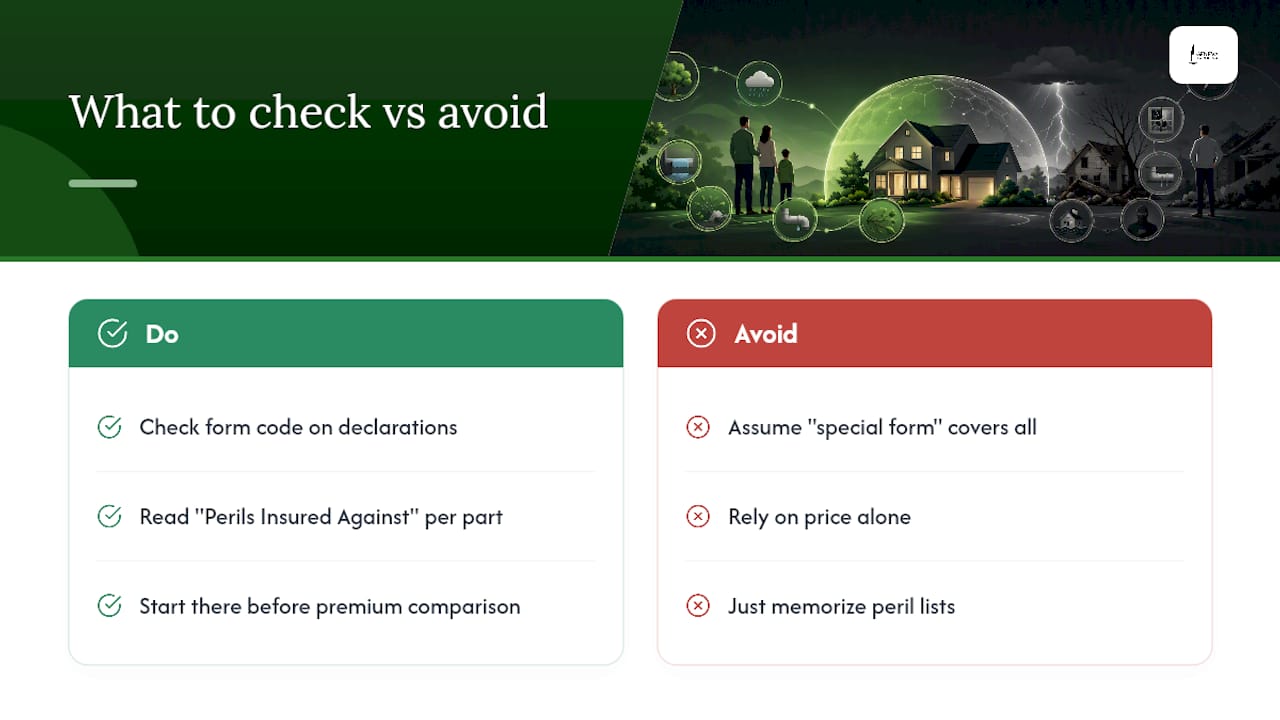
The HO-3 split, open for the dwelling, named for personal property, is a common source of confusion and is typical of a widely sold homeowners form. Homeowners assume "special form" means everything is covered broadly. It doesn't. Your walls and roof get the wide net; your furniture, electronics, and jewelry get the narrow list.
The advice to "just read your policy" is technically correct and practically useless without knowing what to look for. Reading the form code on your declarations page and checking the "Perils Insured Against" section for each coverage part matters more than memorizing peril lists. Start there, not with a side-by-side premium comparison. Price means nothing if the cheaper policy leaves your personal property exposed to losses that never made anyone's list.
— David