

Plan G costs more each month but wraps up nearly every gap Original Medicare leaves open, making it the better fit if you see doctors often or hate surprise bills. Plan N trades a lower premium for small office and ER copays plus exposure to Part B excess charges, which suits healthier beneficiaries willing to pay a little as they go. The real decision hinges on one number: your annual premium gap versus your expected copays, plus the $283 Part B deductible both plans leave you to pay in 2026.
TL;DR:
- Plan N typically saves $20 to $40 per month on premiums but may incur higher out-of-pocket costs if frequent doctor visits or copays exceed initial savings.
- Superior coverage of excess charges makes Plan G more predictable but often results in higher premiums, especially for beneficiaries with frequent medical needs.
- State restrictions on excess charges, present in eight states including Massachusetts and New York, can tilt the choice toward Plan N even for those who see providers often.
- Timing is critical; switching plans later may involve underwriting and higher premiums, so initial selection should consider long-term health and provider habits.
- Comparing personalized quotes and running break-even calculations help determine whether premium savings or copay predictability better fit individual health situations.
Table of Contents
- Plan G Vs. Plan N: What Each One Actually Covers
- How Much Do Plan G And Plan N Really Cost You?
- Which Plan Fits Your Situation Better?
- How Does Switching Between Plans Actually Work?
- How Geneva Insurance Group Helps You Compare Plan G And Plan N
- The Bottom Line On Plan G Vs. Plan N
- An Independent Agent's Take On This Decision
- Get A Fee-Free Medigap Policy Review From Geneva Insurance Group
- Sources
Plan G Vs. Plan N: What Each One Actually Covers
Both plans start from the same foundation, but they split on two specific line items that matter more than people expect.
Medicare's own Medigap comparison chart lays out the benefit structure that every insurer selling standardized Medigap policies has to follow. Where they split is on excess charges and everyday copays.
Plan G covers that difference completely. Plan N does not, which means if your provider charges above the Medicare-approved rate, you're on the hook for that extra amount out of pocket.
Plan N also builds in small, predictable copays that Plan G doesn't have:
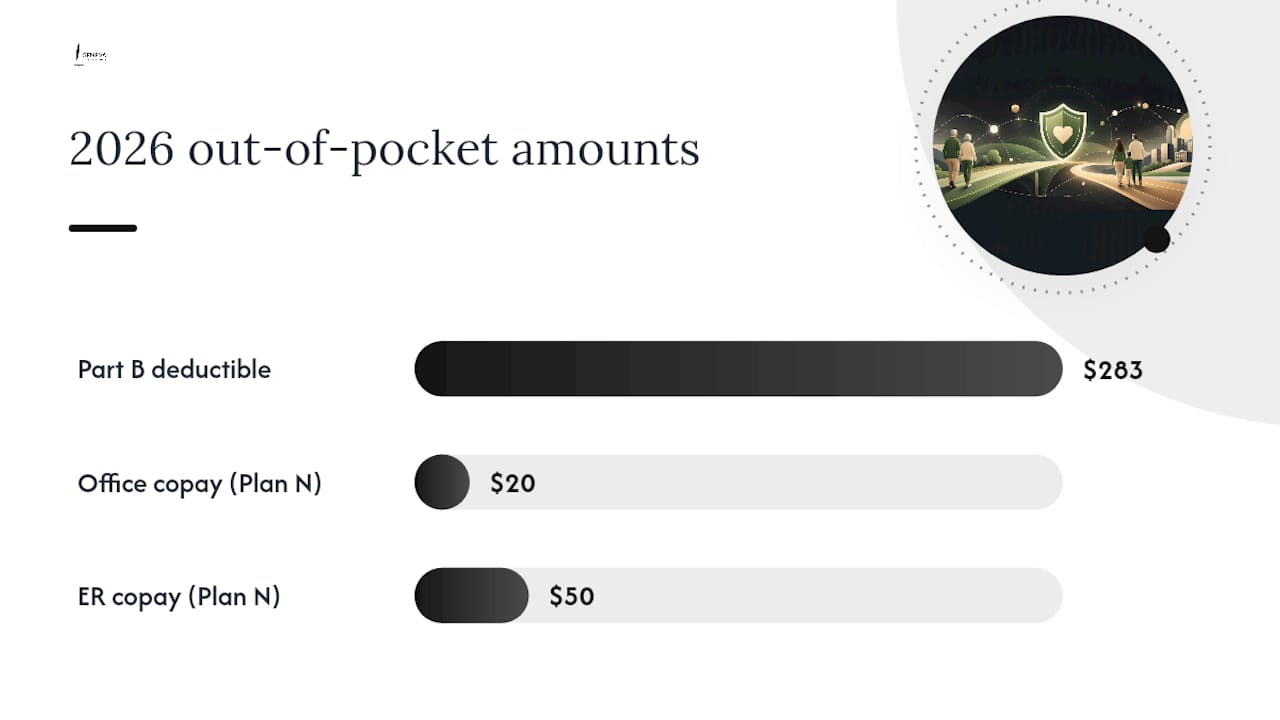
- Up to $20 for an office visit
- Up to $50 for an emergency room visit that doesn't result in an inpatient admission
- No ER copay at all if you're admitted to the hospital
Pro Tip: Ask any provider up front whether they accept Medicare's approved amount "on assignment." Most do, but if yours doesn't and you're on Plan N, that excess charge adds up fast for specialists and out-of-network visits.
Neither plan touches the Part B deductible. In 2026, that figure is $283, and every Medigap enrollee, regardless of plan letter, pays it out of pocket before either plan's coverage kicks in for outpatient services. It's a fixed cost you should plan for no matter which letter you pick.
How Much Do Plan G And Plan N Really Cost You?
Premiums vary by state, insurer, and how a carrier rates its policies (by age, community, or issue age), so there's no single national number. That said, Healthline's cost comparison and NerdWallet's analysis both point to Plan N running roughly $20 to $40 less per month than Plan G in most markets, though the gap can be wider or narrower depending on your carrier and location.
Here's the math that actually decides this for you:
- Find your monthly premium gap between the two plans (say, $30/month, or $360/year).
- Estimate your annual copays under Plan N: multiply expected office visits by up to $20, and add up to $50 per ER visit not resulting in admission.
- Compare the two numbers. If your expected copays are lower than $360, Plan N saves you money that year. If they're higher, Plan G would have been cheaper.
A beneficiary who sees a primary care doctor twice a year and no specialists might rack up $40 in copays, pocketing $320 in savings on Plan N. Someone managing a chronic condition with monthly specialist visits could hit $240 or more in copays before factoring in a single excess charge, which shrinks or erases that premium advantage.
Rating factors shift this math too. Insurers using attained-age rating raise premiums as you get older, while issue-age or community-rated policies hold steadier. Tobacco use, gender, and even your ZIP code can move the premium gap by $10 or more a month, so the "$30 gap" example is a starting point, not a promise.
Which Plan Fits Your Situation Better?
Your health habits and risk tolerance decide this more than the premium chart does.
Plan G tends to fit you if:
- You see multiple specialists or have a chronic condition requiring frequent visits
- You'd rather pay a flat premium and never think about a medical bill again
- You want protection against Part B excess charges without researching every provider's billing practices
- You value knowing your annual healthcare cost almost to the dollar
Plan N tends to fit you if:
- You're generally healthy and see a doctor once or twice a year
- The premium gap in your state is wide enough to outpace your expected copays
- You don't mind paying small amounts as you go instead of a bigger premium every month
- You're comfortable checking whether providers accept Medicare's approved rate
Here's a wrinkle a lot of comparison charts skip: eight states, including Connecticut, Massachusetts, Minnesota, New York, Ohio, Pennsylvania, Rhode Island, and Vermont, either ban or tightly restrict excess charges outright. If you live in one of those states, Plan G's biggest structural advantage barely matters, since providers can't bill you above the approved amount anyway. That alone can tilt the math toward Plan N even for beneficiaries who see doctors fairly often.
Pro Tip: When the premium gap between the two plans is small, under $15 or $20 a month, Plan G usually wins on predictability alone. The savings from Plan N shrink so much they rarely offset even one bad year of copays.
How Does Switching Between Plans Actually Work?
Timing matters more with Medigap than almost any other part of your Medicare decision, and getting it wrong can lock you into a plan you'd rather change.
- Your initial 6-month window. When you first enroll in Part B, you get a guaranteed-issue Medigap open enrollment period. Insurers can't deny you coverage or charge more based on health history during this stretch, whether you pick Plan G or Plan N.
- After that window closes. In most states, switching Medigap plans later requires medical underwriting. Insurers can review your health history, deny you outright, or charge a higher premium based on new diagnoses or prescriptions.
- State-level exceptions. A handful of states offer stronger guaranteed-issue protections or annual "birthday rule" switching windows that bypass underwriting. Rules differ enough by state that it's worth confirming yours directly with a licensed agent before assuming you have flexibility later.
The practical takeaway, echoed across multiple Medigap decision guides, is to treat your first choice as a multi-year decision rather than a trial run. If you pick Plan N to save money now and your health changes in three years, moving to Plan G might mean underwriting could deny you or raise your premium.
How Geneva Insurance Group Helps You Compare Plan G And Plan N
Geneva Insurance Group runs an unbiased comparison across 25+ A-rated carriers instead of pushing one company's version of Plan G or Plan N, and the fee-free policy review analyzes your current coverage for gaps at no cost to you.
In practice, that means running state-specific quotes side by side, modeling your personal premium-versus-copay break-even point, and walking through what medical underwriting could mean if you plan to switch plans down the road.
Bring these to your review:
- Your current Medicare card
- Your existing Medigap policy or premium statement, if you have one
- A list of recent medications and diagnoses
- The names of providers and specialists you currently see
The Bottom Line On Plan G Vs. Plan N
Plan G still wins for beneficiaries who want predictable annual costs and see providers often. Plan N wins for healthier beneficiaries who'd rather bank the monthly premium savings and handle small copays as they come. Three moves to make now:
- Get two to three Medigap quotes for your specific state and age
- Run your own break-even math using your expected visits and copays
- Schedule a fee-free policy review to stress-test your choice against real underwriting risk
An Independent Agent's Take On This Decision
The Plan G versus Plan N debate isn't really about which plan is "better." It's about whether you're optimizing for this year's premium or the next decade's health trajectory. I'd rather see someone overpay slightly for predictability than get squeezed by underwriting five years from now because they saved $25 a month today. Both plans are sound choices. The mistake is picking one without asking where your health, and your risk tolerance, will likely be down the road.
— David
Get A Fee-Free Medigap Policy Review From Geneva Insurance Group
Geneva Insurance Group is the alternative to guessing your way through Plan G versus Plan N alone. Instead of comparing two plan letters in a vacuum, we run your actual numbers, age, state, provider list, and health history, against 25+ A-rated carriers to show you where the real savings and real risks sit.
The fee-free policy review includes a side-by-side carrier comparison in plain language, not insurance jargon, plus ongoing claims advocacy if you ever need to push back on a denied claim. There's no cost to you and no obligation to switch anything. If you're weighing Plan G against Plan N right now, request your fee-free policy review and get a recommendation built around your actual doctor visits, medications, and state rules instead of a generic chart.
This article is general information, not a substitute for advice from a qualified doctor. Consult a qualified healthcare professional about your own circumstances before acting on anything here.