
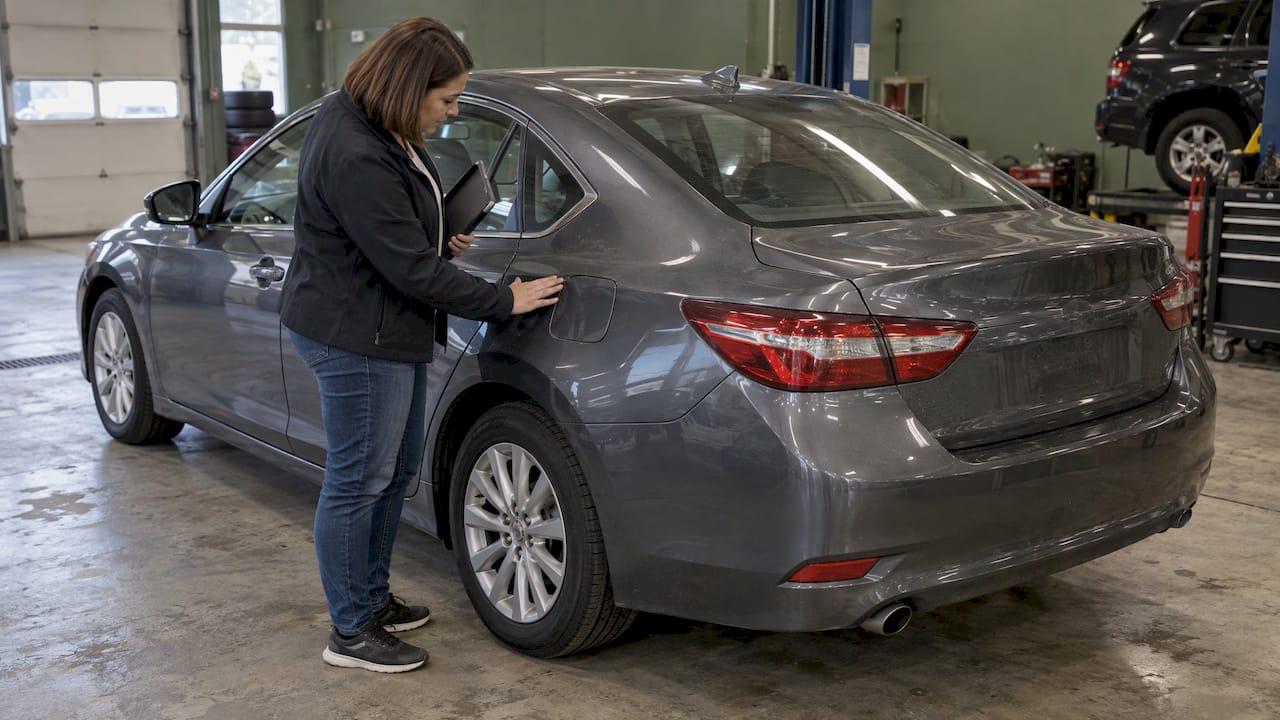
A diminished value claim asks an insurer to pay for the money your car lost in market value because it was in an accident, even after a perfect repair. In most states you file it against the at-fault driver's insurance company, not your own, and the insurer does not pay it automatically: you have to show the loss with evidence. Whether you have a path to recover it depends on who caused the crash, which state you are in and what your own policy says, and that last piece is something you can check before you ever need it.
TL;DR
- Diminished value is the gap between what your car was worth before the accident and what it is worth after repairs. It is a real, recognized loss, but no standard formula measures it.
- In most states the claim goes to the at-fault driver's insurer. Your own policy often does not cover it, so the policy wording matters.
- Payment is not automatic. Itemized repair records, a vehicle history report, local comparable listings and a written demand carry the claim.
- Insurer formulas can produce very small offers. One federal court order describes a $48.76 offer on a car valued at $14,755.
- Deadlines and rules differ by state. Start early, while the evidence is fresh.
Table of Contents
- What diminished value actually is
- Who pays: the at-fault driver's insurer, usually
- How state rules change the claim
- What evidence supports the claim
- The claim process, step by step
- How to judge the offer
- Our perspective
- Check your own coverage before you need it
- FAQ
- Sources
What diminished value actually is
Imagine two identical cars for sale. One has a clean history. The other was hit, repaired well and has a collision on its record. Buyers pay less for the second one. That price gap is diminished value.
The Washington State Office of the Insurance Commissioner describes it as the difference between the market value of an undamaged car before the accident and its market value after repair. A study in the NAIC's Journal of Insurance Regulation (2023) breaks the loss into three types:
- Parts-related: inferior or non-original parts were used in the repair.
- Repair-related: the workmanship was poor.
- Inherent: the stigma of having an accident on the vehicle's record, even when the repair is flawless.
The inherent type is the one most claims are really about. Your car can drive perfectly and still be worth less the day a buyer sees the history report.
The same study notes that how much a car can lose is strongly tied to its value before the crash. A newer, low-mileage car with a high value has more to lose than an older, high-mileage car that was already worth little. If your car is ten years old with 150,000 miles, expect a smaller claim, and decide whether the effort is worth it.
Who pays: the at-fault driver's insurer, usually
There are two ways to claim, and they work very differently.
Third-party claim. You file against the insurer of the driver who caused the accident, through their property damage liability coverage. The Washington Insurance Commissioner's office says these claims are typically filed against the at-fault party's insurer rather than your own. A Connecticut General Assembly research report explains that such third-party claims are recognized there, with damages measured as pre-accident market value minus post-accident value, plus interest from the date of loss.
First-party claim. You file against your own insurer, usually under collision or uninsured motorist coverage. This is where policies differ most. The same Connecticut report says first-party diminished value claims are typically not covered under personal auto policies in that state. In 2024 the Fifth Circuit, applying Mississippi law, upheld an uninsured-motorist diminished value exclusion in an Allstate policy because it found no rule requiring that coverage in every auto policy.
What this means for you:
- If another driver clearly caused the crash and carries liability insurance, your best route is a third-party claim against that insurer.
- If you caused the crash, a diminished value claim against the other side is generally not available, and your own policy rarely pays for it.
- If the other driver is uninsured, your own policy's wording decides what you can recover. This is the situation where an exclusion hurts most, and you only learn about it after the accident unless you read the policy first.
For a Florida-specific explanation of timelines and what to do when an insurer disputes your claim, see this overview of diminished value in Florida.
How state rules change the claim
There is no single national rule. States differ on who can claim, how value is measured, whether your own insurer can be asked and how long you have.
North Carolina offers a useful example of a state that built in a dispute process. Under General Statute 20-279.21(d1), effective October 1, 2009, motor vehicle liability policies must provide an appraisal process with an umpire when the claimant and insurer disagree on the loss in fair market value by more than $2,000 or 25% of the vehicle's pre-accident NADA retail value, whichever is less. Each side picks an appraiser within 20 days, an umpire breaks ties, and the report is binding unless rejected within 15 days. Most states have nothing this structured, so the negotiation is usually a matter of evidence and persistence.

Deadlines are set by each state's statute of limitations for property damage, and they vary a great deal, from as short as one year in some states to many years in others. Look up your state's property damage limit, or ask your state's department of insurance. The practical rule is the same everywhere: file soon. Dealer quotes, listings and repair records are easier to gather right after the repair than a year later.
If you live in Illinois, Florida or Washington, check your state insurance department's consumer pages first. Washington's Insurance Commissioner publishes a claims guide that addresses diminished value directly.
What evidence supports the claim
The Washington Insurance Commissioner's office states that payment depends on proof that market value decreased even after repair. The NAIC study lists the inputs that carry weight, and they translate into a simple file:
- Repair history: the final itemized repair invoice, plus photos of the damage. Structural damage (frame, unibody, airbags) hurts value more than cosmetic damage like a bumper cover.
- Pre-loss value: what the car was worth the day before the crash, based on its year, trim, mileage and condition.
- Local market comparisons: the study points to using at least four comparable vehicles, with dealership asking prices preferred, from your own market.
- Vehicle history databases: the study names A-Plus, C.L.U.E., CARFAX and AutoCheck as the records buyers and insurers rely on.
- Intangibles: factors such as the car's status as a prized vehicle and the information you provide about it.
A professional appraisal from a licensed appraiser or a dealer's written trade-in quote for the car with and without an accident history adds weight. Photos before the crash, service records and any upgrades show the car's condition and help establish the starting value.
The NAIC study is also candid about the weak point: no standard formula exists for calculating the loss. That is why two reasonable people can land on very different numbers, and why your documentation matters.
The claim process, step by step
1. Finish the repair and keep every record
Wait for the repair to be complete so you have the final itemized invoice. Keep the estimate, supplements, the parts list and the shop's final bill. Note whether any parts were aftermarket or used, since that matters for parts-related loss.
2. Confirm who is at fault and who insures them
Find the police report number and the other driver's insurer and claim number. If fault is disputed, settle that first. A third-party diminished value claim rests on the other driver being responsible. If you are still working through the underlying property claim, our guide to the insurance claims timeline shows what typically happens from filing to payment.
3. Establish the before and after values
Collect local listings for comparable cars with clean histories. Then get evidence of what the repaired car is worth now, such as a written dealer trade-in offer or an appraisal that accounts for the accident record. The difference is your claimed loss.
4. Send a written demand
Put the claim in writing to the at-fault driver's adjuster. State the vehicle, date of loss, claim number and the dollar amount you are asking for. Attach the invoice, photos, history report, comparables and appraisal or dealer quote. Keep it factual and short. A clear demand with documents is harder to wave away than a phone call.
5. Expect a counteroffer and respond in writing
Insurers often answer with a formula-based figure. Ask the adjuster to explain in writing how it was calculated, including the starting value and each modifier. Respond to the specific points with your comparables and quotes.
6. Decide whether to settle, escalate or stop
If the gap is small, a negotiated settlement is usually the fastest result. If the insurer will not move, options include filing a complaint with your state department of insurance, using a policy's appraisal clause where one applies, or small claims court against the at-fault driver. Where the amount at stake is large or fault is contested, an attorney licensed in your state is the right person to talk to. Get a release in writing only when you are satisfied, since a signed release usually ends the claim.
How to judge the offer
Be prepared for a low first number. In a 2013 federal court order in the Tiller case, the court recounted that an insurer applied a 30% damage modifier and an 11% mileage modifier to a car valued at $14,755 and arrived at an assessment of $48.76. The owner did not cash the check because she found it inadequate.
The NAIC study notes that one widely used formula is controversial because of its mileage modifier, which can shrink the result sharply for cars with higher mileage. A formula is one way of estimating the loss. It is not the only measure, and your own market evidence is a legitimate counterweight.
To evaluate an offer, ask four questions:
- Does it start from a pre-accident value that matches what comparable cars actually sell for locally?
- Does it reflect structural damage, if there was any?
- Does it treat the accident record on your history report as a real market factor?
- Can the adjuster show the math in writing?
If the answers are no, counter with your documents. If you are unsure whether the number is reasonable, compare it to the dealer quote or appraisal you collected in step 3.
Our perspective
Most people meet the words "diminished value" for the first time after a crash, when they are already juggling a rental car, a body shop and an adjuster. That is the worst time to learn that your own policy may not pay for it.
We are an independent agency, and we compare coverage across more than 25 A-rated carriers. When we review a policy, we explain it in plain language: what it covers, what it excludes and where the gaps are. How a policy treats a loss like this one is exactly the kind of detail that is easy to miss in the fine print.
The other piece is advocacy. We stand with our clients during claims, because the paperwork and the back-and-forth are where people lose steam. Knowing your coverage before the accident and having someone in your corner after it is a stronger position than starting from scratch with an adjuster.
David
Check your own coverage before you need it
A diminished value claim usually starts with someone else's insurance, but your own policy decides what happens when the other driver is uninsured, when fault is shared or when a loss falls outside what you expected. Reading that policy takes time most people never have until a claim lands.
Geneva Insurance Group offers a free policy review at $0 where we go through your existing coverage, point out gaps in plain language and compare options across 25+ carriers. If you drive a newer or higher-value car, it is also worth looking at whether full coverage still makes sense for your vehicle. We are licensed in 17 states, including Illinois, Florida and Washington.

If you would like to see how your auto coverage reads today, start with a free quote and review. If an insurer has already turned down part of a claim, our steps for what to do when a claim is denied are a good place to begin.
FAQ
Is a diminished value claim worth it?
It depends on the car and the damage. Newer, higher-value cars with structural damage have the most to lose, so the claim is more likely to justify the effort. An older, high-mileage car that was already worth little has less value to lose, and a small claim may not repay the time spent.
Can I file diminished value with my own insurance company?
Sometimes, but many personal auto policies do not cover it. Official reports and court decisions have recognized policy exclusions in some states. Read your policy's collision and uninsured motorist sections, or have the policy reviewed, to see what applies to you.
How long do I have to file a diminished value claim?
The deadline is set by your state, usually through the property damage statute of limitations, and it runs from the date of the accident. Periods differ widely between states. Check with your state's department of insurance and file as soon as the repair is complete.
What if the insurer's offer is too low?
Ask for the calculation in writing, then answer with your repair records, comparable listings and a dealer quote or appraisal. If the insurer does not move, you can complain to your state's insurance department or, for larger or disputed claims, speak with an attorney licensed in your state.
Sources
- Automobile Diminished Value Claims, NAIC Journal of Insurance Regulation (2023)
- Filing an auto insurance claim, Washington State Office of the Insurance Commissioner
- Insurance Claim for Car's Diminished Resale Value, Connecticut General Assembly (2007)
- Tiller v. State Farm order, U.S. District Court, N.D. Georgia (February 5, 2013)
- North Carolina General Assembly, Session 2009, S660
- Watkins v. Allstate, U.S. Court of Appeals for the Fifth Circuit (January 12, 2024)