
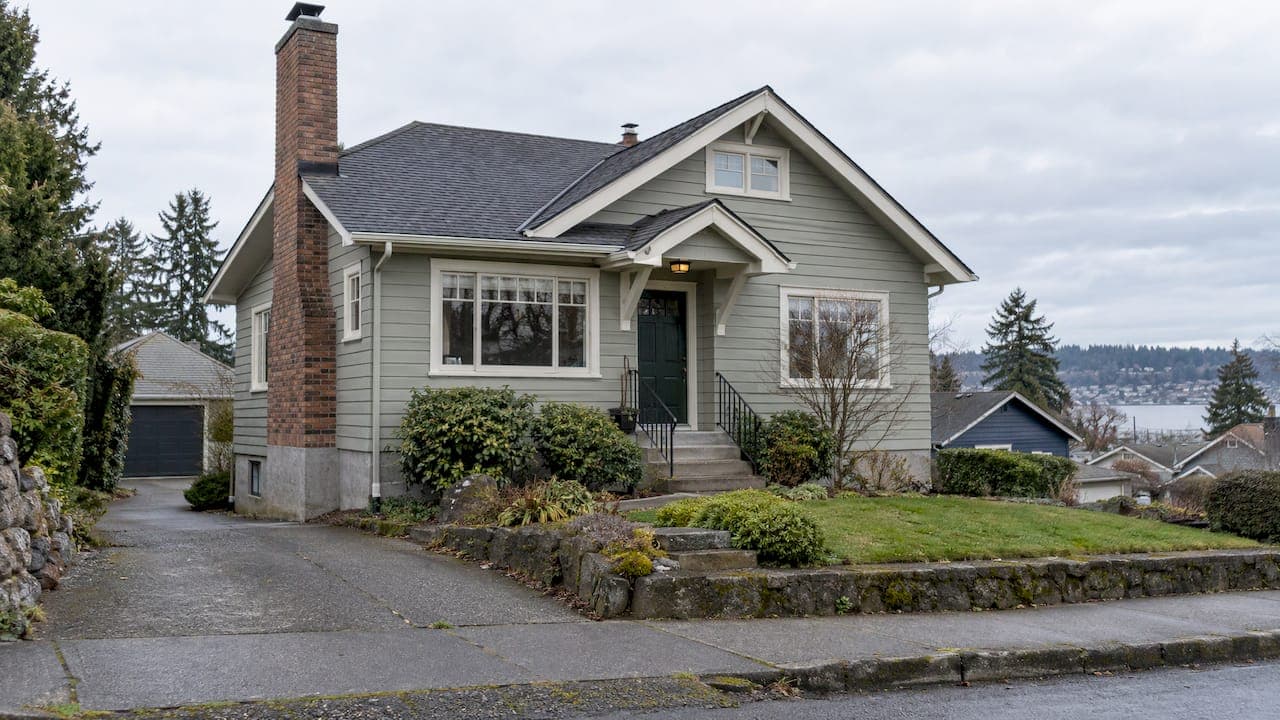
A standard homeowners or renters policy in Washington does not pay for earthquake damage. Earthquake coverage is something you add to your homeowner or renter policy or buy separately, and it usually comes with a large percentage deductible. In the Puget Sound area, a $500,000 policy has been reported to cost anywhere from about $750 to more than $5,000 a year, depending mostly on how your house is built. Below we walk through what it covers, what you would really pay, and how to decide whether it belongs in your plan.
TL;DR
- Earthquake damage is not part of a standard home or renters policy in Washington. You add the coverage or buy it as its own policy.
- Deductibles typically run 10% to 25% of your coverage limit, per category. On $600,000 of coverage with a 15% deductible, the first $90,000 of damage is yours.
- As of May 2023, Puget Sound premiums for $500,000 of coverage ran roughly $750 to $2,000+ for frame houses and $1,000 to $5,000+ for masonry houses.
- Rates depend on the company, location, age and construction of the home, and some insurers want the house bolted to its foundation.
- You cannot wait until after a quake to buy. There is a waiting period afterward, so decide before the shaking starts.
Table of Contents
- Does your Washington policy already cover earthquakes?
- Why this matters more in western Washington
- What earthquake insurance covers
- What earthquake insurance costs in Seattle and Washington
- How the deductible works
- What moves your rate
- Is earthquake insurance worth it in Washington?
- Renters, condo owners and landlords
- How to buy earthquake coverage
- Get a second opinion on your coverage
- Our perspective
- FAQ
- Sources
Does your Washington policy already cover earthquakes?
Almost certainly not. Fire after a quake is a separate question that depends on your policy wording, but the shaking itself, the cracked foundation and the collapsed chimney are generally outside a standard homeowners form. The Washington Office of the Insurance Commissioner (OIC) describes earthquake insurance as coverage you add to a homeowner or renter policy or buy on its own.
The quickest way to confirm is to open your declarations page. The NAIC's consumer guide defines it as a summary that lists your categories of coverage, limits and endorsements. Look for an earthquake endorsement or a separate earthquake policy number. If you find neither, you have no quake coverage.
The same guide recommends asking your agent to explain how earthquake insurance differs from your homeowners policy. That is a good question to ask before you renew, not after a loss.
Why this matters more in western Washington
The OIC says the western half of the state is earthquake country. It is home to the Cascadia Subduction Zone and the Seattle and South Whidbey Island faults, all capable of large-magnitude earthquakes. That includes Seattle, Tacoma, Everett, Olympia and most of the Puget Sound region.
Despite that risk, few people carry coverage. According to data cited by FEMA, only 11.3% of Washington residents had earthquake insurance as of 2017, even though the state is the second-largest market in the country for it. In practice, most households would be paying for a major repair with savings, loans or disaster aid.
What earthquake insurance covers
Coverage varies by policy, but the OIC and NAIC describe a consistent core. A typical earthquake policy pays for:
- Dwelling: repairs to your home, and often other structures on the property such as a detached garage or shed.
- Personal property: belongings damaged by the quake, such as furniture, electronics and clothing.
- Debris removal: clearing damaged material after the event.
- Additional living expenses: hotel or rental costs while your home is unlivable.
The NAIC guide adds that some policies may also cover building-code upgrade costs, land stabilization and other unattached structures. Those extras are optional or limited on many forms, so ask for them by name and get the answer in writing.
What it usually does not cover
Exclusions are where homeowners get surprised. The OIC lists fire, land movement, vehicles, pre-existing damage, external water damage such as floods, and sometimes masonry veneer. The NAIC guide similarly names fire, land issues like sinkholes, vehicles and pre-existing damage.
Two points deserve attention in a coastal state:
- Tsunamis and floods: earthquake insurance might not cover floods, tidal waves or tsunamis, even when an earthquake causes them. If your home is near the water, ask about flood coverage separately.
- Fire following a quake: earthquake policies commonly leave fire out. Whether your standard homeowners policy responds to a fire that starts after shaking depends on its wording, so have it read to you plainly rather than assuming.
If you want a refresher on how your base policy defines what it covers, our explainer on named perils versus open perils shows why wording matters so much at claim time.
What earthquake insurance costs in Seattle and Washington
Prices are not published by a single rate table, and they differ by company and address. The best Washington-specific figure we can point to comes from a Puget Sound consumer research report. As of May 2023, premiums for $500,000 of earthquake coverage in most Puget Sound communities ranged from $750 to more than $2,000 a year for frame houses, and from $1,000 to more than $5,000 a year for masonry houses.
| House type | Coverage limit | Reported annual premium (as of May 2023) |
|---|---|---|
| Frame house, most Puget Sound communities | $500,000 | $750 to more than $2,000 |
| Masonry house, most Puget Sound communities | $500,000 | $1,000 to more than $5,000 |
Treat these as a range for planning, not a quote. Prices have likely moved since 2023, and your own number will depend on the factors below. Seattle homeowners in particular should expect a quote that reflects the age and construction of their specific house, not a neighborhood average.
We do not publish earthquake premiums of our own, because a real number requires your address, your home's details and the carriers' current filings. A quote request is free and takes less time than reading rate tables.
How the deductible works
This is the part that changes the value of the policy more than the premium does. Earthquake deductibles are not a flat $1,000 or $2,500. According to the OIC, they are usually a percentage of the insured limit, often 10% to 25%. You pay that share out of pocket before the insurer pays the rest, and separate deductibles often apply to different structures or property categories.

The Puget Sound research report says most companies' earthquake policies carry a 10% to 25% deductible for each category of coverage. Its example: with $600,000 of coverage and a 15% deductible, the first $90,000 of damage comes out of your own pocket.
Here is how the same math plays out on a $500,000 dwelling limit:
| Deductible | You pay first | Insurer pays damage above |
|---|---|---|
| 10% | $50,000 | $50,000 |
| 15% | $75,000 | $75,000 |
| 25% | $125,000 | $125,000 |
A higher deductible lowers the premium, but it also means a moderate quake may produce damage that never reaches the point where the policy pays. Before you pick a percentage, ask yourself: could I cover that amount in cash or credit if my house were damaged? Policies are designed for catastrophic loss, so the right deductible is the highest one you could realistically absorb.
If the idea of percentage deductibles is new to you, our deductible glossary entry covers the basics. Our piece on the Florida hurricane deductible shows the same percentage logic in another catastrophe-prone state.
What moves your rate
The Puget Sound report says rates vary by company, location, and the age and construction of the home. Here is what that means in practice:
- Construction type: the pricing gap between frame and masonry homes in the table above is large. Brick and masonry perform worse in shaking, and insurers price accordingly.
- Age of the house: older homes are often built before modern seismic codes, which tends to raise the quote.
- Foundation and retrofit: insurers may require the house to be bolted to its foundation. The OIC's homeowner guide says some earthquake insurers may require homeowners to retrofit or to strap hot water tanks to a wall before providing coverage.
- Location: your address affects the quote, which is why the same $500,000 limit costs different amounts in different ZIP codes.
- Limit and deductible: a higher limit raises the premium, and a higher deductible lowers it.
- The company: carriers rate earthquake risk differently, so two quotes for the same house can be far apart.
The practical takeaway: a seismic retrofit does double duty. It makes your home safer and can remove a barrier to getting coverage in the first place.
Is earthquake insurance worth it in Washington?
There is no universal answer, but there is a clean way to decide. The Washington Military Department suggests you consider coverage if you live in a quake-prone area and could not afford to repair or rebuild, live elsewhere while the home is repaired, or repay your mortgage after an earthquake.
Ask yourself these questions:
- Could I rebuild or repair from savings? If a $100,000 repair would be a crisis, the coverage fills a real gap.
- Do I still owe a mortgage? A damaged house does not erase the loan. Lenders generally expect payments to continue.
- Could I live elsewhere for months? Additional living expenses can matter as much as the repair itself.
- Is my home on the west side? The fault systems the OIC describes are in western Washington, so risk is higher there than in the eastern part of the state.
- Is my house frame or masonry, bolted or not? This drives both the price and your insurability.
If you answered yes to the first three, price a policy. Even if the premium is more than you expected, a quote will show you exactly what you would be buying and what the deductible would be.
Renters, condo owners and landlords
Earthquake coverage is not only for people who own a detached house.
Renters. The OIC says you can add earthquake coverage to a renters policy. Your landlord's insurance protects the building, not your belongings, so the quake risk to your furniture, electronics and clothes is yours. If you are weighing it, see our renters insurance page, and if you share a lease, our guide to roommate renters insurance explains how to avoid gaps between co-tenants.
Condo owners. Your association's master policy and your own unit policy can respond differently to earthquakes, and assessments after a loss can be significant. Ask both the association and your agent what is and is not insured before you decide on a personal limit.
Landlords. If you own rental property, a quake affects both the building and your rental income, and what your policy does about each is spelled out in its terms. This overview of landlord insurance requirements is a useful starting point for what to check on a rental policy, and earthquake coverage can be added to that conversation.

How to buy earthquake coverage
The process is simpler than most people expect.
- Pull your declarations page. Confirm whether you have any earthquake endorsement now.
- Gather home details. Year built, construction type (frame or masonry), foundation, any retrofit work, and approximate rebuild cost.
- Choose a limit. Base it on what it would cost to rebuild, not market value, because land value is not what the insurer repairs.
- Choose a deductible you can fund. See the table above.
- Compare more than one company. Quotes vary by carrier, so a single quote tells you little.
- Ask about exclusions in writing. Especially masonry veneer, fire, and land movement.
Timing matters. The OIC notes that after an earthquake, you usually have to wait a while before you can buy earthquake insurance. Waiting for the next tremor to prompt a purchase means you may not be able to get covered when it counts.
Get a second opinion on your coverage
We are an independent agency, so we are not tied to one insurer. We compare options across more than 25 A-rated carriers and explain them in plain language, without insurance jargon. We are licensed in Washington, and our Washington insurance page covers what we offer in the state.
The simplest first step is our free policy review. We look at what you carry today, point out gaps (including whether earthquake is missing), and you owe nothing for the review. If you want to see options, you can request insurance quotes for your home, or start with the free policy review.

If you are also checking your base coverage, our homeowners insurance page shows how we approach it, and the guide on when to switch home insurance lists the signals that a policy has stopped fitting.
Our perspective
Most people we talk to in Washington assume their homeowners policy already deals with earthquakes. It does not, and the surprise usually comes at the worst possible time.
What we see is that people focus on the premium and skip the deductible. A percentage deductible of 10% to 25% is the real price of this coverage, so we start every earthquake conversation with a simple question: what could you actually pay out of pocket after a major loss? The right policy is the one whose deductible you can live with.
This is also why working independently matters. Earthquake coverage differs by company in price, in exclusions and in what the insurer wants your house to look like. When we can compare across 25+ A-rated carriers and put the differences in plain words, you choose with your eyes open. And if you ever have to file, we stay in your corner through the claim.
If you are not ready to buy anything, start with the free policy review. It costs nothing, carries no obligation, and tells you exactly where you stand.
David
FAQ
Is earthquake insurance worth it in Washington state?
It can be, particularly in western Washington where the Cascadia Subduction Zone and the Seattle fault are located. It makes the most sense if you could not afford to repair or rebuild, pay for temporary housing, or keep paying a mortgage on a damaged home. A quote will show whether the premium and deductible fit your budget.
How much does earthquake insurance cost in Seattle?
As of May 2023, a Puget Sound report put $500,000 of coverage at roughly $750 to more than $2,000 a year for frame houses and $1,000 to more than $5,000 for masonry houses. Your actual price depends on the company, your address, and your home's age and construction. Request current quotes rather than relying on averages.
Does homeowners insurance cover earthquakes in Washington?
No, not by default. Earthquake coverage is an add-on to your homeowner or renter policy, or a separate policy. Check your declarations page for an earthquake endorsement to see whether you have it.
What is a typical earthquake insurance deductible?
Deductibles are usually a percentage of your coverage limit, commonly 10% to 25%, and often apply separately to each category of coverage. With a $600,000 limit and a 15% deductible, you would pay the first $90,000 of damage yourself.
Can I buy earthquake insurance right after a quake?
Usually not right away. The Washington Office of the Insurance Commissioner notes that there is typically a waiting period after an earthquake before you can buy coverage, so it is best to arrange it in advance.
Sources
- Earthquake insurance, Washington Office of the Insurance Commissioner
- A Consumer's Guide to Earthquake Insurance, NAIC
- Should You Buy Earthquake Coverage? Puget Sound, Checkbook
- A consumer's guide to homeowner insurance, Washington OIC
- Earthquake insurance, Washington Military Department
- Earthquake Insurance, FEMA
- Landlord insurance requirements for US landlords