
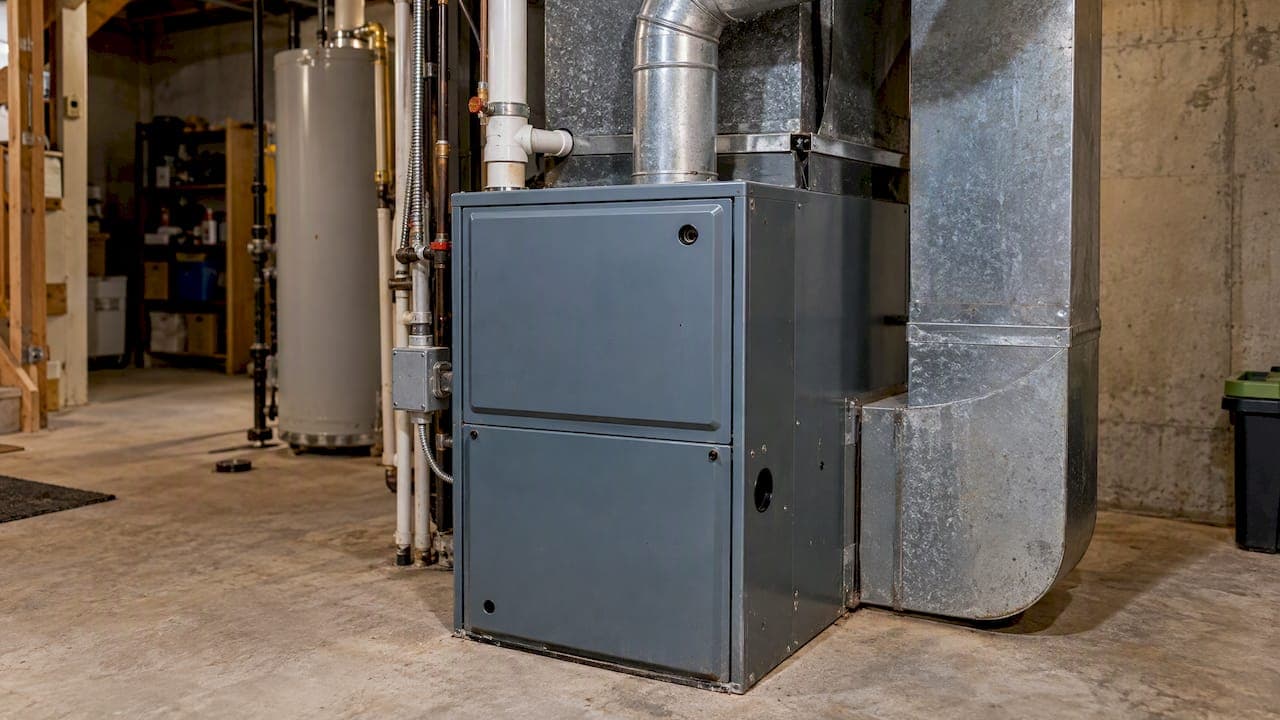
Equipment breakdown coverage pays to repair or replace equipment that fails suddenly because of an electrical, mechanical or pressure-related problem. Investopedia describes it as insurance for sudden and accidental failures such as a power surge or a motor burnout. It was once called boiler and machinery insurance. Homeowners can often add it to a home policy, and businesses can add it to a commercial property policy. It is not a repair plan for things that simply wore out.
This guide explains what is covered, what is not, how it differs from a home warranty, and how to decide whether to add it. It also covers the home-based business gap that catches many people off guard.
TL;DR
- Equipment breakdown coverage pays for sudden, accidental electrical, mechanical or pressure failures, such as a power surge that kills a furnace control board or a motor burnout.
- It does not pay for normal wear and tear, poor maintenance, or outside perils like fire, flood or earthquake. Those fall under other parts of your policy.
- It is not a home warranty. A warranty is built around age-related failure. Breakdown coverage requires a sudden event.
- If you run a business from home, a typical homeowners policy limits business equipment to $2,500, which is often too little.
- We review your current policies for free and show you where the gaps are before you buy anything.
Table of Contents
- What equipment breakdown coverage actually is
- What it covers at home
- What it does not cover
- Equipment breakdown coverage vs. a home warranty
- What it costs
- The home-based business gap
- Equipment breakdown for commercial buildings
- How to decide whether to add it
- Our perspective
- Get your current coverage checked
- FAQ
- Sources
What equipment breakdown coverage actually is
Standard property insurance is built around named causes of loss: fire, wind, theft, certain kinds of water damage. A machine that quietly burns out its own motor often does not fit any of them. Equipment breakdown coverage fills that hole. According to Investopedia, it covers repair or replacement costs when equipment fails from electrical, mechanical or pressure-related causes, and it can also respond to related losses such as business interruption, extra expenses and spoilage.
The trigger matters more than the machine. The failure has to be sudden and accidental. Typical examples:
- A power surge fries the compressor in your central air conditioner.
- A motor burns out in a commercial refrigerator.
- An electrical arc damages a switchboard.
- A pressure vessel, such as a boiler, fails internally.
The same source is clear about the limits. It does not cover damage from external perils like fire, flood or earthquake, and it does not cover normal wear and tear. Those external perils are handled by the rest of your property policy, which is why breakdown coverage is an add-on to a package, not a replacement for it.
What it covers at home
For a homeowner, the equipment in question is the stuff that makes the house livable and is expensive to replace in one hit. Think of:
- Furnaces, boilers and heat pumps
- Central air conditioning and HVAC components
- Water heaters
- Refrigerators, freezers, washers and dryers
- Electronics and home office equipment
- Well pumps, sump pumps and similar mechanical systems
Exactly which items are included depends on the carrier and the endorsement wording, so check the list rather than assuming. A few details to look for in the form:
- Food spoilage. If a refrigerator or freezer fails, does the endorsement pay for the food inside, and up to what amount?
- Surge versus lightning. Lightning that causes a fire is generally handled under the main policy, as Triple-I explains. Ask how the endorsement treats surge damage that has no fire attached.
- Age limits. Some forms limit coverage on very old equipment or pay depreciated value. Ask whether the payment is replacement cost or actual cash value.
- Deductible. Breakdown claims may carry their own deductible, separate from your wind or hail deductible.
If you have a finished basement with a sump pump, read the endorsement alongside your water backup coverage. The two respond to different events, and the pump failing is not the same claim as the drain backing up.
What it does not cover
Here is where most disappointment comes from. Equipment breakdown coverage generally excludes:
- Normal wear and tear. A 17-year-old furnace that stops because it is 17 years old is not a sudden accident.
- Poor maintenance. If a filter was never changed and a unit seized up, expect a fight.
- External perils. Fire, flood and earthquake damage belong to other coverages, per Investopedia.
- Cosmetic damage. Dents and scratches are not breakdowns.
- Anything outside the policy's defined equipment list. Read the definitions section.
If you want protection against ordinary age-related failure, that is a different product, covered next.
Equipment breakdown coverage vs. a home warranty
People mix these up constantly, partly because both talk about appliances and HVAC. They solve different problems.
| Equipment breakdown coverage | Home warranty (service contract) | |
|---|---|---|
| What it is | Insurance, usually an endorsement on your homeowners policy | A service contract, sold separately |
| What triggers a claim | A sudden and accidental event, such as a surge or motor burnout | Mechanical failure from ordinary use and age |
| Wear and tear | Excluded | Typically the main reason people buy it |
| Poor maintenance | Excluded | Often excluded or disputed |
| Where it sits | Part of your insurance program | Separate contract with its own terms |
The distinction comes straight from Investopedia's explanation: a warranty addresses wear-related failures, while breakdown coverage needs a sudden and accidental event. Neither one is automatically better. If your systems are new and your main fear is a surge or an electrical fault, breakdown coverage is the closer match. If your systems are old and your fear is that they will simply quit, you are looking at a different kind of contract, and you should read its exclusions closely.
What it costs
We do not publish prices for any policy, because the premium depends on the carrier, your state, the home and the limit you choose. What we can point to is the general pattern: for homeowners this is usually a small add-on rather than a major line on the bill. The NAIC and Triple-I material we reviewed describes endorsements for home businesses starting around $25 a year, and consumer guides commonly cite a range of $25 to $50 a year for a homeowner add-on, but treat those as ballparks, not quotes. A carrier can price it higher or lower, and some carriers do not offer it at all.
Because we are independent and compare more than 25 A-rated carriers, we can see which ones offer the endorsement, what the limit and deductible look like, and what each one excludes. That is a faster way to find out than calling carriers one at a time.
The home-based business gap
This is the part of the topic where the dollar figures get serious. Many people run a consulting practice, an online shop or a design studio from a spare room and assume their homeowners policy covers the gear. Triple-I notes that a typical homeowners policy provides only $2,500 of coverage for business equipment, which is usually not enough, and that business liabilities are often excluded altogether. The Triple-I small business guide adds that the usual limit drops to $250 when the equipment is off the premises, which matters if you carry a laptop to client sites. The NAIC makes a similar point about renters and homeowners policies limiting office equipment replacement.
Triple-I also describes two ways to close the gap: an endorsement on the homeowners policy that raises the equipment limit, at a cost of roughly $25 a year for a doubling to $5,000, or a dedicated in-home business policy, costing under $300 a year, with a $10,000 equipment limit and liability coverage included. Those figures are Triple-I's general illustrations, so confirm the real numbers with a quote.

Now add the breakdown question. Suppose your main workstation fails after a surge. Under a typical homeowners policy, you are working with a $2,500 ceiling for all business equipment together, and whether a breakdown is covered at all depends on the wording. A computer, a monitor, a printer and a backup drive can use that limit quickly.
A few practical points:
- Inventory your gear. Add up replacement cost for computers, cameras, printers, specialty tools and anything else you earn money with.
- Think about downtime. Business interruption and extra expense are the pieces that cover lost income while you replace equipment. A homeowners endorsement is rarely built for that.
- Consider the data, not just the hardware. A failed machine can be replaced. Lost client files may not be. Broken devices also create security and compliance headaches, and a cybersecurity firm's guide on why cyber insurance claims get denied is useful reading if you hold client data at home.
- Know your repair options. Not every failure needs a claim. If a laptop has a cracked screen or a dead battery and the repair costs less than your deductible, paying for the fix directly can be cheaper. A repair shop's overview of common business laptop repairs shows what typical repairs involve before you decide whether to file a claim.
We wrote more about the $2,500 limit in our post on home-based business insurance. If your business has outgrown the spare room, a full commercial property policy or a broader business insurance program is the next step.
Equipment breakdown for commercial buildings
For a shop, restaurant, clinic, office or light manufacturer, the equipment is the business: HVAC, refrigeration, ovens, compressors, electrical panels, production machines, point-of-sale systems. A failure can stop revenue the same day. On the commercial side, the coverage usually includes more than the repair bill. As the Investopedia overview lists, it can extend to business interruption, extra expenses and spoilage.
When you review a commercial quote, ask about:
- Whether breakdown coverage is included in the property form or sold as a separate endorsement.
- The limit for lost income and how long the waiting period runs before it applies.
- Spoilage limits for refrigerated or temperature-sensitive stock.
- Whether equipment you lease is covered, and who is responsible for it under the lease.
- Whether a hard-to-place operation needs a different route. If a carrier declined you, our high-risk business insurance page explains how we look for options.
How to decide whether to add it
Use this short checklist.
- List the expensive systems. Furnace, AC, water heater, major appliances, home office gear, or on the business side, the machines you cannot work without.
- Price a failure. If one replacement would hurt your budget, the case for a low-cost endorsement is strong.
- Check what your policy already says. Some policies include a form of breakdown coverage. Look at the endorsements page of your declarations, and see how your personal property coverage is defined.
- Compare the deductible to the likely loss. A small appliance may cost less than the deductible.
- Match the product to the risk. Sudden failures: breakdown coverage. Age-related failures: a maintenance fund or a service contract.
- Ask who pays for what on a claim. Some carriers allow you to choose your own repair vendor. Others do not.
Our perspective
In our experience, equipment breakdown coverage is one of the least understood parts of a policy, and it is rarely explained at the time of sale. Most people find out it exists, or does not, when the furnace dies in January.

We do not think the answer is to add every endorsement a carrier offers. The better approach is to read the actual wording, compare it across carriers, and tell you in plain language what is covered, what is excluded and what you would pay out of pocket. Because we work with more than 25 A-rated carriers, we are not tied to one company's form. That matters here, because breakdown endorsements differ a lot in what they list and how they pay.
The other thing we watch for is the home business that has quietly outgrown its coverage. Owners assume the homeowners policy handles it, and the $2,500 limit says otherwise. We would rather you hear that during a free review than during a claim.
— David
Get your current coverage checked
If you are not sure whether you have equipment breakdown coverage, or whether your home business equipment is protected, start with our free policy review. We look at your existing policies, point out gaps in plain language, and there is no obligation. If you are ready to compare options, you can request an insurance quote, or see how we handle homeowners insurance.
FAQ
Is equipment breakdown coverage the same as a home warranty?
No. Equipment breakdown coverage is insurance and requires a sudden and accidental event, such as a power surge or motor burnout. A home warranty is a service contract that centers on mechanical failure from normal use and age. Check the exclusions on whichever you consider.
Does my homeowners policy already include it?
Sometimes, but often it is an optional endorsement. Look at the endorsements listed on your declarations page or ask your agent to confirm in writing. In a free review we can check this for you.
Does it cover normal wear and tear?
No. Normal wear and tear and poor maintenance are excluded, according to Investopedia. If an old appliance stops working because of age, this coverage will not respond.
Does it cover equipment for a business I run from home?
Possibly, but the limit is the issue. A typical homeowners policy caps business equipment at $2,500, per Triple-I. An endorsement or a separate in-home business policy can raise that, so total your equipment and compare.
Does it cover fire, flood or earthquake damage to equipment?
No, those are outside this coverage. They are handled by other parts of your property policy, or by separate flood and earthquake coverage. Ask your agent how each peril is treated before you need to file.
Sources
- What Is Equipment Breakdown Coverage? Protect Your Business Assets (Investopedia)
- Insuring Your Home-based Business (Triple-I)
- Home-Based Businesses (Triple-I small business guide)
- Working from home: your insurance coverage (NAIC)
- Lightning coverage and safety (Triple-I)