
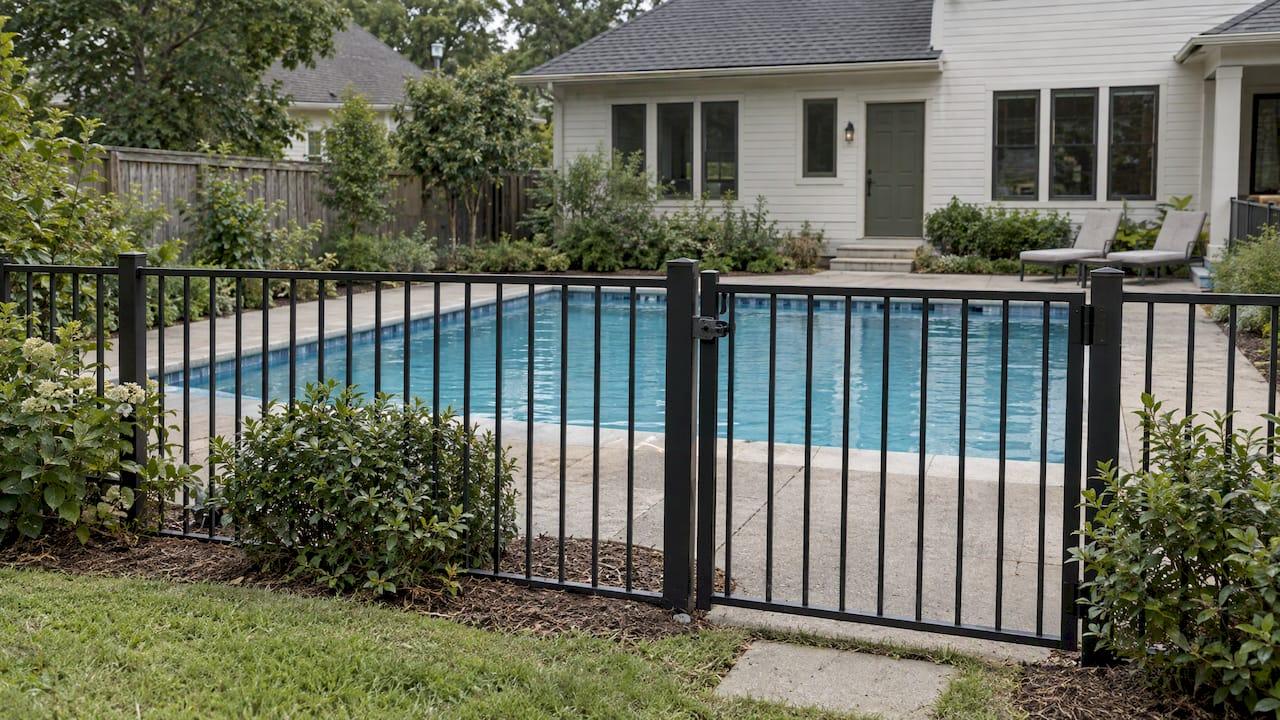
Pool liability insurance is the part of your coverage that pays when someone is hurt at your pool and you are held responsible. For most homeowners, it comes from the personal liability section of the homeowners policy, and the default limit is often too low for a pool. Many policies also carry limits or exclusions that matter for pools, so it pays to read yours before swim season, not after an accident.
Below, we walk through what a standard policy does and does not cover, what the attractive nuisance doctrine means for you, which limits to consider, and how to lower your risk.
TL;DR
- A standard homeowners policy treats the pool as property (damage) and treats guest injuries under personal liability and medical payments. There is usually no separate "pool policy."
- Default liability limits are often $100,000. Consumer guidance from insurance bodies suggests pool owners consider at least $300,000 or $500,000, plus an umbrella policy.
- Attractive nuisance rules vary by state, and courts in several states have held that an ordinary pool is not one. Your duty of reasonable care still applies.
- Fencing, self-latching gates, alarms and a cover reduce risk, and tell your insurer you have a pool.
- We offer a free policy review that checks your liability limits and pool-related gaps across 25+ A-rated carriers.
Table of Contents
- How pool coverage works under a homeowners policy
- Does homeowners insurance cover pool injuries?
- What is attractive nuisance, and does it apply to your pool?
- How much liability coverage should a pool owner carry?
- Safety steps that reduce your risk
- Questions to ask your agent before swim season
- Get your pool coverage reviewed
- FAQ
- Sources
How pool coverage works under a homeowners policy
A standard homeowners form does not have a pool section. According to a pool industry guide to the ISO HO-3 form, the pool is property under Coverage A, B or C, while injuries to guests fall under Coverage E (personal liability) and Coverage F (medical payments to others).
That gives you two separate questions:
- Damage to the pool itself. Which part of the policy pays, and up to what limit?
- Injury to other people. How much liability protection do you have if someone sues?
The second question is what people mean by pool liability insurance, and it is the one with the bigger financial downside.
Coverage for the pool itself
Homeowners insurance may cover a pool damaged by a covered peril such as fire, windstorm or vandalism. Experian explains where it lands:
| Pool type | Usually covered under | Typical limit |
|---|---|---|
| Small above-ground pool | Personal property (Coverage C) | Around 50% of the dwelling limit |
| In-ground or permanent above-ground pool | Other structures (Coverage B) | Usually 10% of the dwelling limit |
| Indoor pool, or in-ground pool sharing the home's foundation | Dwelling (Coverage A) | Highest limits |
If your pool would cost more than 10% of your dwelling limit to rebuild, that is worth raising with your agent. Our Coverage C glossary entry explains how personal property coverage works, and our guide to choosing coverage limits shows how to think about adequate amounts.
What is typically not covered
The NW Insurance Council says damage from ground movement, earthquakes, flooding or lack of maintenance is generally not covered under a standard homeowners policy. The pool industry guide adds that the HO 00 03 form excludes freezing, thawing, and the pressure or weight of water or ice on a pool, as well as water below the ground pressing on a pool.
Experian also notes that wear and tear and failure to winterize may not be covered. If your yard is prone to groundwater, ask us about water backup coverage, which addresses a related but different risk.
Does homeowners insurance cover pool injuries?
The liability section is the part that responds when a guest, neighbor or delivery person is hurt and you are legally responsible. Coverage E pays for your legal liability and your defense. Coverage F pays small medical bills regardless of fault.
The numbers are modest. The pool industry guide reports that Citizens Property Insurance's HO-3 sets liability at $100,000 and medical payments at $2,000. Per the NW Insurance Council, standard policies often include at least $100,000 in liability, with many insurers offering limits up to $500,000.
Two details matter:
- Limits can exclude pool equipment. The same guide says that Citizens' form does not cover diving boards, pool slides or empty pools. Policies differ, so check the wording for yours.
- Defense stops when the limit is paid. The duty to defend under Coverage E ends once the liability limit has been paid out.
The Texas Department of Insurance also warns that many policies provide minimal or no liability coverage for swimming pools, which is why you should confirm what yours says. Rules and forms differ by insurer and state, so read your own declarations page and ask your agent to point to the exact language.
A worked example
The pool industry guide offers a simple illustration. Say a court awards $750,000 after a serious pool injury. With only a $100,000 liability limit, $650,000 is left unpaid and could reach your savings or future earnings. With a $300,000 homeowners limit plus a $1 million umbrella policy, nothing is left unpaid.

That gap is the reason insurance regulators and trade groups point pool owners toward higher limits.
What is attractive nuisance, and does it apply to your pool?
Searchers often ask about attractive nuisance insurance. There is no such product: it is a legal doctrine, and your liability coverage is what responds if a claim is made under it.
Under Restatement (Second) of Torts Section 339, a landowner may be liable for physical harm to trespassing children caused by an artificial condition if five elements are met, including that the children do not discover or realize the risk. Whether something qualifies depends on the circumstances.
The Insurance Information Institute says the insurance industry treats a pool as an attractive nuisance, which raises liability risk, and advises pool owners to review their coverage with a professional.
Courts, however, differ by state:
- Kansas. In Mozier v. Parsons (1995), the state supreme court held that swimming pools generally are not attractive nuisances, leaving room only for a highly unusual situation.
- Oklahoma. In Brown v. Dempster (2024), the court held the doctrine does not apply to pools without a hidden or unusual danger, but the owner can still face ordinary premises liability claims.
- Ohio. In Bennett v. Stanley (2001), the court adopted Section 339 and said that even where an attractive nuisance exists, the owner is held to ordinary care, not automatic liability.
The practical lesson: even in states where the doctrine is narrow, a child, guest or neighbor can still bring a premises liability claim, and your duty depends on who was hurt and why they were there. Defending that claim costs money whether or not you win. For a legal question about your own property, talk to a licensed attorney in your state.
How much liability coverage should a pool owner carry?
The Insurance Information Institute advises pool owners to consider raising homeowners liability to at least $300,000 or $500,000, more if their assets warrant it, and to consider an umbrella policy. The South Carolina Department of Insurance gives the same guidance in its consumer guide.
The Illinois Insurance Association likewise says pools and trampolines raise your liability exposure, and recommends telling your insurer, looking at higher limits or an umbrella, and taking precautions such as a fence and self-latching gate.
Where an umbrella policy fits
The NW Insurance Council says a personal umbrella typically provides $1 million to $5 million of liability coverage after your homeowners limit is used up. Most umbrella insurers want underlying limits first: the pool industry guide, citing Triple-I, reports $300,000 of homeowners liability and $250,000 of auto liability before a $1 million umbrella is sold.
That means raising the base limits and adding the umbrella work together. Our umbrella insurance page explains how personal liability coverage sits on top of your home and auto policies.
Renting out your pool or your home
The Texas Department of Insurance notes that if you rent out your pool but not the house, you probably need specific coverage. It also says some insurers will not renew coverage for a pool that has not been properly maintained. If you rent out a whole property that has a pool, landlord insurance basics are worth reviewing alongside your liability limits.
Safety steps that reduce your risk
Safety measures protect people first. They also show reasonable care if a claim ever arises. The Consumer Product Safety Commission recommends:
- A barrier at least 4 feet high, with 5 feet or higher preferable.
- Openings small enough that a 4-inch sphere cannot pass through.
- Gates that open away from the pool and are self-closing and self-latching.
- A latch release at least 3 inches below the top of the gate on the pool side when it is less than 54 inches from the bottom.
- Door alarms on doors leading to the pool area.
- Well-maintained pool covers, and life rings or reaching poles within easy reach.
The National Drowning Prevention Association states that a four-sided isolation fence reduces a child's drowning risk by 83% compared with three-sided perimeter fencing. A fence that separates the pool from the house is the single most useful layer.
Check local building codes too, since many towns set their own barrier requirements for pools.
Questions to ask your agent before swim season
Bring this list to your next renewal conversation:
- What are my liability and medical payments limits today?
- Are diving boards, slides or other pool equipment excluded?
- Is my pool covered as a structure, and will the limit cover a rebuild?
- Do I meet the underlying limits an umbrella insurer needs?
- What does my policy say about winterizing and maintenance?
- What happens if I rent out the pool or the property?
Our perspective
Pool owners usually discover their limits at the worst time: after a claim is filed. At Geneva Insurance Group we think the better moment is a quiet afternoon with the declarations page in hand.
Because we are independent, we compare coverage across more than 25 A-rated carriers instead of selling one company's form. For a pool, that means looking at liability limits, medical payments and how an umbrella would sit above them, then explaining each piece in plain language, not jargon.
We also stay with you when a claim happens, because the policy only matters if someone helps you use it. Our policy review is free, with no obligation.
David
Get your pool coverage reviewed
If you have a pool, or plan to add one, we can look at your current policy and show you where the liability limits and exclusions stand. Our free policy review is $0 and carries no obligation, and we compare options across 25+ A-rated carriers.

When you are ready to see options, start with insurance quotes, or read about homeowners insurance first. We are licensed in 17 states, including Illinois, Florida and Washington.
FAQ
Does homeowners insurance cover someone who drowns or is injured in my pool?
The personal liability section of a homeowners policy is designed to respond when you are legally responsible for a guest's injury, up to its limit. Medical payments coverage handles smaller bills regardless of fault. Because limits are often as low as $100,000 and some policies restrict pool-related coverage, confirm the wording with your agent.
Do I need an umbrella policy if I have a pool?
Insurance regulators and trade groups suggest pool owners consider one. The Insurance Information Institute advises raising homeowners liability to at least $300,000 or $500,000 and looking at an umbrella for added protection. How much you need depends on your assets and income.
Will my premium go up if I add a pool?
You should tell your insurer about the pool, as the Illinois Insurance Association recommends. Changes in premium depend on the carrier, your state and your safety features. We can compare how different carriers treat a pool and show you the result before you decide.
Does a fence lower my liability risk?
Yes, it lowers the risk of an accident, and the NDPA reports that four-sided fencing cuts a child's drowning risk by 83% compared with three-sided fencing. Pair it with a self-closing, self-latching gate and a door alarm, following the CPSC guidelines.
Sources
- Pool Insurance: Homeowners Liability, Exclusions, Umbrella
- Does Homeowners Insurance Cover Swimming Pools? (Experian)
- Swimming Pools & Liability (NW Insurance Council)
- Does homeowners insurance cover swimming pools? (Texas Department of Insurance)
- Attractive nuisance doctrine (Legal Information Institute)
- Pool safety and insurance (Triple-I)
- Mozier v. Parsons (Kansas Supreme Court, 1995)
- Brown v. Dempster (Oklahoma Supreme Court, 2024)
- Bennett v. Stanley (Ohio Supreme Court, 2001)
- Safety Barrier Guidelines for Residential Pools (CPSC)
- Barriers & Alarms (NDPA)
- Landlord Insurance Explained