
A 4-point inspection is a focused insurance inspection of a home's roof, electrical, plumbing, and HVAC systems, and Florida carriers commonly require it for older homes before issuing or renewing coverage. If your home is approaching 30 years old, verify the requirement with your agent and schedule a Florida-licensed inspector before your application or renewal date.
TL;DR:
- Some carriers set the threshold near 25 years, while others judge individual system ages, so your insurer’s underwriting rule determines whether you need a report.
- Florida guidance generally accepts reports dated within 30 days of application, but carriers set their own windows, so schedule only after confirming your deadline.
- A standalone inspection typically costs $100 to $300 and takes about an hour; buyers can pair it with a full inspection for broader condition findings.
- Prioritize aging roofs, hazardous panels, polybutylene pipes, and active leaks; carriers may require repairs before binding, set deadlines, or decline coverage.
- Before booking, verify the inspector’s active Florida license and ask your carrier about required form versions and extra photo requirements.
Table of Contents
- What a 4-point inspection covers and how it differs from a full home inspection
- System-by-system checklist: what inspectors document for roof, electrical, plumbing, and HVAC
- Inspector, form, and photo requirements: who can sign and what the report must include
- When insurers request a 4-point inspection and the report's validity
- Cost, timeline, and what to expect on inspection day
- How to prepare: a homeowner checklist to avoid re-inspections and speed underwriting
- Common failure triggers and next steps if your 4-point flags problems
- How an independent insurance agent can help after a 4-point inspection
- Fix vs shop: a practical way to think about your 4-point results
- How Geneva can help: free policy review and coverage options for Florida homeowners
- FAQ
- Sources
What a 4-point inspection covers and how it differs from a full home inspection
A 4-point inspection looks at exactly four systems: roof, electrical, plumbing, and HVAC. It does not check cosmetic issues, appliances, windows, foundations, or interior finishes the way a full home inspection does. Insurers designed it this way on purpose. Those four systems account for the overwhelming share of expensive insurance claims, from roof leaks to electrical fires to burst pipes, so carriers use the 4-point inspection guide from MyFloridaCFO as a quick underwriting snapshot rather than a full condition report.
A full home inspection, by contrast, is a buyer's tool. It covers structural components, appliances, grading and drainage, interior and exterior condition, and dozens of minor items that matter for a purchase decision but not for underwriting. A 4-point inspection is narrower and faster, which is exactly why insurers accept it as a standalone document for older homes.
The scope difference matters for what you can expect on inspection day:
- A 4-point inspector photographs and documents only the four covered systems, not the whole house.
- The report notes ages, materials, and visible hazards rather than grading overall home condition.
- Minor cosmetic wear, like peeling paint or worn flooring, falls outside the inspection entirely.
- Structural issues unrelated to the four systems are typically not addressed unless they directly affect one of them.
Most 4-point inspections take about an hour on site, and many Florida inspectors deliver the completed report the same day, according to the MyFloridaCFO four-point inspection guide. That speed is part of the appeal for homeowners racing a policy deadline, but it also means the inspector has limited time to catch issues outside the four systems. If you are buying an older home, pairing a 4-point with a full home inspection gives you both the underwriting document the insurer wants and the broader condition report you want as a buyer.
System-by-system checklist: what inspectors document for roof, electrical, plumbing, and HVAC
Each of the four systems has its own set of items inspectors look for, and knowing them ahead of time helps you spot problems before an inspector does.

Roof. Inspectors record the roofing material, an estimated age, and any visible damage such as missing shingles, exposed underlayment, or signs of past leaks. They also note the roof's apparent remaining useful life, which matters because many carriers set their own age cutoffs for roofs regardless of the rest of the home's condition. Every slope of the roof typically needs its own photo, along with general elevation shots of the front and rear of the house. A roof nearing the end of its expected service life is one of the most common reasons a 4-point triggers a conditional offer or request for replacement before binding.
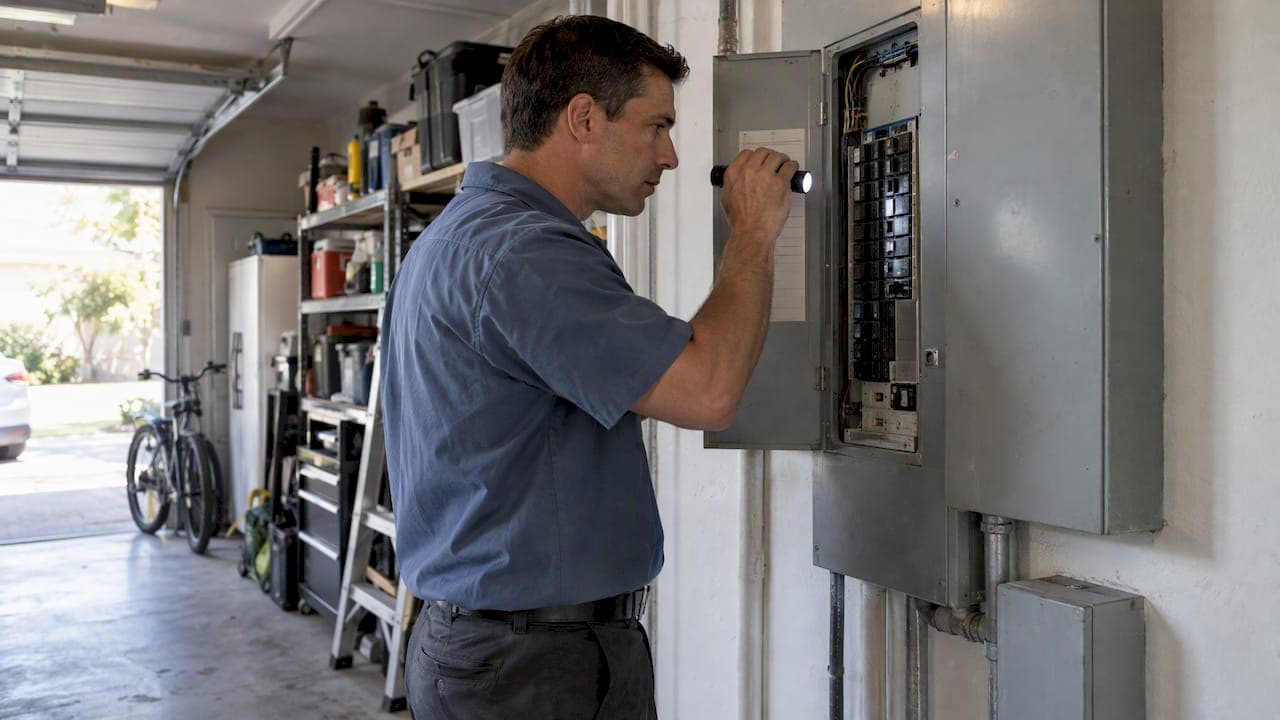
Electrical. The inspector documents the main panel's brand, type, and amperage, along with the condition of visible branch wiring. They look specifically for hazards like double-tapped breakers (two wires connected to a single breaker slot designed for one), exposed or frayed wiring, and signs of improper DIY work. Certain older panel brands associated with higher fire risk draw extra scrutiny from insurers, so if your home still has its original panel from a few decades ago, it is worth having an electrician assess it before the inspection rather than after a flag comes back.
Plumbing. Inspectors check the supply and drain line materials throughout the home, flagging materials known for higher failure rates, including polybutylene piping and galvanized steel. They also record the water heater's age and typically require a photo of the manufacturer's data plate along with the temperature and pressure relief (TPR) valve. Any visible active leaks, whether at the water heater, under sinks, or at exposed supply lines, get documented directly on the report. A 2025 update to Citizens' roof and 4-point inspection form added more specific photo mandates around the water heater's TPR valve, so confirm with your inspector that they are working from the current version of the form.
HVAC. The inspector notes the system's age, photographs the manufacturer's data plate, and confirms the unit powers on and runs during a basic operational check. They also look for evidence of poor installation, such as improperly sealed ductwork, and any signs of water leaking from the unit itself, which can point to a failing condensate line or coil.
Pro Tip: Pull your water heater and HVAC manufacturer plates into view and wipe them clean before the inspector arrives. A faded or hidden data plate often means a guessed age on the report, which can prompt an unnecessary follow-up request from your carrier.
A few practical patterns show up across all four systems. Carriers are less interested in minor cosmetic wear and far more interested in anything that predicts a claim: age past expected service life, materials with known failure histories, and visible hazards an inspector can photograph in the moment. If you already know one of these systems is aging out, addressing it before the inspection is almost always faster than dealing with a conditional offer afterward.
Inspector, form, and photo requirements: who can sign and what the report must include
Not just anyone can complete a Florida 4-point inspection that an insurer will accept. Carriers, including Citizens Property Insurance Corporation, generally require the form to be completed and signed by a verifiable Florida-licensed professional. Acceptable signers typically include:
- Florida-licensed general, building, or residential contractors.
- Licensed home inspectors operating under Florida's inspector licensing requirements.
- Registered architects.
- Professional engineers licensed in Florida.
- Certified building code officials.
Trade-specific professionals, such as a licensed electrician or plumber, may be limited to signing off on only their portion of the form rather than the full inspection, so confirm with your carrier whether a single generalist inspector or multiple trade sign-offs are needed for your situation.
Citizens' Insp4pt form lays out a minimum photo list that most Florida carriers follow even when using their own version of the form. At minimum, expect to need photos of the front and rear elevations of the home, each distinct roof slope, the main electrical panel with the cover open, the electrical panel with the cover off in areas where hazards are noted, the water heater's manufacturer plate and TPR valve, the HVAC system's manufacturer plate, and any specific hazards identified during the inspection. The 2025 Citizens form update tightened some of these photo mandates, so an inspector working from an outdated checklist may miss something your carrier now expects.
The completed form itself needs to include the inspection date, the inspector's signature, their license number, their professional title, and their company name. Missing any of these fields is one of the more common reasons a carrier bounces a report back for correction.
Before booking, verify your inspector's license directly through Florida's Department of Business and Professional Regulation at myfloridalicense.com. A quick lookup confirms the license is active and matches the name and number that will appear on your form, which avoids a rejected report after the fact.
When insurers request a 4-point inspection and the report's validity
Carriers in Florida do not all use the exact same age cutoff, but a widely used benchmark is that homes around 30 years old or older commonly trigger a 4-point requirement, based on guidance outlined by MyFloridaCFO. Some carriers set their threshold closer to 25 years, and others adjust based on the specific system ages rather than the home's overall age, so the exact trigger point depends on which insurer you are applying with.
A few common situations typically call for a 4-point inspection:
- Applying for a new policy on a home that meets the carrier's age threshold.
- Renewing an existing policy when the carrier updates its underwriting requirements.
- Switching carriers on an older home, since the new insurer has its own inspection rules.
- Any situation where the age of the roof, electrical panel, plumbing, or HVAC system is unknown or undocumented.
Once you have a report in hand, timing matters. Florida consumer guidance generally treats a 4-point inspection as acceptable when dated within 30 days of the insurance application, according to MyFloridaCFO. Carriers set their own acceptable windows, though, so confirm the exact timeframe with your agent before scheduling. Booking the inspection too early relative to your application date is a common and avoidable reason a report gets rejected for being stale.
Cost, timeline, and what to expect on inspection day
Standalone 4-point inspections in Florida typically run in the range of $100 to $300, according to MyFloridaCFO, with the exact cost depending on your home's size, your local market, and whether you bundle the inspection with a full home inspection. Bundling often changes the per-item price compared to ordering a 4-point on its own.
On inspection day, plan for roughly an hour on site. The inspector walks the roof or uses a ladder and binoculars to assess each slope, opens the main electrical panel, checks the water heater and HVAC system, and photographs everything required by the form. Some providers offer same-day report delivery, which is useful if you are working against an application or renewal deadline.
A few things shape what happens during and after the visit:
- The inspector records ages, materials, and visible hazards directly onto the standardized form as they go.
- Photos are matched to the minimum checklist your carrier requires, not just general documentation.
- The completed report typically goes to your insurance agent, who forwards it to the carrier for underwriting review.
- If the inspection finishes noticeably faster than an hour, ask to see the delivered photos and confirm every required shot was taken. A rushed inspection sometimes means skipped documentation rather than a genuinely clean report.
How to prepare: a homeowner checklist to avoid re-inspections and speed underwriting
A little preparation before the inspector arrives can mean the difference between a same-day approval and a follow-up request that delays your coverage.
- Clear physical access to the main electrical panel and any secondary panels so the inspector can open the cover without moving furniture or storage.
- Label breakers if they are not already labeled, which helps the inspector move faster and reduces the chance of a rushed assessment.
- Remove ladders, debris, or overhanging branches that could block clear roof photos from the ground or from a ladder angle.
- Gather receipts or documentation for any recent roof, electrical, plumbing, or HVAC repairs or replacements.
- Wipe down and make visible the manufacturer data plates on your water heater and HVAC unit.
- Check that your water heater's TPR valve is accessible and not obstructed by stored items nearby.
Before the inspector arrives, ask your agent whether your carrier has specific photo demands beyond the standard checklist, or whether they require a particular version of the inspection form. Passing that information along to the inspector ahead of time avoids a second visit.
Pro Tip: If you know your roof or electrical panel is aging toward a carrier's typical cutoff, address it before scheduling the inspection rather than after. A pre-inspection repair is almost always less disruptive than a conditional offer that delays your binding date.
When you are deciding what to fix first, prioritize the items most likely to block underwriting outright: an end-of-life roof, a flagged electrical panel, or an active plumbing leak. Cosmetic issues outside the four systems will not affect your 4-point results, so your time and budget are better spent on the systems the inspector is actually scoring.
Common failure triggers and next steps if your 4-point flags problems
Certain findings show up again and again as reasons a 4-point inspection leads to a conditional offer, a required repair before binding, or in some cases a declination.
- A roof assessed as near or past its expected useful life, even without active leaks.
- Electrical panels from brands insurers commonly associate with higher fire risk, or visible hazards like double-tapped breakers.
- Polybutylene piping, which many carriers treat as an automatic red flag due to its known failure history.
- A water heater well past its expected service life or showing signs of corrosion or leaking.
- Any active leak discovered during the inspection, regardless of which system it affects.
When a 4-point flags one of these issues, carriers generally respond in one of three ways: a conditional offer that requires the repair or replacement within a set timeframe, a requirement that the fix happen before the policy binds at all, or in more serious cases, a declination. None of these outcomes are necessarily final. Once you complete the needed repair, get a written estimate and receipt from the licensed contractor who did the work, according to guidance from MyFloridaCFO. Many agents can then coordinate a resubmission of the 4-point, or a trade-specific sign-off covering just the repaired system, to shorten the gap between the fix and your binding date. If a structural issue tied to one of the four systems needs a documented repair plan before a carrier will reconsider, a structural repair and retrofit planning resource can help put that documentation together for resubmission.
How an independent insurance agent can help after a 4-point inspection
Once your 4-point inspection is complete, the report itself is only half the picture. What it means for your coverage options depends entirely on which carrier you are applying with, since underwriting rules for roof age, panel brands, and plumbing materials vary significantly from one insurer to the next.
We review how your 4-point results align with underwriting rules from multiple insurance carriers rather than checking against a single insurer's rulebook. That matters because a roof age or electrical panel brand that triggers a decline with one carrier might be perfectly acceptable to another, and you would have no way to know that without shopping multiple underwriting guidelines at once.
We offer a free policy review that walks through your existing coverage, identifies gaps, and explains in plain language what your 4-point findings mean for your options going forward, with no fee attached. If a repair is needed before a carrier will bind coverage, we also advocate on your behalf during that process rather than leaving you to interpret underwriting language on your own. For Florida homeowners navigating an older home's insurance requirements, having someone translate the inspection report into actual next steps saves time and prevents coverage gaps.
Fix vs shop: a practical way to think about your 4-point results
When a 4-point inspection comes back with a flagged item, homeowners tend to ask the wrong first question: should I fix this, or should I shop for a different carrier? The better question is which system is flagged and how close you are to needing a replacement anyway. A roof with five years of useful life left is worth repairing now, since you will need to address it regardless of carrier. A roof flagged only because one specific insurer sets an unusually conservative age cutoff is often better solved by shopping carriers instead of spending money on a repair you do not yet need.
For buyers, pairing a 4-point with a full home inspection at the same visit is usually the more cost-effective move, since you get both the underwriting document and a genuine condition report without paying for two separate appointments. If you are financing the purchase, ask your lender or a resource like First Choice Home Loan's guide to FHA loans about how inspection timing lines up with your closing schedule.
Whatever your results show, document everything, talk to your agent before assuming the worst, and consider a policy review to see the full range of options available to you.
— David
How Geneva can help: free policy review and coverage options for Florida homeowners

A 4-point inspection report is a document full of technical detail, and turning it into an actual coverage decision is where we come in. We offer a free policy review that takes your 4-point results and maps them against options from more than 25 A-rated carriers, explained in plain language instead of underwriting jargon.
If your current policy is renewing and your home just cleared (or is approaching) a 4-point requirement, this is also a good moment to see whether a different carrier offers better terms for your home's age and systems. We can walk through:
- What your specific 4-point findings mean for eligibility with different carriers.
- Whether a flagged item is worth repairing now or better solved by switching insurers.
- How your results compare across homeowners and condo insurance options available to you.
- What a fair premium looks like for a home with your roof, electrical, plumbing, and HVAC profile.
Start with a free policy review or get insurance quotes directly to see your options once your 4-point inspection is in hand.
FAQ
What is done during a 4-point inspection in Florida?
A Florida-licensed inspector examines and photographs four systems: the roof, the electrical panel and wiring, the plumbing supply and drain lines and water heater, and the HVAC system. The inspector documents each system's age, material, and any visible hazards on a standardized form, a process outlined in the MyFloridaCFO four-point inspection guide.
What will fail a 4-point inspection in Florida?
Common failure triggers include a roof near or past its expected useful life, electrical panels with hazards like double-tapped breakers, polybutylene or galvanized plumbing, and water heaters showing corrosion or leaks. Depending on the finding, carriers may issue a conditional offer requiring repair, require the fix before binding, or decline coverage.
How much does a 4-point inspection cost in Florida?
Standalone 4-point inspections in Florida typically cost between $100 and $300, according to MyFloridaCFO, depending on home size, local market, and whether it is bundled with a full home inspection. The inspection itself generally takes about an hour on site.
Can you get insurance without a 4-point inspection in Florida?
Whether a 4-point inspection is required depends on the carrier and your home's age, with many insurers requiring one for homes around 30 years or older. Newer homes or carriers without an age-based requirement may not need one, so check directly with your agent or carrier before assuming either way.
How long is a 4-point inspection valid in Florida?
Florida guidance generally treats a 4-point inspection report as acceptable when dated within 30 days of your insurance application, per MyFloridaCFO. Carriers set their own specific windows, so confirm the exact timeframe with your agent before scheduling the inspection.
Sources
- Four Point Inspection Guide — MyFloridaCFO
- Citizens — Roof and 4-Point Inspection form updates (March 2025)